A split lateral or a stuck valve in a San Diego County yard can run on a timer while you sleep. Water sheets across the patio, sits against the slab, and shows up as wet flooring inside the door. That path is irrigation leak water damage from landscape lines, a different event from a fire sprinkler discharge.
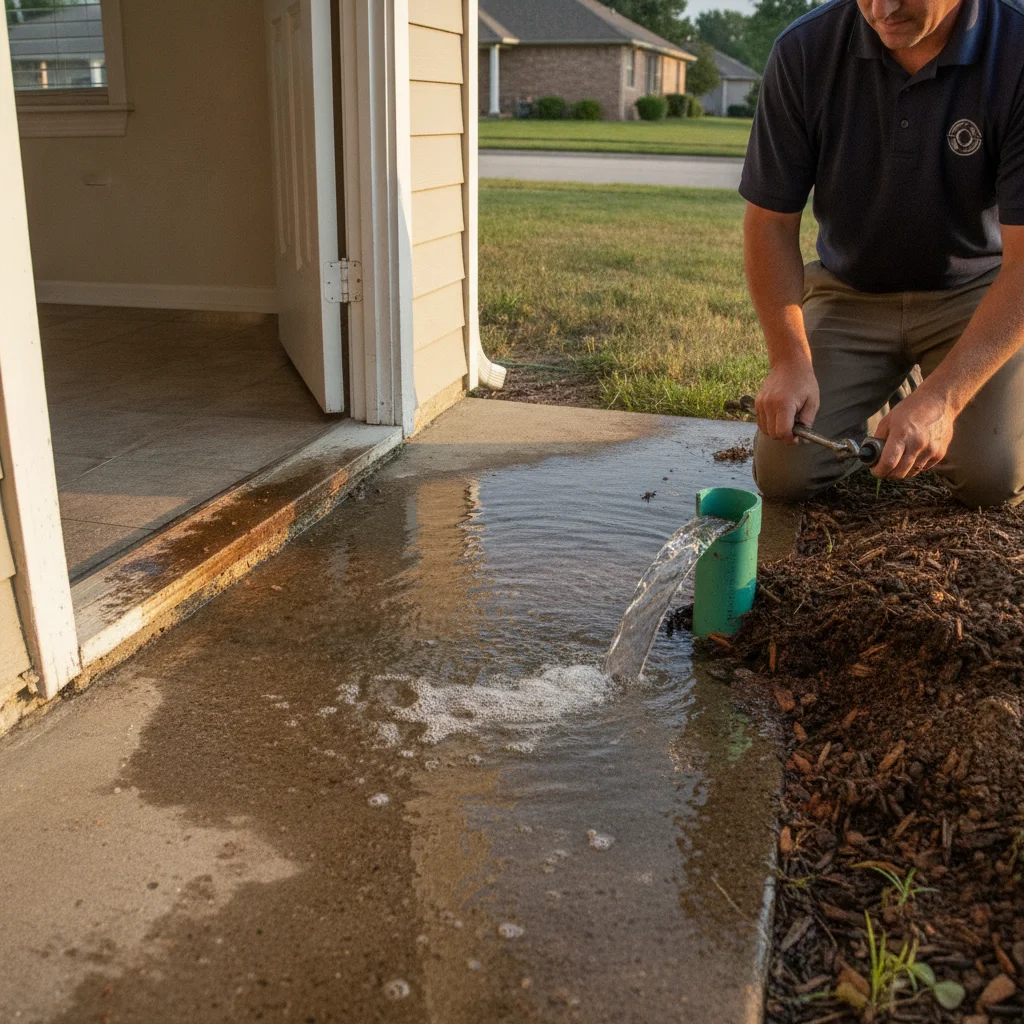
Confirm the irrigation source is shut down
Stop the water before anyone starts drying. Indoor work fails if a zone is still feeding the slab.
Find the irrigation controller and set the whole system to off. If you can reach the irrigation shutoff at the backflow preventer or the dedicated irrigation valve without walking through standing water, close it. Leave fire-protection valves alone.
If water has already crossed the threshold, treat electricity first. If electrical circuits or equipment are wet or near water, turn off power at the main breaker only when you can reach it without entering standing water. Otherwise call an electrician. Never switch power on or off while standing in water.
Don’t assume the water is clean. The EPA says to fix plumbing leaks and other water problems as soon as possible and dry items completely. If water or mold damage was caused by sewage or other contaminated water, call a professional experienced with contaminated-water damage. The matched restoration pro assesses what entered the house.
If you can’t find the shutoff, call an irrigation technician or landscaper for the yard side. Indoor moisture is water damage restoration. Restore Pro SD matches homeowners with licensed, independent restoration pros for that indoor work. It does not repair irrigation.
If the meter still turns with indoor fixtures off, the leak may still be open. Call the water agency on your bill. City of San Diego customers use the Public Utilities Department. Other cities and unincorporated county areas have their own districts. We could not confirm a countywide leak-adjustment program.
Trace water along slabs, walls, and flooring
Irrigation water follows the low edge of a San Diego slab: patio concrete, the patio-to-wall joint, a sliding-door track, the garage joint.
Walk that path from the soggy soil or broken head to the wall. Check stucco at grade and the door jamb. Inside, check baseboards, shoe molding, and the first few feet of flooring.
Vinyl plank, laminate, and carpet can look dry on top while the slab is wet. Tile can trap water too. See water trapped under tile floors if the wet zone shares a slab with a kitchen or bath.
Stucco at grade is a common travel path in Chula Vista, El Cajon, and Oceanside tract homes. Water that sits against the coating can move sideways and stain farther along the wall. See rainwater damage from a stucco wall leak for that same coating path after storms.
In many Clairemont and Mira Mesa side yards the irrigation main runs in the strip between house and fence. A leak there wets the slab along a whole elevation.
If you already see mold, or you suspect the HVAC is contaminated, do not run the system. The EPA says that can spread mold through the building. Allergic reactions to mold are common and can be immediate or delayed. For more detailed health information, consult a health professional.
A wet patch that never dries, a head that dribbles after the cycle, or a jumped water bill are outdoor clues. Many systems in this county cycle before dawn, so a leak can sit unseen until the floor feels soft. We could not confirm a typical number of days a leak goes unnoticed.
Separate landscape repair from indoor drying
Treat this as two jobs.
Landscape repair is the pipe, head, valve, and clock. An irrigation technician or landscaper owns that work. A plumber may be the right trade if the break is on the house side of the backflow or at the domestic service. Ask the person who will open the ground which section of pipe they are qualified to repair.
Indoor work is extraction, moisture mapping, and structural drying. The licensed independent restoration pro we connect you with does that work. Check a restoration contractor’s license on the CSLB license lookup before work starts. Restore Pro SD is a referral service. It holds no contractor license.
Keep both tracks moving. The EPA wants the water problem stopped and materials dried. The landscaper can isolate the zone while the restoration pro removes water from the slab and walls.
We could not confirm a typical price to fix an irrigation leak in San Diego County. Depth, pipe size, and hardscape change the number. Ask the irrigation contractor for their own figure. Restore Pro SD does not set prices and does not quote landscape work.
Coverage for yard sprinklers versus water that reached the interior is not a confirmed one-line rule. Read your policy and talk to your carrier. Our page on whether homeowners insurance covers water damage explains how claims often get framed.
If you rent, California Civil Code 1941, 1941.1, and 1942 set fitness for occupation, waterproofing and plumbing in good working order, floors in good repair, and repair-and-deduct rules after notice. Confirm the current text with the California Legislature before you use those remedies.
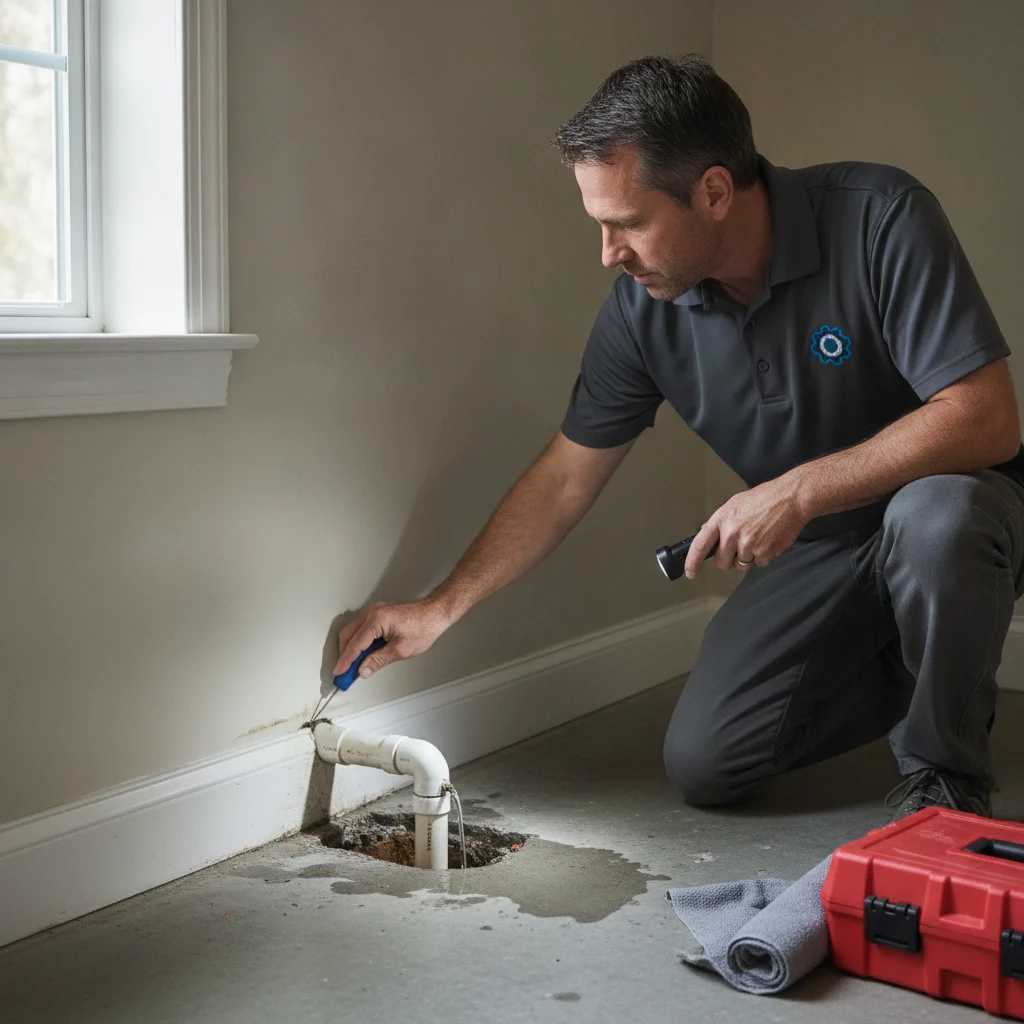
Check for hidden moisture at the slab edge
The last two inches do the lasting damage. Water sits at the slab edge, under the bottom plate, behind the baseboard, and in the carpet tack strip.
Have the matched restoration pro meter that line. A visual pass is not enough on San Diego slabs. Check the slab edge at the wall, the first course of drywall, loose vinyl at the door, and the closet on the wet exterior wall.
This can behave like slab-leak water damage even when the broken pipe is outside. A true slab leak is usually domestic plumbing under the house. Irrigation leak water damage starts in the yard and migrates in. The drying plan still has to treat the concrete and the bottom of the wall. Drying concrete after water damage takes time because concrete holds water.
If the moldy area is less than about 10 square feet (roughly a 3 ft by 3 ft patch), in most cases a homeowner can handle cleanup using EPA mold guidance. If there has been a lot of water damage, or mold growth covers more than 10 square feet, consult EPA mold remediation guidance and bring in a professional. Do not paint or caulk moldy surfaces. Clean up the mold and dry the surfaces before painting. Paint applied over moldy surfaces is likely to peel.
Mold behind baseboards is a common hide after a slow wet edge. A small stain at the shoe can sit over a larger wet plate.
HOA common-area irrigation can wet a unit slab in condos from Chula Vista to University City. The association may own the system. Interior finishes still need drying. Get that split in writing.
Review readings before finishes go back
The leak is off. The landscaper is closing the trench. Indoor work is not finished until moisture readings say the assembly is dry.
If water is still standing on the slab or in carpet, the matched pro starts with extraction, then airflow and dehumidification, then meter checks. Ask for a drying log: readings on the slab, the plate, the drywall, and any remaining flooring, taken across the drying period. What a water damage drying log records is the paper trail your insurer and your flooring installer will want.
Putting baseboards or new vinyl back over a still-wet edge traps moisture. That is how a yard leak becomes indoor mold. The EPA says to dry items completely.
Structural drying often runs three to five days. That describes the work, not when someone will arrive. Restore Pro SD publishes no arrival times.
Don’t restart the irrigation zone that wet the house until the outdoor repair is tested. A zone that still weeps will recharge the same slab edge. If the HVAC was shut down because of suspected mold, leave it off until that question is settled.
When finishes go back, keep splash and grade from dumping water at the same line. That is maintenance. Restore Pro SD gives no warranties. Only the matched local pro’s work is warrantied, and only on the terms in their contract.
When to call us
Call when irrigation water has reached flooring, baseboards, or the slab edge and you need indoor extraction and drying. Restore Pro SD is a referral service that matches you with licensed, independent local water damage professionals. Call us at (858) 400-4586 and we’ll connect you with a licensed local restoration pro.