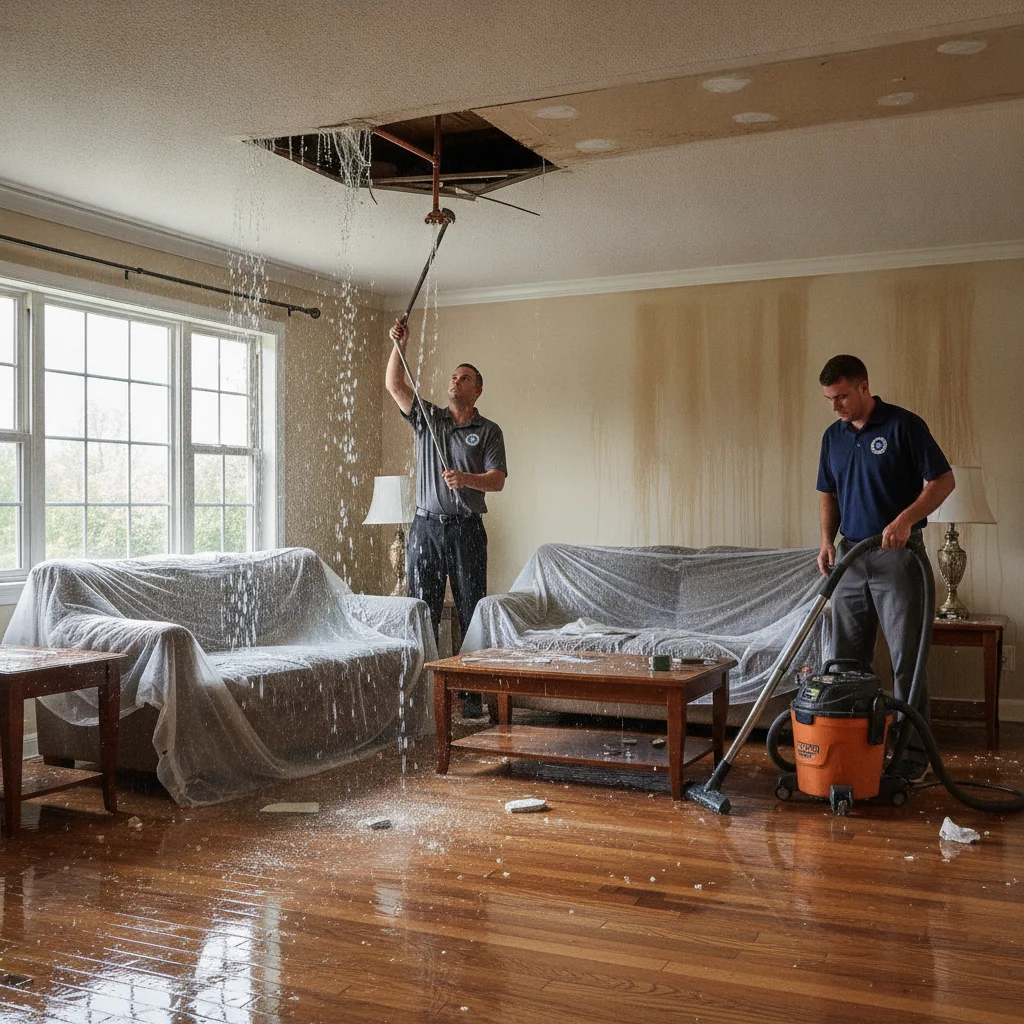
Treat a sprinkler discharge as two separate workstreams. One addresses the sprinkler system. The other documents and restores the water-affected property. Keeping those scopes separate gives each contractor a clear assignment.
Confirm who will address the sprinkler system
The first decision concerns responsibility for the sprinkler equipment. Identify who can inspect the system, document its condition, and specify any required repairs. That company may be different from the independent pro handling sprinkler discharge water cleanup.
Start with the property’s decision chain. In a rented home, condominium, commercial suite, or managed building, that chain may include an owner, manager, or association representative. Record each person’s role instead of relying on a verbal handoff.
Ask the sprinkler-system company to provide written answers to these points:
- What part of the system was inspected?
- What condition did the inspector document?
- What system work, if any, was authorized?
- Who will confirm that assigned system work is complete?
- Are there access limits that affect the restoration scope?
Don’t place sprinkler inspection or repair inside a general water cleanup description. If one contractor proposes both scopes, ask for separate tasks, credentials, and completion records. You should be able to tell which company accepted responsibility for each item.
Restore Pro SD serves all 67 cities in San Diego County. However, the approved site record doesn’t identify a single local permitting or inspection path for every sprinkler incident. Confirm current requirements with the city or county office that has jurisdiction over the property.
Restore Pro SD isn’t a contractor and doesn’t service fire suppression systems. We match property owners with licensed, independent water damage professionals. Before signing, you can check a contractor’s current record through the CSLB license check.
Track water beyond the visibly wet area
Don’t let the first visible stain define the inspection boundary. Ask the restoration pro to check and document the spaces surrounding the discharge area. The written scope should identify what was examined, what wasn’t accessible, and what needs another review.
Request a room-by-room moisture map. It should use consistent names for rooms, walls, ceilings, floors, and adjoining spaces. In a multilevel property, the map should also state which level contains each recorded location. Labels such as “bedroom wall” aren’t enough when several bedrooms exist.
Ask the pro to photograph the initial condition before materials or contents move. Each image should connect to a named location. The file should also distinguish visible observations from meter readings or other measurements. If the pro uses an instrument, ask for the reading, unit, location, and date.
Include nearby closets, corridors, cabinets, wall sections, and rooms in the discussion. That doesn’t mean every nearby material requires restoration. It means the contractor should record which areas were checked and how each decision was reached.
Keep a separate list for contents. Note where each item started, who moved it, and where it went. Don’t describe an item as restorable or unsalvageable without the independent pro’s written basis.
No water category for a sprinkler discharge appears in this site’s approved claims ledger. This article therefore doesn’t assign one. Ask the restoration professional to record any classification used and explain the basis for that selection.
Separate water cleanup from fire residue in the scope
The water restoration scope should say what the pro observed. It shouldn’t imply that smoke, soot, or another residue exists unless someone documented it. Likewise, a fire-related scope shouldn’t replace the room-by-room water record.
Ask for separate descriptions when the file includes both water damage and documented fire residue. Each description should identify the affected locations, proposed work, material decisions, and responsible contractor. Keep the supporting photographs and measurements tied to the correct part of the scope.
This separation matters during comparison. One proposal may include water extraction, material handling, drying documentation, or repair tasks. Another may include work connected to documented fire residue. A single broad label makes it difficult to see which company proposed each task.
Our fire and water damage restoration matching service connects San Diego County property owners with licensed, independent local pros. Restore Pro SD doesn’t inspect sprinkler equipment, remove water, clean residue, or repair materials.
For more context on projects involving both types of damage, read our guide to fire and water damage restoration in San Diego. Use that broader guide alongside the discharge-specific records for your property.
Before approving a scope, ask the contractor to mark assumptions clearly. An observation, proposed task, system repair, and material decision shouldn’t appear as if they’re the same thing.
How the independent pro documents drying
Ask the independent restoration pro to organize the drying record as a timeline. The file should let you compare the documented starting condition, work performed, later measurements, material decisions, and stated completion basis.
A useful location record includes the room name, surface or material, exact measurement point, date, reading, and unit. If a point moves between visits, ask the pro to explain how the new location relates to earlier measurements. Consistent labels make the entries easier to follow.
Request notes for every material removed, opened, moved, or left in place. Each note should identify the location and the reason recorded by the contractor. If access was limited, the file should say where and why. It should also identify who will determine the next step.
Ask for progression, not only final readings. The record should connect changes in measurements to the work described for that area. Photographs can support the file, but captions should state the location and what the image is meant to document.
This site’s approved claims ledger doesn’t contain a verified IICRC procedure for sprinkler discharge water damage. The page can’t assign an IICRC standard or drying target. If a contractor relies on an IICRC document or certification, ask for its exact name and how it applies to the proposed work.
Finally, ask the pro to define completion in writing. The explanation should refer to the recorded locations and measurements. Don’t substitute a general phrase such as “drying complete” for the underlying project record.
Coordinate restoration with system repairs
Use one coordination sheet for the sprinkler-system company, restoration contractor, property representative, and any official involved with the address. List each open task, its owner, the required record, and who can confirm completion.
Keep the two main scopes visible. The sprinkler-system side should address only the system work assigned to that company. The restoration side should address the water-affected property included in the independent pro’s contract. Neither file should silently certify the other contractor’s work.
Ask both companies about access and sequencing before materials are closed or final finishes begin. Get their answers in writing. If their instructions conflict, identify the disputed location and ask the responsible parties to resolve it directly.
Don’t create your own permit, inspection, safety, or reopening rule from general online advice. No incident-specific rule for this topic could be confirmed in the approved site ledger. Check the current requirement with the authority responsible for the property address and keep its written direction with the job file.
Before the final handoff, compare the moisture map, drying record, material decisions, system documents, and remaining repair list. Note any location that appears in one record but not another. Ask the responsible contractor to explain the difference.
Restore Pro SD performs no restoration or sprinkler work. We don’t set contractor prices or provide warranties. The property owner contracts with and pays the matched independent professional directly.
When to call us
If a sprinkler discharge affected ceilings, walls, floors, contents, or surrounding areas, ask a licensed Water Damage Restoration pro to define the cleanup and drying scope. Keep sprinkler-system inspection and repair assigned separately. Call (858) 400-4586 to hear the recording-consent notice, then leave a recorded message for Restore Pro SD.