Structural drying in San Diego. Dry to readings, not by guess.
We match customers with licensed, independent local water damage professionals. Drying is a calculated process, not a guess. Ask an independent professional how they will size air movers and dehumidifiers, how they will take moisture readings, and how they will decide materials are dry. Restore Pro SD matches you with a licensed, independent local water damage professional serving San Diego County.
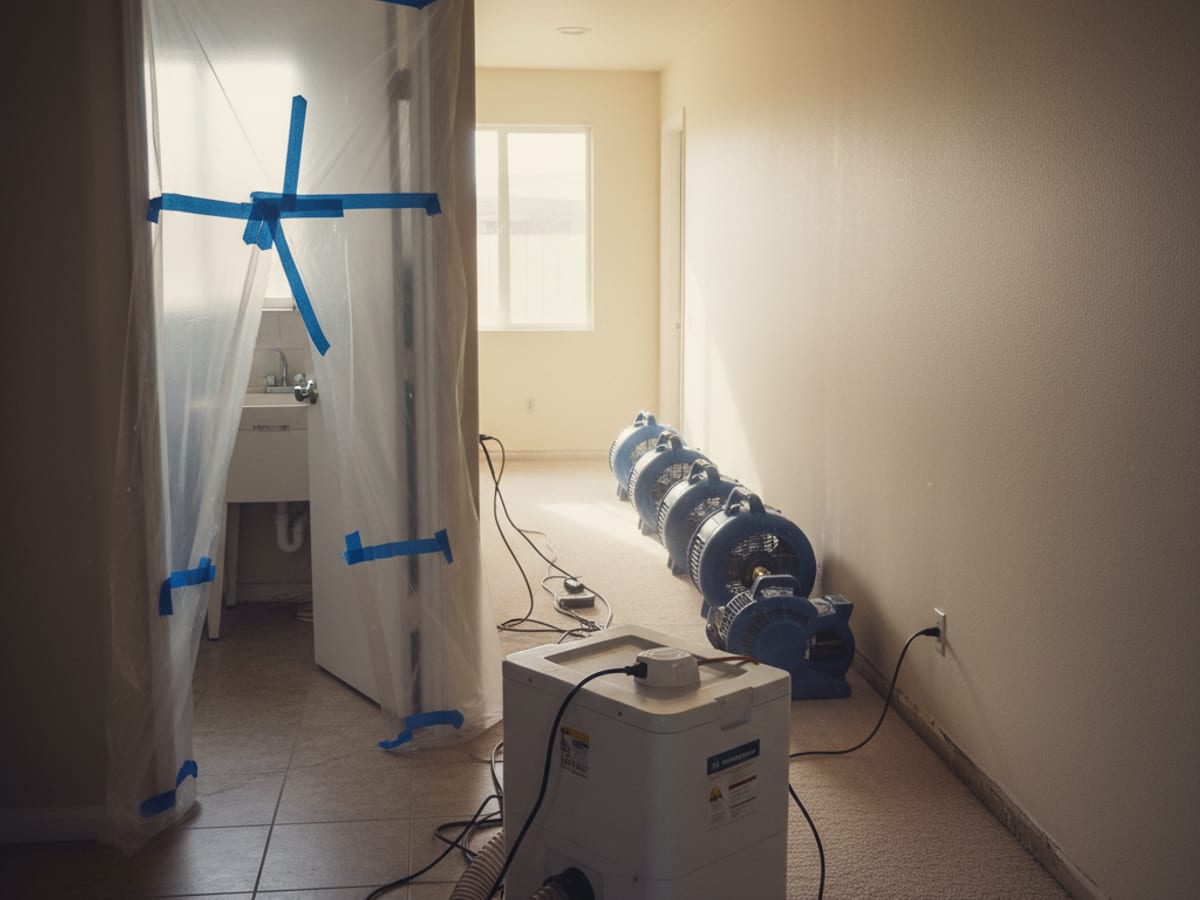
What's included in structural drying?
- Ask how they will size equipment for the cubic footage of your rooms
- Ask how they will keep indoor humidity dropping when outdoor air is already wet
- Ask how often they will log moisture readings
- Ask whether wall cavities or floors need more than surface airflow
- Ask what reading they will use as done, compared with a dry room of the same materials
When do you need structural drying?
- After water extraction has removed the standing water
- After a flood cut to dry the wall cavity above the cut line
- Following a slab leak or supply line failure
- Hardwood floors that got wet and you want to save them
- Cabinet bases, stair runners, or other materials that cannot be torn out fast
What do homeowners ask about Structural Drying?
Why so many fans and dehumidifiers?
Air movers move wet air off the material. Dehumidifiers pull that moisture out of the air. Ask the independent professional how they size the set for your cubic footage, not a county average.
Can I shut the equipment off at night?
Ask the independent professional. Drying usually needs continuous run time. They should tell you whether a night shutoff would reset the curve, and how they placed equipment relative to bedrooms.
How do you know it's dry?
Ask which meters they will use on wood, drywall, and hard floors, and what nearby dry material they will use as a baseline. Readings should be written down, not guessed.
Will the equipment dry my hardwood floors?
Ask whether they think the floor can dry in place, and what would make them recommend removal instead. Catching the water early helps. This page does not promise a save.
Where do we offer Structural Drying in San Diego County?
We connect you with structural drying pros in every city and community in San Diego County. Pick your city for local climate notes and service specifics.
See structural drying in all 67 cities
Need structural drying in San Diego County?
Leave a message and you get a call back. We match you with a licensed, independent local water damage professional.