Mold remediation in San Diego. Matched with a licensed independent pro.
We match customers with licensed, independent local water damage professionals. Ask an independent professional how they will contain the work, remove affected material, and verify the job, and whether the moisture source will be fixed first. EPA guidance is to fix water problems as soon as possible and dry items completely. Restore Pro SD matches you with a licensed, independent local water damage professional serving San Diego County.
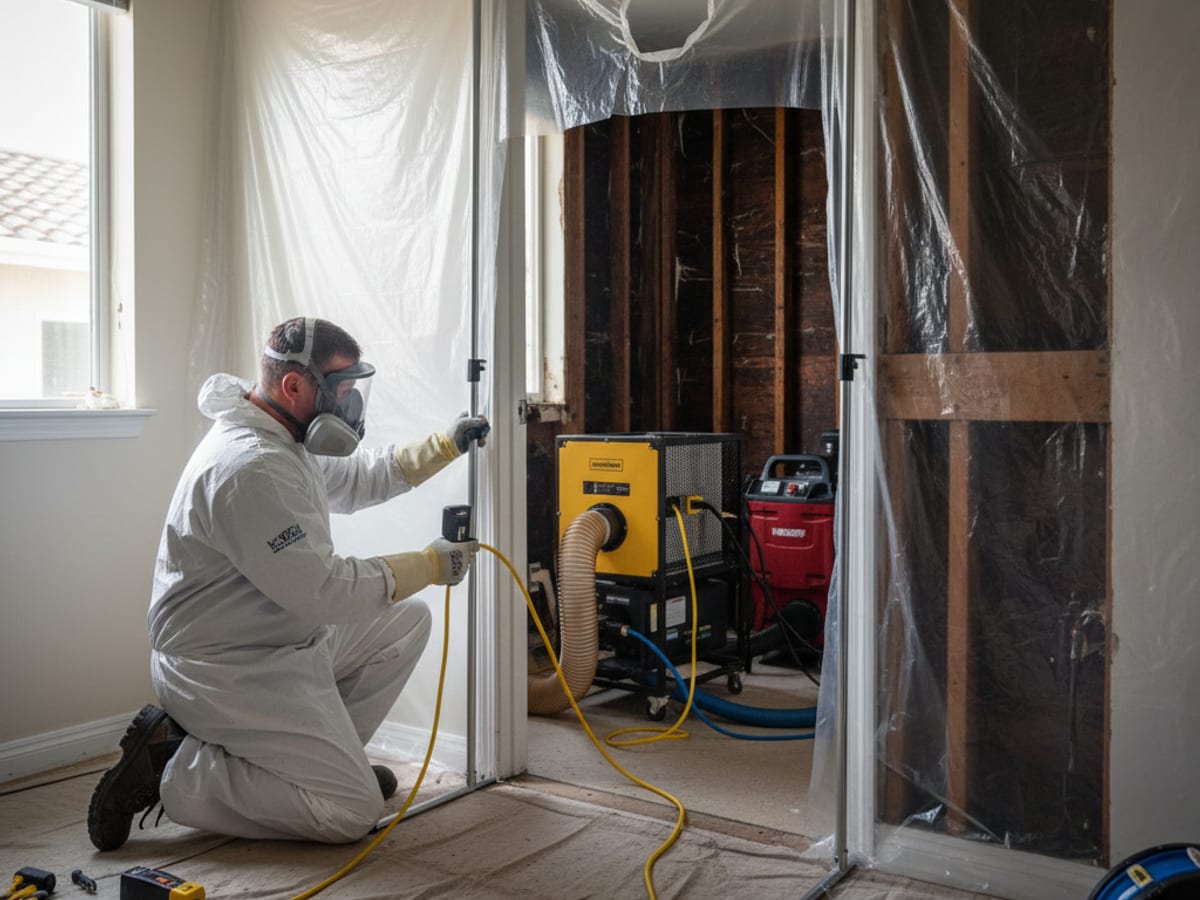
What's included in mold remediation?
- Ask how they will find the moisture source before removal starts
- Ask how they will contain the work zone and filter the air
- Ask which materials they expect to remove versus clean
- Ask whether a separate tester will do clearance sampling, if you want that
- Ask who will repair the leak, roof, or HVAC problem that fed the mold
When do you need mold remediation?
- Visible mold on drywall, baseboards, ceilings, or under cabinets
- Persistent musty smell, especially in closets and bathrooms
- Recent water damage that did not get dried properly
- A previous occupant or inspector flagged elevated mold spore counts
- Allergy or respiratory symptoms that ease when away from the home
- Real estate transaction with mold called out in inspection
What do homeowners ask about Mold Remediation?
Should I get a mold test before remediation?
Ask an independent tester if you want sampling for health questions, a real-estate file, or a third-party check after the work. Restore Pro SD does not perform testing and does not decide whether a test is required.
Is mold dangerous?
Health effects depend on the person and the situation. This page is not medical advice. EPA guidance is to fix water problems as soon as possible and dry items completely. If sewage or other contaminated water caused the damage, call a professional experienced with that work.
Will insurance pay for mold?
Ask your carrier whether mold from a recent sudden water loss is covered, and what limits apply. Long-term seepage mold is often a different question. You contract with and pay the independent professional directly.
Why does mold keep coming back?
Ask the independent professional to identify the source before they start removal. EPA guidance is to fix water problems as soon as possible and dry items completely.
Do I need to leave the house during mold remediation?
Ask the independent professional how they will isolate the work zone, and whether occupants with breathing problems should stay elsewhere. Restore Pro SD does not make that medical call.
Where do we offer Mold Remediation in San Diego County?
We connect you with mold remediation pros in every city and community in San Diego County. Pick your city for local climate notes and service specifics.
See mold remediation in all 67 cities
Need mold remediation in San Diego County?
Leave a message and you get a call back. We match you with a licensed, independent local water damage professional.