A slow leak under a Lemon Grove sink, behind a shower, or along a stucco wall often shows up late. You see a stain, a soft baseboard, or mold on the back of a cabinet. Cleanup only holds if the water is stopped first and the wet materials are actually dry.
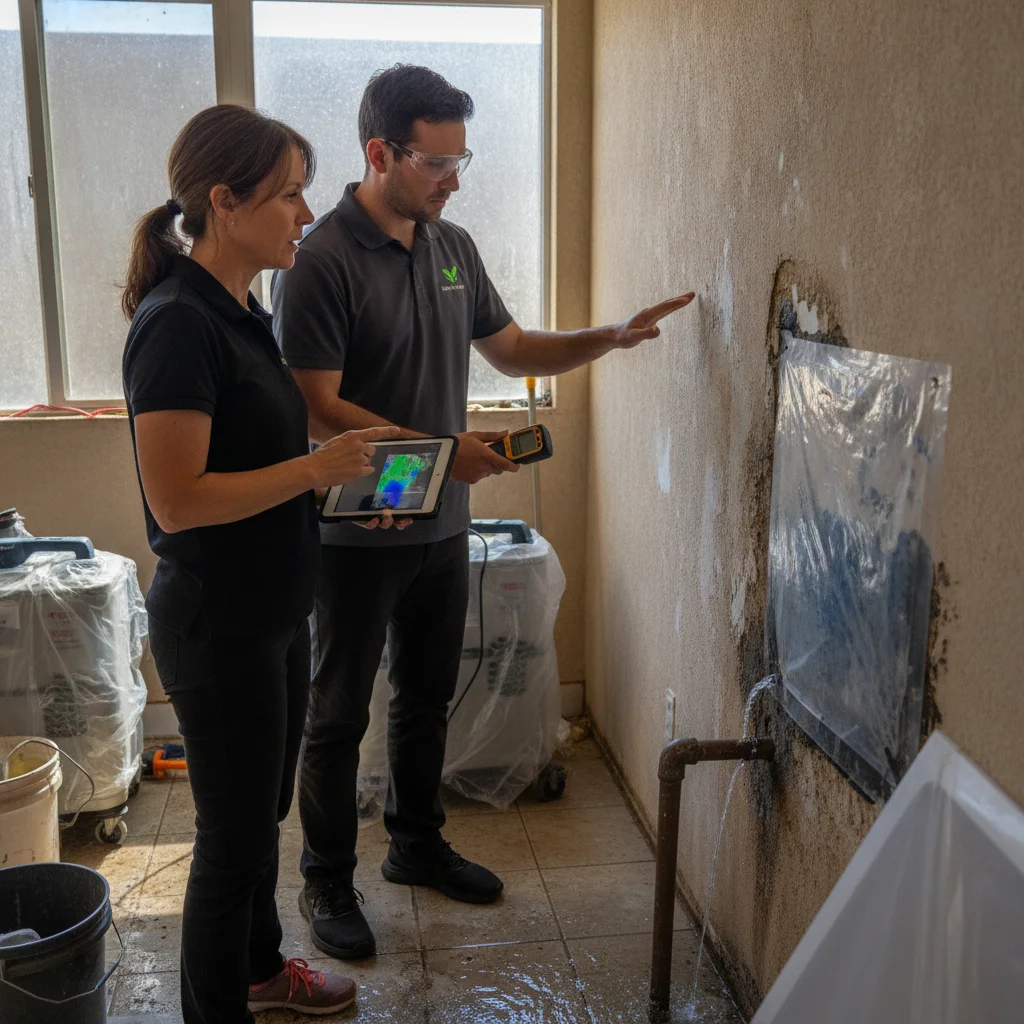
Confirm the moisture source before remediation
Mold cleanup after a leak in Lemon Grove fails when the stain gets wiped and the pipe, roof, or irrigation line still weeps. The EPA mold guidance is blunt: fix plumbing leaks and other water problems as soon as you can, then dry items completely. Painting, bleaching, or running a fan on a wet cavity does not replace that step.
Start at the room that stained, then work back to the water. In this East County city that is often a supply line in a 1950s or 1960s bath, a shower valve in the wall, a kitchen drain at the cabinet toe-kick, or a roof-to-stucco path after a winter storm. Homes along Broadway, Lemon Grove Avenue, and Massachusetts Avenue sit on small lots. Irrigation against the foundation and short roof overhangs can wet the lower wall without leaving a puddle in the room.
If the water was sewage or another contaminated source, the EPA says to call a professional experienced with that kind of damage. That is a different job than wiping a clean supply-line leak. The matched pro may need sewage cleanup in the same scope as the mold work.
Stay out of standing water around outlets and appliances. The CDC’s electrical-hazard advice is to shut power at the main breaker only when you can reach it without walking through water. Never switch power on or off while you are standing in water. If the panel is in a wet garage or a wet laundry room, stop and get an electrician.
Do not assume the HVAC system can “dry the house” while mold is in the return or the coils. The EPA says not to run the system if you know or suspect it is contaminated with mold, because it can move spores through the building. Ask the independent pro to treat that as its own decision, not a default.
If you rent, California Civil Code 1941 and 1941.1 speak to a dwelling that lacks effective waterproofing, weather protection, or plumbing in good working order. Civil Code 1942 describes the tenant’s repair-and-deduct path after notice, with limits. That is landlord-tenant law, not a restoration protocol. Put the leak in writing, then get a licensed pro looking at the wet materials. Our rental water-damage notes walk through that sequence without turning Restore Pro SD into a legal advisor.
Check beyond the first visible stain
The patch you can see is often the edge of the wet path. Water from a shower valve, a slab-adjacent pipe, or a roof leak at the fascia can run along plates, paper-faced drywall, and the back of baseboards. Mold behind baseboards is a common Lemon Grove find in older cottages and small multiplexes, because the finish looks fine while the cavity stays damp.
Have the independent pro check the room next door, the closet on the other side of the wet wall, the cabinet kick, and the flooring edge. Many Lemon Grove houses sit near grade, not over a North County basement. The hidden wet zone is more often a wall cavity, a toe-kick, a hallway closet, or flooring on slab than a below-grade room. Open a small inspection hole only when the pro can contain dust. A random demo hole in a living room on a shared wall can spread the problem.
The EPA’s cleanup page draws a size line homeowners actually use. If the moldy area is less than about 10 square feet (roughly a 3 ft by 3 ft patch), in most cases a homeowner can handle cleanup with EPA tips. If there has been a lot of water damage, or growth covers more than 10 square feet, consult the EPA’s mold remediation guidance and bring in a professional. That is a consult trigger, not a promise that a small patch is always a DIY job. Hidden wet insulation, sewage, or a contaminated HVAC system still needs a pro.
Do not paint or caulk over the stain to “hold you over.” The EPA says paint applied over moldy surfaces is likely to peel, and the mold has to be cleaned and the surface dried first. If someone already painted it, read can you paint over mold and plan on going back to the material, not adding another coat.
A musty smell with no obvious spot is a reason to look further, not a diagnosis by itself. So is staining that keeps spreading after the visible leak was “fixed.” Ask for moisture readings on the suspect wall, the base plate, and the flooring edge, and for a simple map of what is still wet. Water damage can lead to mold when materials stay damp. The reading, not the color of the stain, tells you whether cleanup is even ready to start.
Compare containment, removal, and drying
Mold remediation in Lemon Grove is not one product. It is three jobs that a licensed independent pro should separate on paper: containment, removal, and drying. If a bid lumps them as “mold cleanup” with no map of the work area, you cannot tell what you are buying.
Containment is how the pro keeps the rest of the house out of the work. That usually means plastic barriers, controlled access, and filtered air moving out of the work zone so spores do not ride into the hall. Ask where the barrier will sit in your actual floor plan. A one-bath house off Federal Boulevard is a different layout than a Broadway storefront with an apartment above it.
Removal is what comes out. Paper-faced drywall, wet insulation, and swollen cabinet backs often cannot be cleaned in place. Framing and some hard surfaces can often be cleaned and kept if they can be dried. The matched pro should say which materials leave and which stay, and why. That is the part that decides whether you are looking at a small cut-out or a larger rebuild.
Drying is the job that makes the first two stick. If the plate, subfloor, or stucco-backed cavity is still wet, growth can return on the new paper. Structural drying is its own scope: air movement, dehumidification, and recorded moisture readings until the materials are actually dry. Ask how the pro will document that, not only how the room will look when the plastic comes down.
Can mold truly be remediated? Yes, when the water source is gone, contaminated material is cleaned or removed, and the remaining structure is dry. It is not a wipe-and-spray event, and it is not a warranty from Restore Pro SD. The professional mold remediation process is the sequence to compare against a bid. Ask whether the pro’s mold work follows IICRC S520 and whether related water work follows IICRC S500. Those are voluntary industry protocols. They are not a California license.
Cost is a fair question and a bad place to invent a number. No public Lemon Grove rate schedule turned up for this page, and Restore Pro SD does not set prices. What you pay the independent pro depends on how many square feet are involved, what has to come out, how much containment the layout needs, and how long drying takes. Use our mold remediation cost notes to see which line items belong on a bid. Then have the pro itemize them for your house.
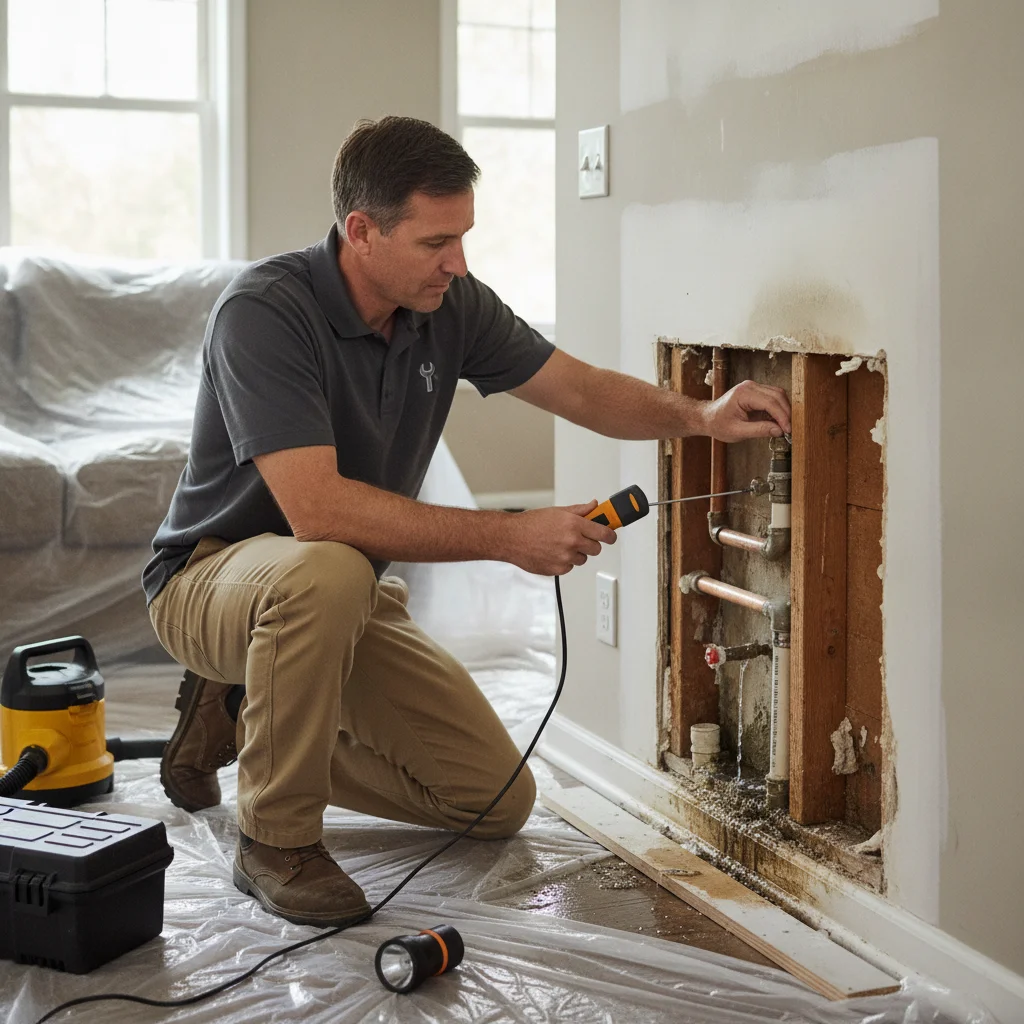
Verify the independent pro through official sources
Restore Pro SD is a referral service. We match you with licensed, independent local water-damage and mold-remediation pros. We do not hold a contractors license, we do not send a brand crew, and we do not warrant the physical work. The person who cuts the drywall should be the person whose license you can look up.
Water-damage repair and related reconstruction in California are licensed through the Contractors State License Board. Before work starts, take the license number the pro gives you and run it on the CSLB license check. Confirm the name, the city, the status, and the classification match the person at the door. IICRC credentials (WRT, ASD, S500, S520) are training marks. They do not replace a CSLB license. Our verify a restoration company and choose a mold remediation contractor pages are the checklist to keep next to that search.
Ask who is contracting with you. You pay the independent pro directly. Get the moisture map, the containment plan, the removal list, and the drying plan in writing. If drywall, cabinets, or finishes come out, ask who pulls any City of Lemon Grove building permit for the rebuild. That is a city question, not something Restore Pro SD can stamp.
Homeowners insurance may or may not pay for mold cleanup after a leak. Coverage turns on the cause, the policy language, and what the carrier accepts. A sudden pipe failure is a different claim conversation than a long, slow seepage the homeowner already knew about. We do not speak for carriers. Document the leak, the room, and the readings, then ask your insurer. Does homeowners insurance cover water damage is the starting point for that call.
If someone offers ozone machines as the cleanup, pause. The EPA’s ozone-generator page says that at concentrations that do not exceed public health standards, ozone has little potential to remove indoor air contaminants, and that ozone can be harmful. Containment, removal, and drying are the work to compare. A machine in the hallway is not a substitute.
Use Lemon Grove details only when sources confirm them
Generic East County mold pages treat Lemon Grove like El Cajon or a North County basement town. The details that matter here are the ones you can check.
Lemon Grove is an incorporated city in San Diego County. Building permits inside city limits are a City of Lemon Grove question, not a County of San Diego one. Spring Valley next door is unincorporated, so a house a few blocks across the line may be under County Building. Confirm which office you are in before anyone prices a rebuild. Look up Building or Community Development on the City of Lemon Grove site (lemongrove.ca.gov) and ask whether replacing the drywall, insulation, or cabinets in your scope needs a permit. A specific permit fee or mold ordinance number could not be confirmed for this page. The city counter is the source, not a blog.
Housing along Broadway and the La Mesa line includes older single-family streets and small apartment buildings. Further east you will see later tracts. Year built, foundation type, and whether you have a short crawl or a slab are facts on your property, not averages. If you need the year, use the County Assessor record. If you need the crawl, look for an access hatch or have the pro check. Do not let a page invent a percentage of “Lemon Grove cottages” with dirt crawl spaces.
Winter rain on SR-94 and summer irrigation on small lots are both real wet-season patterns here. Neither one is a measured moisture reading for your wall. The matched pro still has to find the actual source in your bath, roof, or slab edge.
EPA health language is limited and worth keeping limited. Allergic reactions to mold are common and can be immediate or delayed. Molds can cause asthma attacks in people with asthma who are allergic to mold. Mold can irritate the eyes, skin, nose, throat, and lungs of both allergic and non-allergic people. That EPA brief guide does not list every possible health effect. For symptoms, talk to a health professional. This page will not name species or invent a “toxic” label.
If a local rule, fee, or license claim is not on the CSLB site, the City of Lemon Grove site, or the EPA pages linked here, treat it as unconfirmed. Ask the authority that actually sets it.
When to call us
Call when the leak is stopped or still active, the stain is larger than a small patch, the smell has no source, or you need a licensed restoration pro to contain, remove, and dry the wet materials. Call us at (858) 400-4586 and we’ll connect you with a licensed local restoration pro.