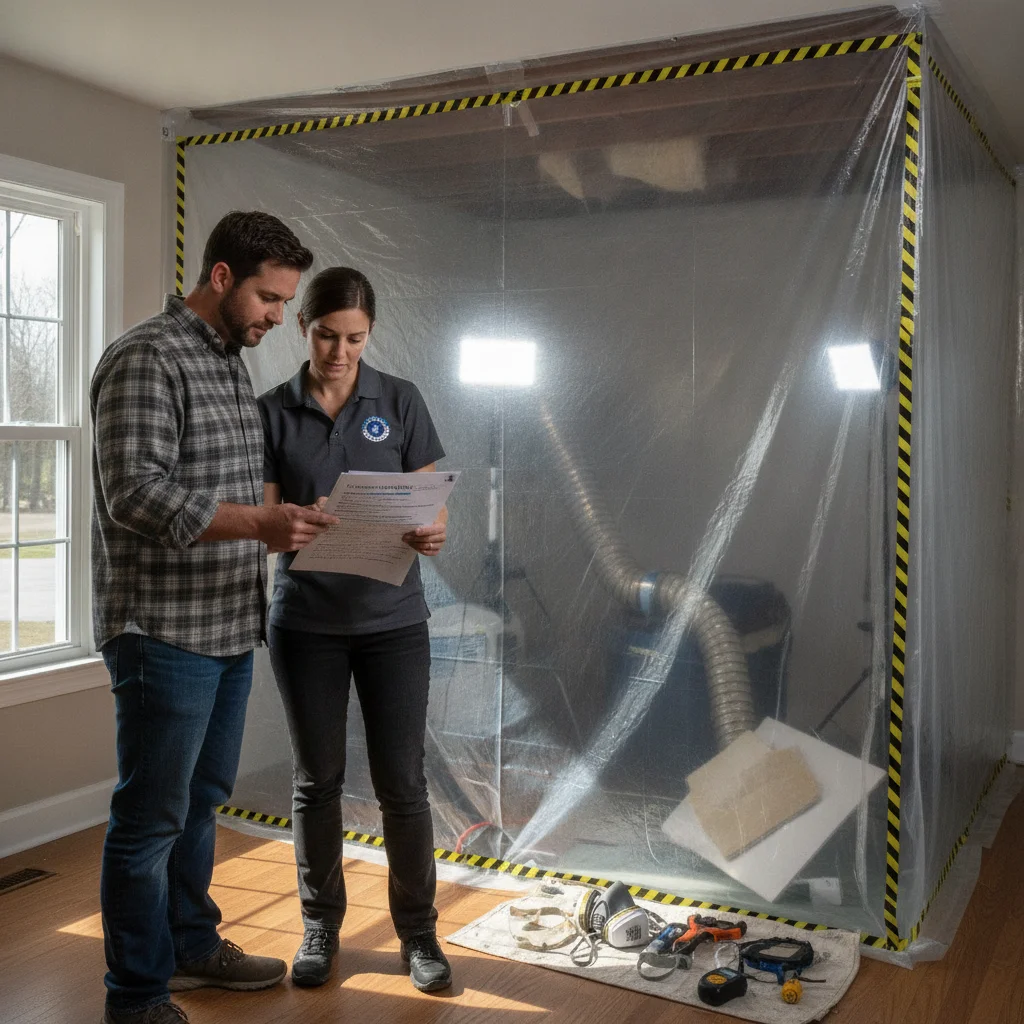
Choose mold remediation contractors by comparing their written scopes, credentials, containment plans, and project boundaries. In San Diego County, the right choice is the independent contractor who clearly documents what’s included, excluded, and subject to change. Don’t make the decision from one headline price.
Start with scope, inspection, and written findings
The first comparison isn’t the final price. It’s what each contractor believes the project includes. Ask every contractor to describe the affected areas in writing before you compare proposals.
The written findings should use clear room names and locations. “Bedroom wall” isn’t as useful as “north wall of the downstairs bedroom.” Photos, labels, or a simple diagram can make each proposal easier to follow.
Ask each contractor to address these points:
- Which rooms, surfaces, and materials are included?
- What observations support the proposed work?
- Was any area inaccessible during the inspection?
- Does the proposal address a suspected moisture source?
- What could cause the written scope to change?
Don’t assume two proposals describe the same project. One might include a wall cavity, while another covers only the visible surface. A third might leave that decision open until work begins. Those differences should appear on your comparison sheet.
Ask who prepared the findings and whether another party provided inspection information. If testing was performed, request the written report and identify who produced it. Don’t rely on a verbal summary when the contractor’s proposal refers to outside findings.
Keep the contractor’s findings separate from your own observations. Record where you noticed staining, odors, water, or damaged finishes. Present that list to every bidder. It gives each contractor the same starting information.
The EPA’s mold resources can serve as a neutral reference while you review unfamiliar terms. If a proposal uses technical language, ask the contractor to explain it in plain words and connect it to a specific part of your property.
Ask how containment and air control will work
Containment and air control shouldn’t be a vague line item. Ask each contractor to draw or describe the planned work boundary. The answer should help you picture which rooms are inside the project and which remain outside it.
Ask how workers, tools, debris, and removed materials will move through the property. Find out whether the proposal includes protecting floors or belongings along that path. If an entry, hallway, or shared room is involved, have the contractor identify it.
The proposal should answer practical questions:
- Where will the work boundary begin and end?
- How will people enter and leave the work area?
- What happens to belongings inside that area?
- Which air-control equipment is included in the proposal?
- Who checks the setup during the project?
- What event would require the boundary to change?
You don’t need to accept unexplained phrases. If a contractor lists “containment” or “air control,” ask what that means for your rooms. Request the equipment, placement, and monitoring details in writing.
Also discuss access before choosing a contractor. Ask whether occupants can use nearby rooms during the work. If the answer depends on conditions found later, have the contractor identify who makes that decision and how you’ll be notified.
A careful proposal also explains how changes receive approval. Ask whether work stops before an expanded scope begins. Request written authorization terms for added materials, labor, cleaning, or repairs. This keeps a field decision from becoming an unclear charge later.
When people search for mold remediation experts, technical language can sound persuasive. Clear project details matter more. Compare what each contractor commits to doing, documenting, and explaining.
Check the independent contractor’s credentials
Restore Pro SD is a referral service, not a restoration contractor. We match customers with licensed, independent local water damage professionals. The customer contracts with and pays the selected professional directly.
Verify the contractor before signing. Start with the exact legal or business name printed on the proposal. Then use the CSLB’s official license lookup to check the current record. Don’t rely only on a number printed on a vehicle, business card, or website.
Ask the contractor to identify the name that will appear on your agreement. If the proposal, license record, and payment instructions show different names, request a written explanation before proceeding. You should know which independent business is responsible for the contract.
Insurance should also be verified through a current source. Ask for the insurer’s name and instructions for confirming the policy directly. Don’t treat an undated document as final confirmation.
Some contractors may present training certificates or other industry credentials. Ask who issued each credential, whose name appears on it, and how you can verify it. Keep those certificates separate from the contractor’s state license record on your comparison sheet.
Check who will supervise the project and who can approve changes. Ask whether subcontractors may enter the property. If so, request the names and responsibilities of those businesses before work begins.
Restore Pro SD serves communities across San Diego County. Whether the property is in San Diego, Chula Vista, Oceanside, or El Cajon, use the current official source for license verification. Don’t assume a contractor’s marketing language answers that question.
Compare removal, cleaning, and repair boundaries
A mold proposal can contain several different work categories. Put removal, cleaning, disposal, and repair on separate rows when you compare contractors. This exposes exclusions that a single project total can hide.
Ask each contractor to identify which materials are proposed for removal. The answer should name the room and material, not just a broad area. If the contractor expects to make that decision after opening a surface, ask how the change will be documented and approved.
Cleaning deserves the same detail. Have each bidder list the surfaces, belongings, or areas included in the cleaning scope. Ask what isn’t included. If contents must be moved, find out who handles them, where they go, and whether their return is part of the proposal.
Repair boundaries often create confusion. Don’t assume a remediation proposal includes rebuilding every removed finish. Ask whether drywall, baseboards, flooring, cabinets, paint, or other finishes are included. Mark each item as included, excluded, or undecided.
Use the same comparison structure for every proposal:
- Inspection findings and affected areas
- Work boundaries and access routes
- Materials proposed for removal
- Cleaning and disposal tasks
- Repairs and finish work
- Documentation provided at completion
- Conditions that could change the scope
If you want a clearer picture of the project stages, review our guide to the professional mold remediation process. Then ask each contractor where their proposal begins and ends within that process.
A proposal doesn’t need identical wording to another proposal. It does need enough detail for you to identify material differences. If one bidder includes repair work and another excludes it, compare those boundaries before comparing totals.
Watch for gaps in vague remediation proposals
When deciding how to choose a mold removal company, look for missing decisions. A short proposal may still be clear. A long proposal can remain vague if it never identifies rooms, materials, exclusions, or change terms.
Watch for broad descriptions that aren’t tied to your property. “Treat affected areas” doesn’t tell you which areas qualify. “Complete remediation” doesn’t define removal, cleaning, disposal, or repair. Ask for those details before signing.
Payment terms also need plain language. Request a written schedule showing when payments become due and what work corresponds to each stage. Restore Pro SD doesn’t set contractor prices or payment policies. Those terms come from the independent professional you hire.
Ask these final questions before making your choice:
- Who is the named contracting business?
- Which written findings support the scope?
- What work is specifically excluded?
- Who approves a scope change?
- How will added work be priced and authorized?
- What documents will you receive when work ends?
- If a warranty is offered, where are its written terms?
- Who handles questions after the project closes?
Save every version of the proposal. If a contractor revises one section, ask for a complete updated copy with the revision date. Don’t rely on scattered texts or verbal additions to define the final agreement.
San Diego County includes many separate local jurisdictions. Ask the contractor which authority applies to your property and who handles permit questions, if any. If the contractor gives a regulatory answer, confirm it with the current official authority before relying on it.
When you’re ready to speak with an independent local professional, our mold remediation matching service can connect you with a pro in the network. You’ll still review the contractor’s scope, credentials, and agreement before hiring.
When to call us
If suspected mold follows water damage, or the planned scope includes removal and repair, ask for a licensed Water Damage Restoration pro. Call us at (858) 400-4586 and we’ll connect you with a licensed local restoration pro.