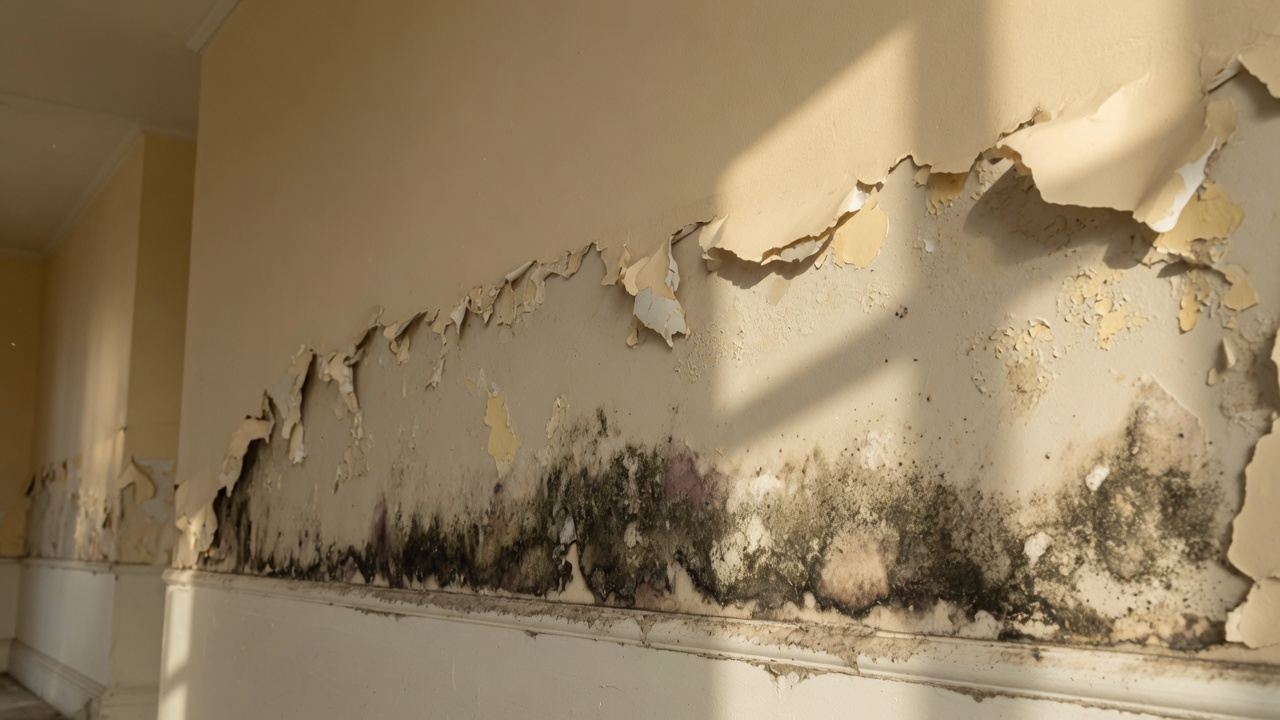
No. You cannot paint over mold and skip cleanup. The EPA mold cleanup guidance is direct: “Do not paint or caulk moldy surfaces. Clean up the mold and dry the surfaces before painting. Paint applied over moldy surfaces is likely to peel.”
A dark patch in a Pacific Beach bathroom, or a halo above the baseboard in an El Cajon slab ranch, is a moisture problem. Mold-killing primer, rubbing alcohol, and a rented ozone machine do not change that. The independent restoration professional you are matched with has to find what is still wet and remove colonized material. A painter comes after the wall is actually clean and dry.
EPA says do not paint or caulk moldy surfaces
Paint sits on the face of the drywall. Mold on paper-faced gypsum lives in the paper, and often in the cavity behind it. A fresh coat can hide a stain in a Mission Valley condo for a short stretch. Then the finish fails, the musty smell returns, and the next showing still has the same line.
Covering the spot does not stop the water. It does not dry the paper. It does not tell you whether the bottom plate is still wet. An Ocean Beach cottage holds moisture longer than a dry afternoon in Santee. Inland heat can bake the painted face while the plate stays wet against the slab.
If the water came from sewage or another contaminated source, stop handling the wall yourself. The EPA says to fix plumbing leaks and other water problems as soon as possible, dry items completely, and call a professional experienced with contaminated-water damage when sewage is involved. Restore Pro SD is a referral service. We connect you with those independent licensed pros. We do not paint, scrape, or remediate.
Primer, alcohol, and ozone still leave the moisture
Homeowners reach for three shortcuts when they do not want a wall opened. None of them replace cleanup and drying.
Mold-killing primer is still a paint step
Home centers sell primers labeled for mold and mildew, including Kilz and Zinsser lines. Those cans are a paint step, not a cleanup. The manufacturers tell you to clean first. Restore Pro SD does not endorse a product.
A primer cannot dry wet gypsum or pull colonized paper out of a wall. It cannot find the shower leak in a Carlsbad guest bath or the AC condensate drip that stained a hallway in Mira Mesa. If you roll it over a still-wet patch, you have coated the problem. After an independent pro has removed what has to go, and the remaining assembly is dry, a painter can prime and finish.
Rubbing alcohol is not a substitute
Household rubbing alcohol is not a substitute for removing wet colonized material and fixing the moisture. This page does not publish a lab result for alcohol on wall mold. A wipe can change how a small hard-surface spot looks. It does not dry the paper face of drywall, reach insulation, or stop a supply leak inside a San Marcos laundry wall. Do not mix products. This page does not recommend bleach protocols.
Ozone machines do not take care of the wall
A rented ozone machine is not a wall cleanup. The EPA page on ozone generators sold as air cleaners is the rule for that shortcut. Available scientific evidence shows that at concentrations that do not exceed public health standards, ozone has little potential to remove indoor air contaminants. Ozone can be harmful. Ozone does not react at all with some chemicals, and for chemicals it does react with, the reaction can form harmful or irritating by-products.
An ozone machine does not extract water from drywall or replace wet insulation. A musty Encinitas bathroom after a shower leak still needs the wet materials found and dried. If you suspect the HVAC system may be contaminated with mold, do not run it to air out the house. The EPA says that can spread mold throughout the building.
The EPA line is about 10 square feet
If the moldy area is less than about 10 square feet, roughly a 3 ft by 3 ft patch, in most cases a homeowner can handle cleanup themselves using EPA tips. If there has been a lot of water damage, or mold growth covers more than 10 square feet, consult EPA’s mold remediation guidance.
A 3 ft by 3 ft face on a guest-bath wall in a Clairemont ranch can still hide a larger wet area behind the paint. The square you can see is not the map. An independent pro meters past the stain, along the baseboard, and into the cavity. Wet drywall is a save-or-replace question based on those readings, not on how well a primer covers.
A washing-machine flood in a San Marcos laundry closet, or a roof leak that ran down a Rancho Bernardo stairwell, is not a 10-square-foot wipe. Size of the stain and size of the water event are different questions.
Stay out of standing water. If an outlet sits in the wet zone, do not stand in water to kill power. The CDC electrical guidance is to shut the main breaker only when you can reach it without walking through water. Otherwise call an electrician.
Health questions go to a clinician
Restore Pro SD does not diagnose illness and does not test mold. Dark staining after a leak is a moisture problem until a qualified tester says otherwise.
The EPA brief guide to mold, moisture, and your home describes common effects. Allergic reactions to mold are common and can be immediate or delayed. Molds can also cause asthma attacks in people with asthma who are allergic to mold. Mold exposure can irritate the eyes, skin, nose, throat, and lungs of both mold-allergic and non-allergic people. That guidance does not describe all potential health effects. For more detailed information, consult a health professional.
Painting over the stain does not answer a health question. If someone in the house has symptoms they worry about, that is a clinician question, not a Restore Pro SD medical opinion. A separate page covers black mold dangers as a hazard overview. This page is the cover-up question.
What the independent pro removes versus what a painter does
These are two jobs. Mixing them is how a wall gets a fresh color over wet paper.
The independent professional you are matched with for mold remediation works the moisture first. They document the room. They look for the source: a shower, a supply line, an AC drain, a roof, a slab leak. They map how far the wet front has gone. They decide what can be cleaned and dried, and what colonized material has to come out.
On a coastal raised floor in Pacific Beach, that check can include the joist bay. On an inland slab home in Escondido, it is often the plate and the paper face sitting against concrete. A Mission Valley condo may need the unit above checked before anyone textures the ceiling.
Restore Pro SD does not send a brand crew. You contract with the licensed contractor. Check a California license on the CSLB license lookup before work starts.
A painter’s job starts when the wall is actually clean and dry. New drywall, taped and finished, or a hard surface that was cleaned and fully dried. Then primer. Then paint. That sequence is finishing, not remediation.
If you are a renter, tell the landlord in writing before you buy a gallon to hide a spot. California Civil Code 1941 and 1941.1 treat effective waterproofing and floors in good repair as part of a dwelling being fit to occupy. That is the landlord’s repair duty, not a reason to paint over wet drywall. Civil Code 1929 still puts ordinary-care damage on the person who caused it.
When to call us
Call when you can see growth, smell a musty wall after a leak, or you were about to paint, prime, wipe with alcohol, or run ozone instead of drying the assembly. Stay out of standing water.
Call us at (858) 400-4586 and we’ll connect you with a licensed local restoration pro. The line takes a recorded message. You get a call back. You contract with that professional, not with Restore Pro SD.