Standing water on an Encinitas floor is an extraction job, not a mop-and-fan job. Emergency water extraction Encinitas homeowners need is the work of pulling that water out of carpet, pad, grout, and low spots before it migrates into walls. Restore Pro SD matches you with a licensed independent restoration pro for emergency water extraction. We do not own trucks, and we do not run the extractors ourselves.
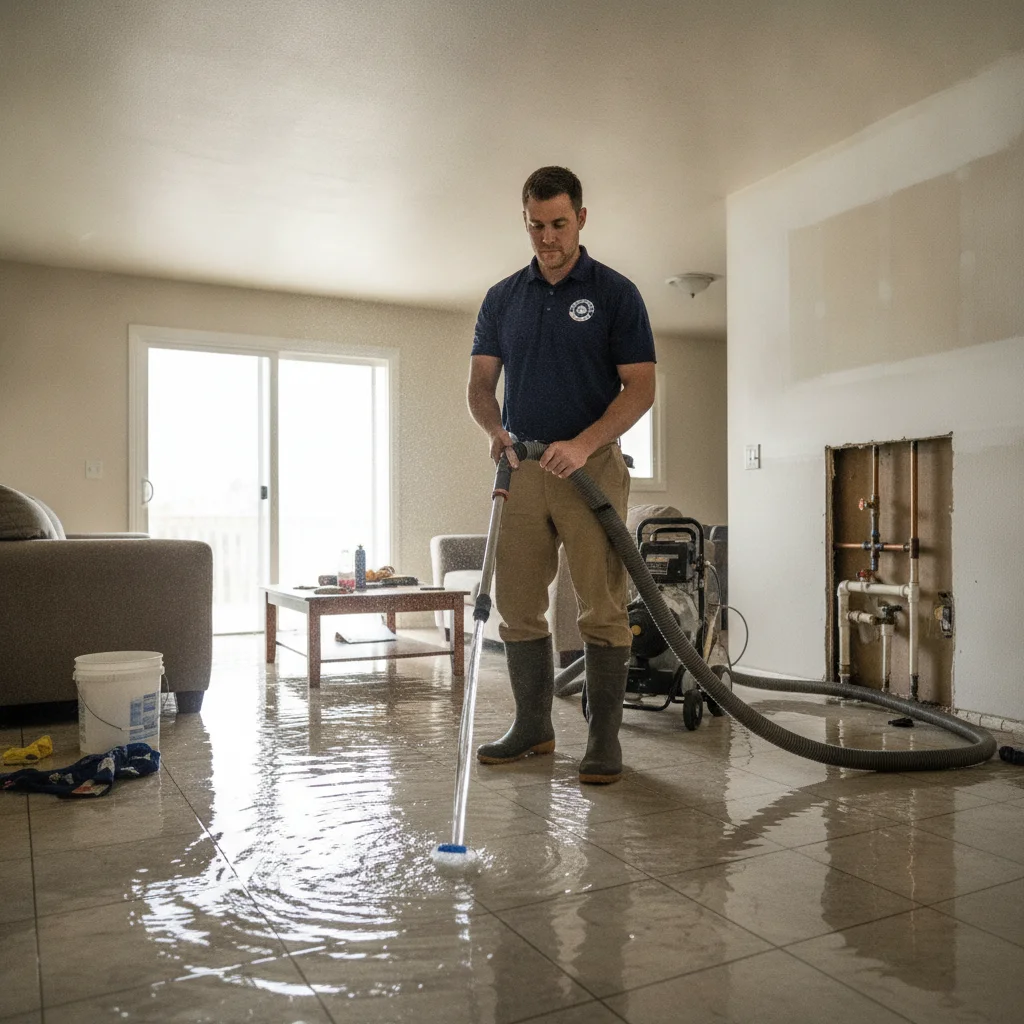
Confirm the water source is being addressed
If a supply line is still open, extraction only chases new water. Close the fixture shutoff if you can reach it from dry floor. If you cannot, close the house main from a dry location. A plumber stops the leak. The restoration pro removes what already spread.
Storm water is a different source. Rain that came in through a slider on Coast Highway 101, or across a patio in Cardiff-by-the-Sea, can keep coming while the weather holds. Towels at a threshold are not a source fix. The City of Encinitas Public Works department manages municipal storm drains. It does not automatically pump water out of a private living room. Confirm that split with the city before you wait on a public crew.
Electrical safety comes first. The CDC says to turn off power at the main breaker only when you can reach it without entering standing water. Otherwise call an electrician. Never switch power on or off while standing in water.
If the water is sewage or another contaminated source, stop. The EPA says to call a professional experienced with contaminated-water damage. That is not the same job as a clean supply-line overflow. Encinitas households dealing with a backup should use our sewage backup cleanup Encinitas notes and treat that water as a health issue.
A burst pipe in a rental is a different path. Landlords and tenants in California have duties under Civil Code sections 1941, 1941.1, and 1942. We cover that in our Encinitas rental burst-pipe article. This page stays on urgent water removal Encinitas homes need after the source is already being handled.
Document affected rooms before extraction starts
Photograph every wet room before anyone moves furniture. Take a wide shot of the space, then close shots of baseboards, the wet edge on flooring, and any staining on drywall. Photograph appliances that sat in water, including model and serial plates if they are readable from dry ground. Those pictures are for your records and for an insurer if you file a claim. Coverage depends on your policy. We do not interpret policies here.
Lift what you can without walking wet carpet more than you must. Walking grinds soil into fibers and pushes water into the next room. Set furniture legs on foil, plastic, or blocks so wood stain does not transfer. Move boxes, rugs, and shoes to a dry room. Do not stack wet goods in a closet and shut the door.
If you rent in Encinitas, give the owner notice of the water. California Civil Code 1941 requires a lessor, absent an agreement to the contrary, to put a dwelling into a condition fit for occupation and to repair later dilapidations that render it untenantable. Civil Code 1941.1 treats missing waterproofing, plumbing that is not in good working order, and floors not in good repair as paths to untenantability. Civil Code 1942 is the repair-and-deduct and vacate path after notice, with limits written into the statute. Read our tenant and landlord water-damage overview rather than guessing the remedy.
Keep people and pets out of standing water. That is documentation and safety in the same step.
Check flooring, walls, and adjoining spaces
Water you can see is not the whole map. Carpet pad holds water. Drywall wicks it upward from the bottom edge. It runs under vinyl plank, into grout, and along a slab. In a Leucadia or Cardiff cottage with a crawl space, it can drip below the floor. In a slab home in New Encinitas, Encinitas Ranch, or Village Park, it can travel sideways under flooring into a hall you thought was dry.
Check adjoining spaces on purpose. Open the room on the other side of a wet wall. Look at the closet, the garage, the hallway, and the unit below if you are upstairs. Check the base of kitchen cabinets if the leak started at a sink or dishwasher. Feel along a dry stretch of baseboard for softness. A musty smell in a closed room is a clue, not a diagnosis. Hidden moisture is why mold after water damage becomes a separate problem when rooms are left wet.
Encinitas sits in coastal North County. The marine layer often keeps outdoor air wet, especially near Moonlight Beach, Swami’s, and the 101 corridor. Opening every window is not a drying plan on a foggy morning. The matched pro decides whether the house needs closed-up dehumidification after extraction. Olivenhain and the inland side of the city sit farther from the bluff, with hillside lots and different drainage. That construction is not interchangeable with a Leucadia bungalow, and it is not interchangeable with a house in El Cajon.
If you already see moldy patches, do not paint or caulk over them. The EPA says to clean the mold and dry the surfaces first. Paint over mold is likely to peel. If growth covers more than about 10 square feet (roughly a 3 ft by 3 ft patch), consult EPA mold remediation guidance rather than treating it as a wipe-down.
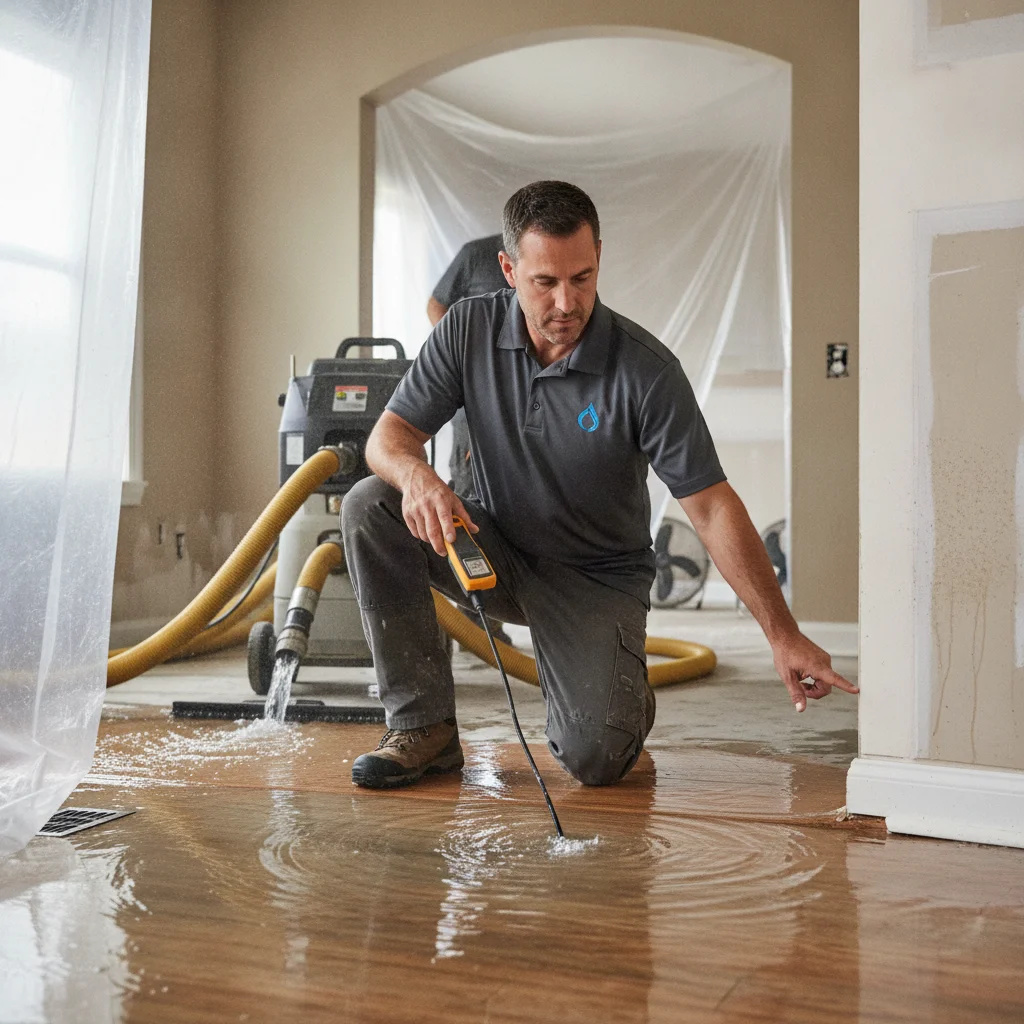
Separate extraction from drying and repairs
Extraction is the pull. Drying is air movement and dehumidification after the bulk water is gone. Repairs come after materials are actually dry. Mixing those three jobs is how rooms stay wet behind new paint.
A household wet/dry vacuum can take surface water off tile. It does not replace professional extraction on carpet and pad. Pad that stays wet under a “clean” carpet is still a moisture source. Some carpet can be saved after clean water. Pad often cannot. Those calls belong to the independent restoration pro, not to a blog rule of thumb. For what the machines leave behind, see what water extraction removes and wet carpet padding after extraction.
After standing water is gone, structural drying is a separate scope. So is carpet water extraction when the floor covering is the main hold. The EPA’s position is simple: fix the water problem as soon as possible and dry items completely. That is why extraction comes first. Water still sitting in pad is water the drying equipment has to fight.
Do not treat ozone machines as the cleanup. The EPA reports that at concentrations that do not exceed public health standards, ozone has little potential to remove indoor air contaminants, and ozone can be harmful. If you suspect the HVAC system is contaminated with mold, do not run it. The EPA says it could spread mold through the building. Consult EPA duct-cleaning guidance before you do more.
Repairs (new drywall, new pad, new baseboard) wait until the assembly is dry. The matched pro should show you a drying record, not just a finished-looking room. Confirm the contractor’s license on the CSLB license check. Restore Pro SD does not hold a contractor license. IICRC credentials some technicians carry are voluntary industry certifications. They are not a California license.
Verify Encinitas details through current official sources
Encinitas is its own city, with its own Public Works, Building Division, and fire department. San Diego County is the broader health overlay. Do not assume a Carlsbad flyer, a county handout, or a national restoration brochure has the current Encinitas rule.
For interior water, restoration is a private contract with a licensed pro. For water that came from the street, a blocked inlet, or a municipal drain, ask City of Encinitas Public Works what the city will and will not do on private property. I could not confirm a published Encinitas ordinance that sets a private-home extraction fee, a city pumping guarantee, or a numeric response window. If those rules exist, the city is the authority. Check the current Public Works and stormwater pages, and ask staff to point at the live document.
Building permits for later reconstruction sit with the Encinitas Building Division. This site’s verified claims ledger does not include a publishable Encinitas permit fee for water-damage repairs, so this page does not quote one. Ask the division for the current fee schedule before you budget a rebuild.
Floodplain questions go to FEMA flood resources and to the maps the city uses for development review. Encinitas includes coastal bluffs, San Elijo Lagoon on the south, and canyons that move stormwater in a wet winter. A specific “this street floods this deep” claim is not in our verified ledger. If you need a mapped flood hazard for insurance, pull the current FEMA map for your parcel.
Mold and moisture health questions belong with EPA mold guidance and a medical professional. The EPA notes allergic reactions can be immediate or delayed, that mold can trigger asthma attacks in people with asthma who are allergic to mold, and that mold can irritate eyes, skin, nose, throat, and lungs. That is guidance, not a diagnosis.
Use neighborhood names a dispatcher and an insurer will recognize: Leucadia, Old Encinitas, New Encinitas, Cardiff-by-the-Sea, Olivenhain, Village Park, Encinitas Ranch. ZIP 92024 covers most of the city. Cardiff uses 92007. Put the address on the house in the notes, not a nearby beach name.
When to call us
Standing water, wet pad, or water that reached a second room is the moment to bring in a licensed Water Damage Restoration pro for extraction, then drying. Restore Pro SD matches you with an independent local contractor, and you get a call back. Call us at (858) 400-4586 and we’ll connect you with a licensed local restoration pro.