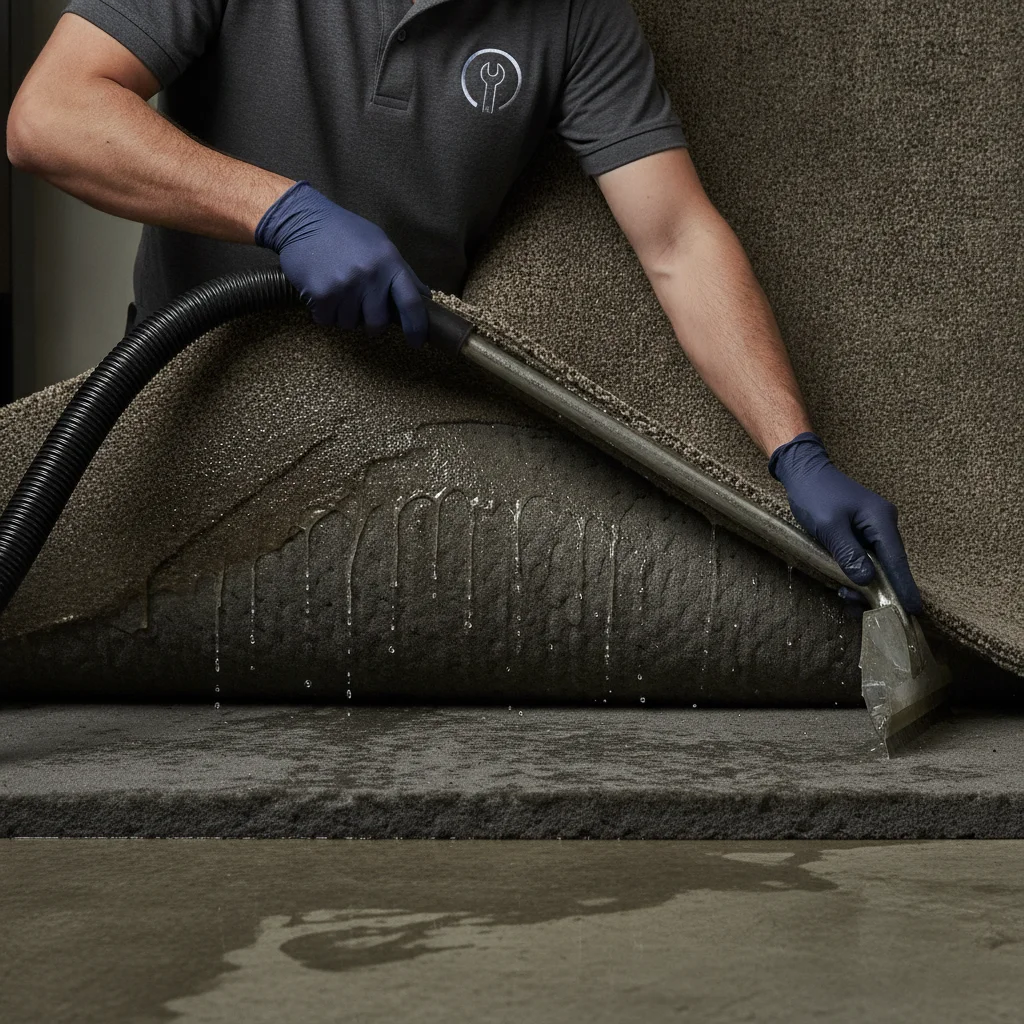
Wet carpet padding after water damage can stay hidden beneath a dry-feeling surface. Surface extraction doesn’t confirm the condition of the padding or subfloor. An independent restoration pro should inspect every affected layer before recommending the next step.
Why the carpet surface can feel dry first
Carpet has more than one layer to evaluate. The visible fibers sit above backing, padding, and the floor assembly. Removing water from the upper surface doesn’t automatically answer what remains underneath.
That difference explains why carpet can feel dry under your hand while the padding is still wet. Surface contact only tells you about the area you touched. It doesn’t show conditions across the room, along the walls, beneath furniture, or near the original water path.
Pressure can also change what you notice. A section may feel normal until someone walks across it. Other areas may feel cool, soft, uneven, or slightly spongy. Those observations can help describe the problem, but they don’t establish whether the carpet system is dry.
The independent pro should compare affected and unaffected areas. That inspection may include carefully lifting an accessible carpet edge. The pro can then examine the backing, padding, tack-strip area, and floor below. Any lifting, testing, or removal should be part of the documented work plan.
Our guide to carpet water extraction explains the broader service. If you’re weighing the finished flooring itself, read about whether water-damaged carpet may be saved. Neither decision should depend on surface feel alone.
How padding and subfloor conditions change the plan
Padding and subflooring need separate findings. The carpet may be one condition, while the padding below tells a different story. The floor assembly underneath adds another decision.
A restoration pro should identify which layers were reached. The written scope should distinguish surface fibers, carpet backing, padding, and subfloor. It should also mark the affected boundaries instead of describing the entire room as one uniform area.
Padding condition can vary within a single room. Water may have followed a wall, doorway, seam, or low point. An unaffected comparison area gives the pro useful context. The goal is a finding tied to specific locations, not a guess based on the room’s appearance.
Subfloor construction also affects access and evaluation. A room over a slab may call for a different plan than an upper-floor assembly. That matters across San Diego County, from coastal Oceanside properties to inland El Cajon homes. The pro should confirm the actual construction instead of relying on the neighborhood or building type.
Ask what was inspected beneath the padding. If the answer is unclear, request a written explanation before approving more work. Our article about a wet subfloor after water damage covers that hidden layer in greater detail.
A sound recommendation separates what was observed from what remains unknown. It should never guarantee that carpet, padding, or the subfloor can be saved before those materials are evaluated.
When extraction and drying become separate steps
Extraction removes accessible water. Drying is a separate part of the work plan when moisture remains within the carpet system or nearby materials. One step shouldn’t be treated as proof that the other is complete.
The independent pro may recommend more extraction from the padding or access beneath the carpet. The plan may also call for airflow, dehumidification, or removal of materials that can’t remain in place. The correct scope depends on what the inspection finds.
Ask the pro to explain each step in plain language. What material is being addressed? Where is it located? How will the pro determine whether conditions have changed? What happens if the readings or visual findings don’t support the original plan?
Avoid relying on a fixed drying deadline. Conditions differ between rooms and floor assemblies. The pro should base decisions on documented conditions rather than a promised number of hours or days.
This distinction matters after a washing machine leak, plumbing release, roof intrusion, or storm entry. Even when visible water has been removed, the work may not be finished. The remaining question is whether the padding, subfloor, walls, or nearby materials still need attention.
Restore Pro SD doesn’t perform extraction or drying. We match San Diego County homeowners with licensed, independent local restoration pros. The customer contracts with and pays the selected professional directly.
How the water source affects salvage decisions
The source and path of the water belong in the salvage discussion. A pro shouldn’t decide based only on whether the carpet looks clean or smells normal. Appearance can’t document where the water started or which materials it crossed.
Share what you know about the event. Identify the room where water first appeared, the suspected source, and any connected spaces. Mention whether water passed through a ceiling, wall, cabinet, hallway, or another flooring material. If the source isn’t confirmed, say that plainly.
The pro should record uncertainty rather than fill gaps with assumptions. That record matters when deciding whether to lift, dry, remove, or further inspect the padding. It also helps separate a recommendation from a guarantee.
Don’t expect one answer for every affected area. Padding beside the source may present different findings from padding across the room. A doorway or wall edge may also require its own inspection. The written plan should show those distinctions.
No contamination or salvage rule for this specific situation could be confirmed from Restore Pro SD’s approved claims ledger. Ask the independent pro to identify the basis for any safety, removal, or salvage recommendation. You can also review the EPA’s mold and moisture guidance and discuss relevant concerns with the professional.
The final choice should rest on the documented source, water path, material condition, and access. It shouldn’t rest on a blanket promise that wet padding can always be dried or must always be replaced.
What the independent pro should document
Documentation turns a vague concern into a reviewable plan. Start with the source, affected rooms, and visible water path. The pro should then identify which carpet edges, padding areas, and floor sections were inspected.
Ask for clear location notes. “Bedroom carpet” isn’t as useful as a description tied to walls, doors, closets, or the source area. Photos can also show where carpet was lifted and which layers were visible during inspection.
The record should distinguish observation from recommendation. For example, the pro can note where padding was accessed, what was found, and why a specific next step was proposed. If an area couldn’t be reached, that limitation should be stated.
Any measurements should include their locations and the materials checked. Ask how the pro will compare later findings with the starting condition. A final statement such as “the room is dry” is less useful without a record showing what was evaluated.
The scope should also explain proposed removal or salvage choices. It shouldn’t promise a result that hasn’t been confirmed. If conditions change after the carpet is lifted, request an updated explanation before authorizing a broader scope.
Restore Pro SD is a referral service that matches customers with licensed, independent local water damage pros. It doesn’t hold a trade license or perform the work. Before selecting a contractor, review the professional’s details through the state’s CSLB license check. Keep the inspection notes, work scope, and contractor information together.
When to call us
Call when carpet padding stays wet, the subfloor condition is unknown, or the water path extends beyond the visible area. This work calls for a licensed water damage restoration pro who can inspect the layers and document a recommended scope.
Call us at (858) 400-4586. The line plays a recording-consent notice, then takes a recorded and transcribed message. It isn’t answered live and doesn’t forward.