It depends on the size of the growth, which rooms are in the work zone, whether the HVAC is involved, how the independent professional plans to contain dust, and who lives in the house. There is no honest universal yes or no for whether you can stay in home during mold remediation.
Restore Pro SD does not make that occupancy call. We match you with a licensed independent restoration professional. You contract with that professional. They explain the work zone. You, a clinician if health is in play, and that contractor decide whether the rest of the house is livable while they work.
If the leak that fed the mold is still open, occupancy is a moisture problem first. The EPA mold cleanup guidance is to fix plumbing leaks and other water problems as soon as possible and dry items completely. If sewage or other contaminated water caused the damage, call a professional experienced with that work. Stay out of standing water. The CDC electrical guidance is never to switch power on or off while standing in water. Shut the main breaker only when you can reach it from dry floor. Otherwise call an electrician.
Size is a cleanup filter, not a stay-home permit
EPA cleanup guidance draws a size line for who does the cleaning, not for who sleeps in the house. If the moldy area is less than about 10 square feet, roughly a 3 ft by 3 ft patch, in most cases a homeowner can handle cleanup using EPA tips. If there has been a lot of water damage, or mold growth covers more than 10 square feet, consult EPA’s mold remediation guidance.
A 3-by-3 patch on guest-bath tile in a Carlsbad two-story is not the same stay-or-go problem as staining along a Mira Mesa hallway ceiling next to the only return. Under 10 square feet can still be a bad night if the patch is in the room you sleep in. Over 10 square feet does not mean you have to leave tonight. It means stop treating it as a wipe-down.
Do not trust the stain as the whole map. Growth behind a baseboard, on wet drywall paper, or on the back of a closet can be larger than the paint. The independent professional maps that. Mold remediation on this site is a matching page, not a brand crew.
Location in a San Diego house changes the math
A slab ranch in El Cajon, Santee, or Escondido is often one living level. If the work zone is the hallway, the HVAC closet, or the only bathroom, staying can mean living inside the job. A two-story in Clairemont or Encinitas can sometimes keep sleeping rooms on a different floor from an upstairs bath leak. That only holds if the independent professional can isolate that zone and the air is not shared through a return, a stairwell, or an open plan.
Coastal humidity in Ocean Beach, Pacific Beach, and Imperial Beach holds moisture longer than a dry East County afternoon. That is not a published drying clock. It is a reason a contained bathroom may stay a work zone across more than one visit.
Condos and HOA buildings add a hallway problem. Plastic across a unit door is not the same as plastic into a common corridor. Ask the independent professional, and the association if you have one, whether sheeting will sit in a shared hallway, whether they will open a shared wall cavity, and whether a common return is in play. Restore Pro SD does not negotiate HOA access.
If the growth is in an HVAC closet, at a return, or near a supply, treat that as a whole-house air question. EPA cleanup guidance is direct: if you know or suspect the HVAC system is contaminated with mold, do not run it. It could spread mold throughout the building. Consult EPA duct-cleaning guidance before taking further action. A bedroom that shares that system is not a sealed second house.
Who lives there is a clinician question
Asthma and irritation are reasons to talk to a clinician, not reasons for Restore Pro SD to declare the house empty or safe. EPA’s brief guide to mold, moisture, and your home is the health language we will stick to. Allergic reactions to mold are common and can be immediate or delayed. Molds can also cause asthma attacks in people with asthma who are allergic to mold. Mold exposure can irritate the eyes, skin, nose, throat, and lungs of both mold-allergic and non-allergic people. That guidance does not describe all potential health effects. For more detailed information, consult a health professional.
Restore Pro SD does not diagnose illness and does not name a species from a photo. Dark staining after a leak is a moisture problem until a qualified tester says otherwise. Our black mold page is the same position: stop the water, dry the materials, and take health questions to a clinician. If someone in the house has asthma or is worried about irritation, that person belongs in the occupancy conversation. We will not convert that into a brand medical rule.
Ask for the containment plan in plain English
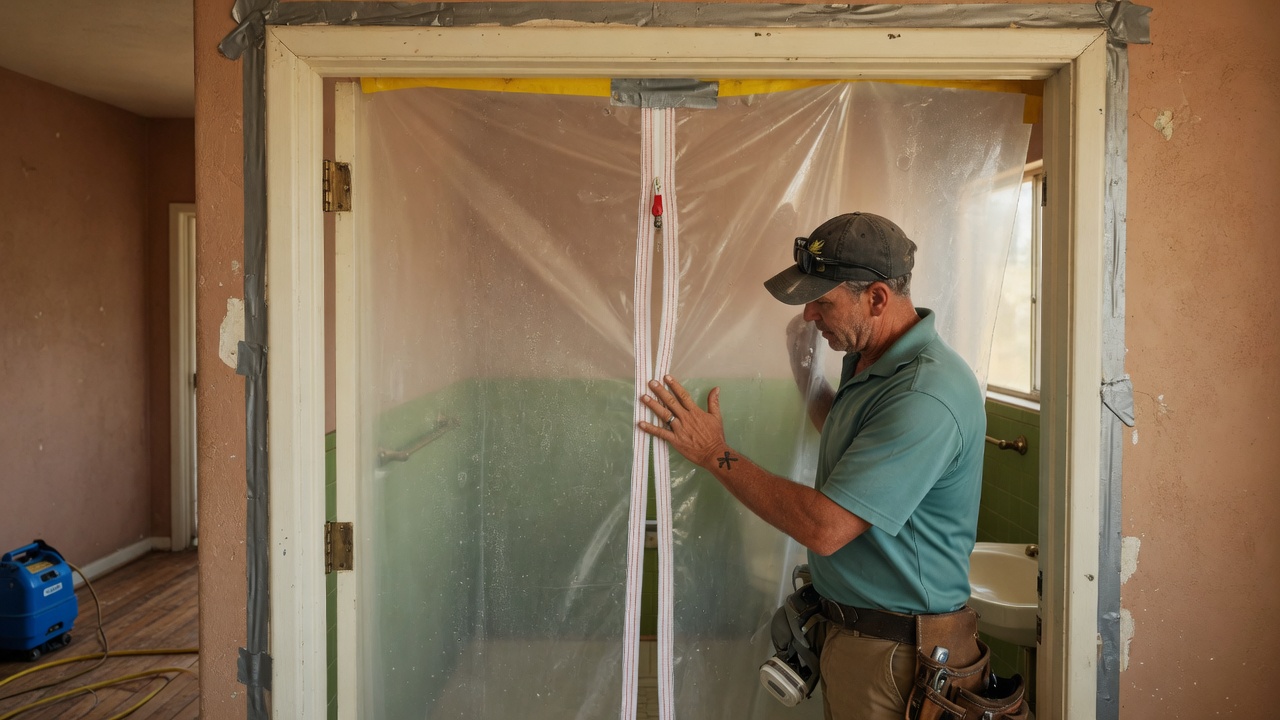
The stay-or-go decision is often the containment decision. If the work zone is sealed from the rooms you would cook and sleep in, some households stay. If wet drywall is coming out into the living room, or the only HVAC is shut down, staying is a different call.
Ask the independent professional to explain their containment plan before anyone starts demolition. Plastic sheeting, negative air, and HEPA filtration are methods many mold contractors use. Restore Pro SD does not promise those methods and does not run a brand mold protocol. The matched pro should tell you which rooms they will isolate, how they will keep dust in the work zone, whether they want the rest of the house occupied, and how they will handle the HVAC.
Our professional mold remediation process page is the order of work to ask for: stop the water, see how far the moisture went, decide what comes out, contain the area if they are disturbing growth, then dry what stays. You contract with the licensed professional. Check a California license on the CSLB license lookup before work starts.
Occupancy checklist to walk through with the matched pro
Bring these questions to the walkthrough. They are for you and the independent professional, not a Restore Pro SD occupancy ruling.
- How large is the visible growth compared with EPA’s about 10 square feet, and how will they check cavities the stain does not show.
- Which rooms are in the work zone, and which rooms would you actually sleep, cook, and bathe in.
- Is the HVAC known or suspected to be mold-contaminated. If yes, EPA says not to run it.
- What is the containment plan. Ask them to explain plastic, negative air, HEPA, or whatever method they intend to use, room by room.
- Who lives here. Has anyone with asthma or symptoms they worry about talked to a health professional.
- Is standing water still present. Can you reach a breaker without standing in it. CDC guidance is not to switch power on or off in water.
- In a condo or HOA, does the work touch a hallway, a shared wall, or a common return, and has the association been told.
- Who is making the occupancy call. That is the licensed professional, you, and a clinician if health is involved. It is not Restore Pro SD.
Write the answers down. You want that on paper while the plastic is still a plan, not after the first wall comes open.
What Restore Pro SD will not decide
We will not tell you it is safe to stay. We will not tell you to leave. We do not inspect the house, employ a remediation crew, or file an insurance claim. We match you with a licensed independent local professional. That professional scopes the work. You contract and pay them directly.
Call Restore Pro SD at (858) 400-4586 when you have visible growth or a wet cavity and you need that matching conversation before you decide whether to sleep in the house. The line takes a recorded message. You get a call back. We match you with a licensed independent restoration professional. They contract with you directly.