Pacific rain does not have to overtop a wall to soak a Coronado house. Water often slides in at a patio door, a garage slab, or a front threshold while the streets are still shedding runoff. That is outside storm water in the living space, and it needs a different read than a burst pipe under a sink.
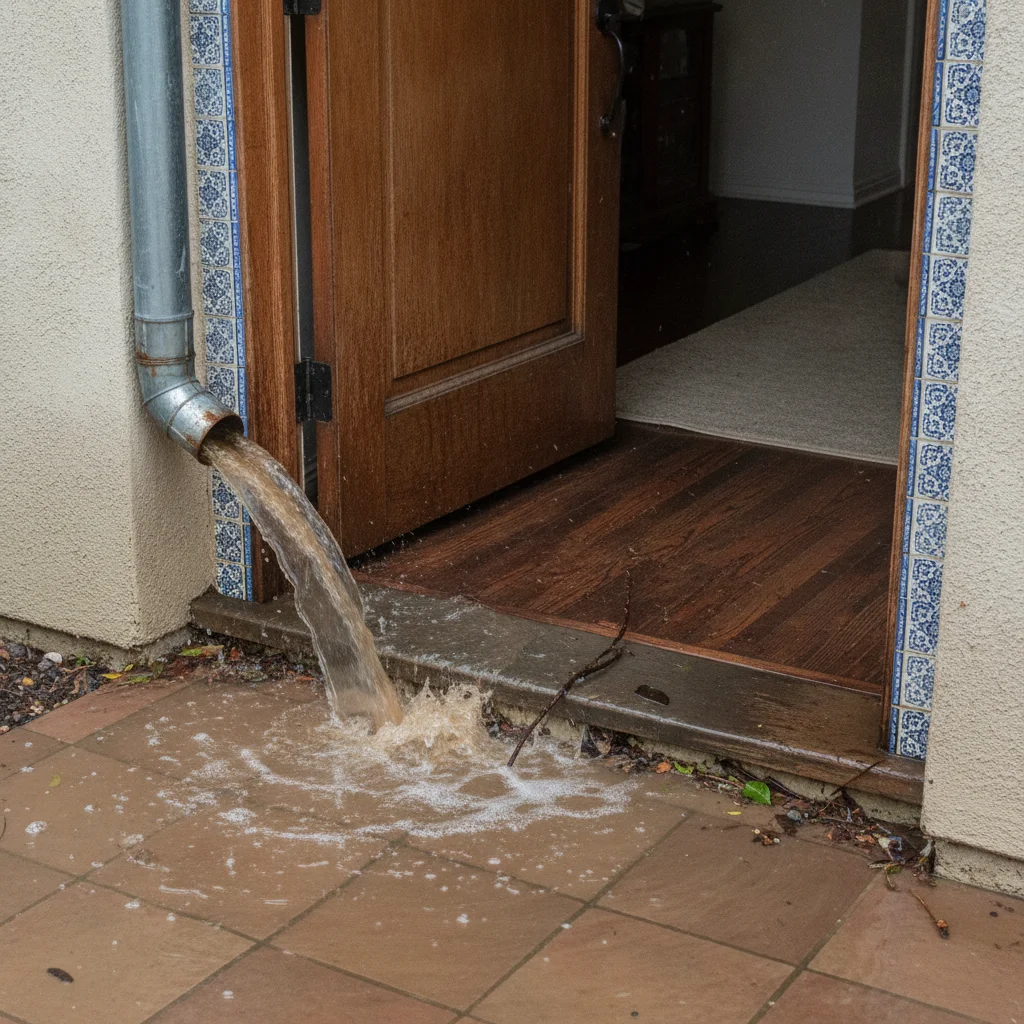
Document the entry path when it’s safe
If electrical circuits or equipment are wet or near water, turn off power at the main breaker only when you can reach it without stepping into standing water. Otherwise call an electrician. Never switch power on or off while standing in water. That guidance comes from the CDC, and it applies in a Coronado garage the same way it applies in any other wet room.
Once you can move without walking through water, document the path. Photograph the wet side of the door or slider, the interior waterline, the garage track, and the patio or sidewalk just outside. Include leaves, grit, or planter mulch if they came in with the rain. Note the time, which way the water was traveling, and whether rain was still falling.
Coronado sits on a narrow strip between San Diego Bay and the Pacific, tied to the mainland by the Coronado Bridge and the Silver Strand. A bay-facing door near Glorietta Bay and an ocean-facing opening on Ocean Boulevard do not take the same weather. Write down which face of the house got wet. That note helps the matched restoration pro sort wind-driven rain from street runoff later.
Don’t mop the floor clean before you have photos. A clear shot of the waterline is more useful than a dry-looking room with a wet subfloor. If water is still coming in, stop what you can stop from the dry side: towels at a threshold, a rolled rug, a board against a slider. Don’t wade out to a storm drain in the street. Public inlets and the right of way belong to the City of Coronado. Report a clogged curb inlet to the city. The water already inside the house is a separate cleanup.
If anyone in the home has breathing trouble, keep them out of the wet rooms. Storm water can carry soil and residue from the street. You don’t need a lab result to treat it as more than clean tap water.
Separate outside water from an indoor leak
Outside storm water and an indoor plumbing leak can land on the same floor during the same night. They are not the same job.
Storm entry usually lines up with the rain. The exterior face of the door, slider, or garage is wet. The water on the floor may hold grit, leaves, or mulch. The wet pattern starts at an opening to the outside and moves inward.
An indoor leak often starts at a fixture: a water heater, a supply line, a toilet, a washer, or an air-conditioner drain. The exterior wall can be dry. The stain may sit under a cabinet or along a pipe run while the patio is clean.
Walk the outside first. Then walk the wet room. If both a patio slider and a water heater pan are wet, say so. The matched pro needs both sources, not the one that looks dramatic.
This is also how Coronado storm entry differs from other county patterns. Imperial Beach storm water is often tied to South Bay river and estuary flooding. Oceanside calls after a storm are often wind-driven rain through roofs and windows on the north coast. Carlsbad jobs more often follow lagoon and neighborhood drainage inland of the beach. On this strip, the story is usually rain and runoff finding a ground-level opening, not a river over a bank.
A roof leak during a storm is still weather-related, but it is a ceiling path, not a door path. If the stain is on a ceiling or in an upstairs closet, treat that as a separate note. Don’t fold it into the threshold story and hope someone notices.
If the water may be sewage or another contaminated source, the EPA says to call a professional experienced with contaminated-water damage. Street runoff is not automatically sewage. It is also not automatically clean. Let the matched pro classify it after they see the path.
Check walls, flooring, and adjoining rooms
The puddle you can see is not the whole job. Storm water moves under vinyl, laminate, and hardwood. It wicks into baseboards and the first few inches of drywall. It follows a hallway into a closet, a powder room, or the unit next door in a stacked building.
Press a dry hand along the lower wall in the next room. Check the closet on the shared wall. Look at the garage side of a living-room slab. Soft flooring, lifted plank edges, and a damp odor after the visible water is gone are all signs the wet area is larger than the shine on the tile.
Follow the EPA mold and moisture guidance here. If the moldy area is less than about 10 square feet, roughly a 3 ft by 3 ft patch, a homeowner can often handle cleanup with EPA tips. If there has been a lot of water damage, or mold covers more than 10 square feet, consult that remediation guidance and bring in help. Don’t paint or caulk moldy surfaces. Clean and dry first. Paint over mold is likely to peel. If you suspect the HVAC system is contaminated with mold, don’t run it. It can spread spores through the building.
Allergic reactions to mold can be immediate or delayed. Mold can trigger asthma attacks in people with asthma who are allergic to it. It can irritate eyes, skin, nose, throat, and lungs even in people who are not allergic. That is from the EPA’s brief mold guide. If someone in the house is having symptoms, talk to a health professional.
Renters have a separate paper trail. California Civil Code 1941 and 1941.1 require a landlord, unless the parties agreed otherwise, to keep a dwelling fit to occupy, including effective waterproofing and weather protection of the roof and exterior walls. Civil Code 1942 describes repair-and-deduct and the right to vacate after notice when the landlord does not repair. Civil Code 1929 still puts ordinary-care repairs on the person who caused the damage. Give written notice. Keep photos. Read the steps on our tenant and landlord water damage page rather than guessing at the statute.
Verify flood information for the exact address
Don’t take a neighbor’s flood story as your map. FEMA flood designations are address-specific. Two houses on the same Coronado block can sit in different mapped flood areas, and a map can change when FEMA issues a new study.
Look up the exact street address in the FEMA flood resources and the Flood Map Service Center. You are checking the current map panel for that parcel, not a citywide label. If the tool does not return a clear zone, write that down. “Not confirmed for this address” is a usable fact. An assumed zone is not.
The City of Coronado is the local government for streets, storm drains, and floodplain administration inside city limits. San Diego County does not replace the city on those public systems here. If you need to know whether a public inlet or a mapped floodplain rule applies to your lot, ask the city. We could not verify a single flood-zone tag that covers every Coronado home, and no honest page should invent one.
Flood insurance and a homeowners policy are different contracts. Storm water that came through a door is not automatically a covered flood, and it is not automatically a covered sudden leak. Don’t file based on a blog. Ask your carrier what they need, and keep the photos of the entry path. Our homeowners insurance and water damage explainer walks through the questions to bring to that call.
If you are on the Cays canals or along the bay, photograph the water side and the street side. Canal water, tide, and rain runoff can arrive in the same hour. The matched pro still has to separate those sources. Don’t assume a canal view means the house is in a flood zone, and don’t assume an ocean view means it is out of one.
What to ask the matched restoration pro
Restore Pro SD is a referral service. We match you with licensed, independent local restoration pros. We don’t extract water, dry walls, or hold a contractor license. The pro you are connected with does the work and contracts with you directly.
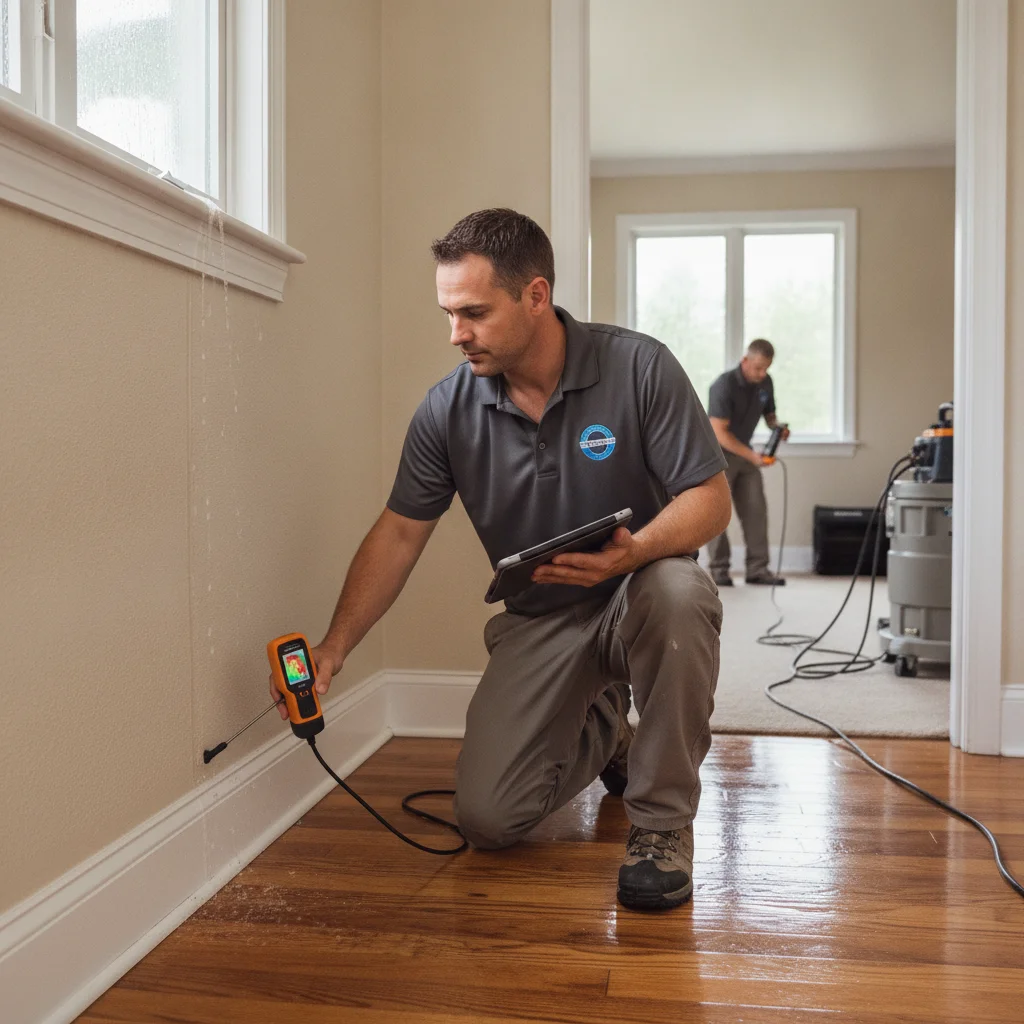
Ask them to walk the entry path you photographed. Ask for a moisture map of the wet room and the rooms that share a wall or a floor. Ask what they will extract, what they will leave in place, and how they will dry the structure. Structural drying is the stage that decides whether wet drywall and subfloor can stay. Storm damage restoration is the larger scope when rain, debris, and openings to the outside are part of the same event.
Ask how they will treat the water. If it carried soil or street residue, cleanup is more than a wet vacuum. If it might be sewage or another contaminated source, the EPA’s position is to use a professional experienced with that work.
Confirm the company on the CSLB license check. A California contractor license is the state credential for the repair work. Industry certificates are voluntary extras. They are not a substitute for the license. Ask for the license number in writing and look it up yourself.
Ask what they will document for you: photos, moisture readings, and a written scope. That file is for your records and for your insurer. We don’t file claims and we don’t set prices. The pro should explain their plan before they open walls.
If mold is already visible beyond a small patch, ask whether mold remediation is part of the same visit or a later scope. Keep those two conversations honest. Drying wet materials and removing established mold are related, and they are not the same task.
When to call us
Call when storm water has come in through a door, garage, or slider, when floors feel soft, or when a damp odor stays after the rain. Call if you cannot tell storm entry from an indoor leak, or if the wet area crosses into another room. Call us at (858) 400-4586 and we’ll connect you with a licensed local restoration pro.