A brown stain on the interior side of a stucco wall after rain in San Diego County is rainwater that came through the wall assembly, not a burst pipe. That wet drywall, insulation, and flooring is the restoration job. The stucco cladding stays with a separate contractor.
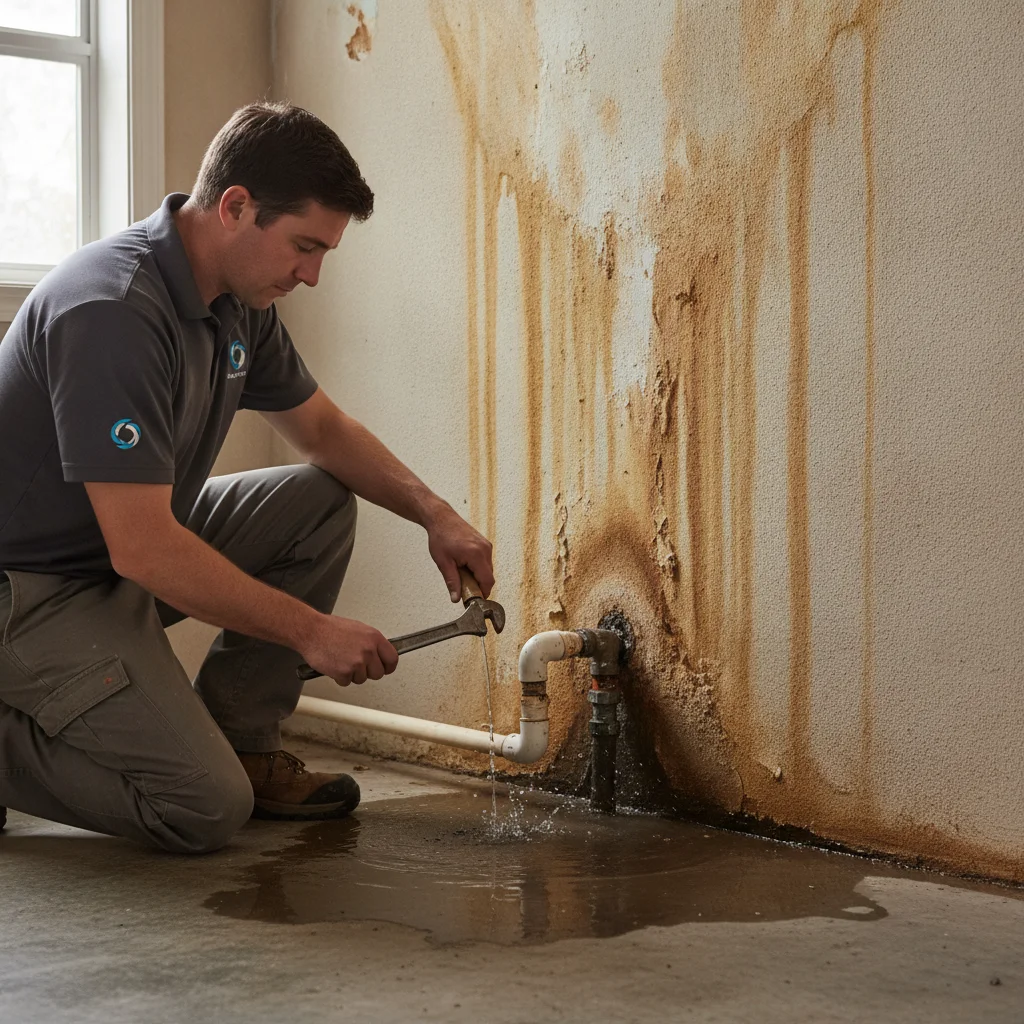
Document the interior wet area when it’s safe
Start inside, and only where you can walk without standing in water. Photograph the stain, the trim, and the floor at the wall. Note the date, the storm, and the room. A west-facing bedroom in Ocean Beach or Oceanside after wind-driven rain is a different record than a shaded north wall in El Cajon. Write that difference down. Adjusters and restoration pros both need the sequence.
If outlets, switches, or cords sit in or next to the wet area, treat it as an electrical hazard. The CDC says to turn off power at the main breaker only when you can reach it without entering standing water. Never switch power on or off while standing in water. If you cannot reach the panel dry, leave it and call an electrician.
Look past color. Press the drywall lightly. Soft gypsum, bubbling paint, warped baseboard, and dark carpet along the exterior wall all belong in the same notes. A musty smell after the face looks dry still matters. Moisture that entered through stucco often hides in the cavity.
Do not spray the exterior with a hose to prove the leak. You can drive water into insulation and floors that were only damp. You can also mix a rain path with a test you created. Document what the weather did. Leave isolation testing to people who do that work.
Separate cladding repair from indoor drying
Stucco leak water damage has two jobs, and they are not the same crew. A licensed stucco or building-envelope contractor works the cladding, flashing, sealant, and weather-resistive layers. A licensed restoration pro handles wet drywall, insulation, flooring, and indoor moisture. Restore Pro SD is a referral service. We match you with independent local restoration pros. We do not patch stucco, and we do not dry your walls ourselves.
Keep those scopes apart on purpose. A new finish coat over a still-wet cavity traps moisture. The EPA says not to paint or caulk moldy surfaces. Clean and dry first. Paint over mold is likely to peel. If you only hire a plaster patch, the indoor damage keeps going. If you only dry the room and leave the rain path open, the next storm repeats it.
People ask whether stucco should have weep holes. We could not confirm a countywide weep-screed or weep-hole rule from the City of San Diego Development Services Department or County of San Diego Planning and Development Services pages used for this article. Ask the building department that issued the permit, or a licensed stucco contractor, how your wall is supposed to drain.
Hairline cracks show up on many local stucco houses. Worry about them here when rain shows up indoors: staining, soft drywall, or wet flooring on the other side of that wall. Cosmetic crack filling is cladding work. Indoor water after an atmospheric river or a coastal windstorm is storm damage restoration work.
Window heads, deck ledgers, hose bibs, and the wall base are the indoor clues that show up from Chula Vista to La Mesa. The restoration pro needs a closed rain path before finishes go back.
Check wall cavities, insulation, and flooring
The stain on the paint is often the last place the water sat, not the first place it entered. Rainwater through a stucco wall can run down behind the cladding, wet the sheathing, soak insulation, and wick into the plate and the floor. A matched restoration pro checks the cavity, not just the face.
That usually means moisture readings on the drywall, the base plate, and the flooring next to the exterior wall. It can mean opening a section of gypsum to see insulation. Wet paper-faced drywall and wet cavity insulation do not always dry in place. Some of it comes out. For that choice, see whether wet insulation can be dried and when wet drywall gets replaced.
Flooring tells on the leak even when the wall looks minor. Carpet and pad hold water at the tack strip. Laminate swells at the exterior edge. Hardwood cups. Tile can hide a wet subfloor. Follow the wet line along the wall, then a few feet into the room. Water does not stop at the stain.
If mold is visible, size it before anyone opens a paint can. The EPA says a moldy area smaller than about 10 square feet is, in most cases, something a homeowner can clean with its published mold cleanup tips. If there has been a lot of water damage, or mold covers more than about 10 square feet, consult that guidance and bring in a pro experienced with the work. Our network’s mold remediation referrals are for that larger, wetter pattern.
If you suspect the HVAC system picked up mold from the wet wall, do not run it to dry the house. The EPA says a contaminated system can spread mold through the building.
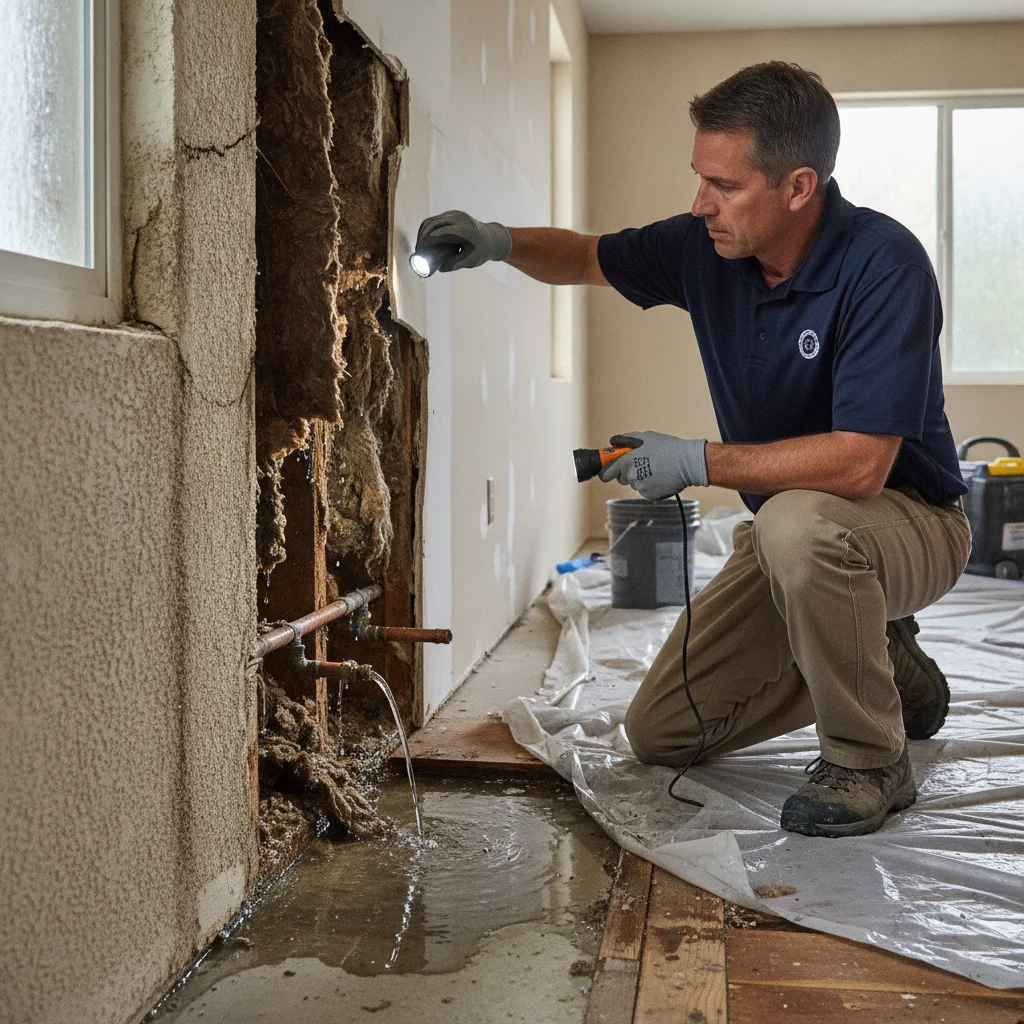
Trace moisture beyond the first stain
Stucco wall leak indoor water damage likes to travel. Gravity takes it down to the sole plate and the slab or subfloor. It also moves sideways into an interior partition. A window return can look dry in the middle of the glass and still weep into the jamb.
Map every room that shares that exterior wall. Check the closet, the far side of a condo party wall, and the ceiling below if you are upstairs. A stain under a second-story window in Mission Hills is not automatically a roof leak. A stain at the base of a first-floor wall after wind-driven rain in Oceanside is not automatically a slab leak. Location, timing, and weather start the trace.
The independent restoration pro should keep going until readings fall back to dry materials, not until the brown mark fades. Faded paint is not a dry cavity. Probe adjacent baseboards. Mold behind baseboards is a common next chapter when rain sat in the bottom of the wall.
East County heat can dry the stucco face while the cavity stays wet. Coastal humidity in Imperial Beach or Encinitas can slow indoor drying even after the rain stops. Those are climate differences inside one county. They are why a moisture map beats a visual check.
If the water was rain, it still needs to be dried completely. The EPA’s mold page is blunt: fix the water problem and dry items completely. Mold can follow water damage when materials stay wet. Do not wait for a second storm to finish the map.
Review findings before finishes go back
Do not close the wall because the stain is gone. Review what the restoration pro found: which materials were wet, what was removed, what dried, and whether the rain path is actually closed. Structural drying is the indoor half. Cladding repair is the outdoor half. Finishes go last.
Ask for the drying record and the moisture readings, not a verbal okay. If insulation came out, confirm what goes back. If drywall came off, confirm the cavity is dry to the plate. If carpet pad was wet, confirm pad and tack strip, not just the face fiber.
Confirm the exterior trade is scheduled or already done. A finished interior patch under an open window head is a temporary room. Check the license of whoever you hire for restoration or stucco on the CSLB license check. Restore Pro SD does not hold that license. The matched independent pro does.
Renters should keep the written findings. California Civil Code 1941 and 1941.1 cover a landlord’s duty to keep a dwelling fit, including waterproofing of exterior walls. Civil Code 1942 describes repair-and-deduct after notice, with strict limits. Read the statute or talk with a tenant clinic. Our rental water damage page covers indoor restoration. It is not legal advice.
Homeowners should resist closing the wall too soon. A stucco wall leak is a building-envelope failure that landed in the living room. Close the envelope. Dry the room. Then paint.
When to call us
Call when rainwater through a stucco wall has wet drywall, insulation, or floors, or when a stain keeps returning after storms. Restore Pro SD matches you with a licensed local restoration pro for the indoor water damage restoration. Call us at (858) 400-4586 and we’ll connect you with a licensed local restoration pro.