After a San Diego rain, a brown ring around the skylight well means water is already in the ceiling. The glass can look fine while the shaft, the insulation, and the lid below are wet. A roofer has to stop the roof opening. A licensed restoration pro has to find and dry what got wet inside.
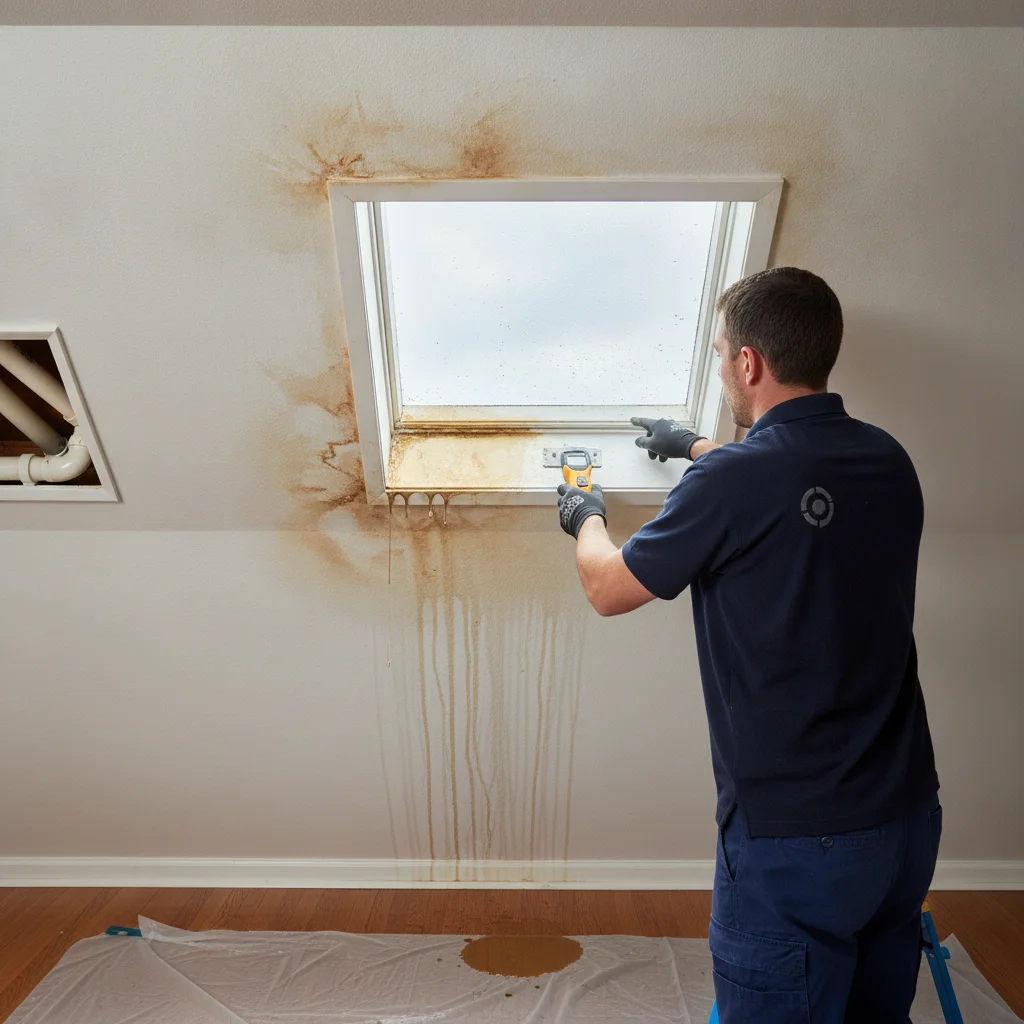
Confirm the roof opening is being addressed
Skylight leak water damage starts at an opening in the roof. Until that opening is covered or repaired, indoor drying will not hold. That is true in Encinitas wind and in an El Cajon cloudburst. The weather is different. The sequence is the same.
Restore Pro SD does not repair roofs, flashing, or skylight units. We match you with licensed, independent water damage pros for the indoor work. A separate roofing contractor handles the opening. Keep those jobs apart from the first call.
You do not need to name the failed part. Do not climb a wet roof. Do not recaulk from a ladder. Photograph the stain, the well, and any active drip. Write down whether it shows up in rain, in west wind, or on a dry morning.
Condensation versus rain entry
Indoor moisture on cold glass can mimic a ceiling leak from skylight panes. Warm air hits the glazing and drips down the well. That is common in bathrooms and kitchens, and on cool nights with no rain. True rain entry usually tracks storms, including the atmospheric rivers that soak San Diego County in winter. If you cannot tell, treat it as water coming in from outside until a roofer and a restoration pro both look.
If water is near a light in the well, stay out of standing water. The CDC says to shut power at the main breaker only when you can reach it without walking through water. Otherwise call an electrician. Never switch power on or off while standing in water.
The EPA says to fix water problems as soon as possible and dry items completely. Catch drips in a bucket. Move furniture and rugs. That is a stopgap, not a repair. Skylights can leak as seals, curbs, and roof details age. No lifespan figure is confirmed here. A roofer reads the unit. The restoration pro reads the wet ceiling.
Check the ceiling well, shaft, and nearby rooms
The well is the drywall shaft from the roof opening down to the room. Water from a leaking skylight often runs those four faces before it ever drips onto the floor. Look at the paint, the corners, and the light box. Soft drywall, brown rings, and bubbling texture all count.
Check more than the room under the glass. Water follows framing. It can show up in a hallway, a closet, or the bedroom on the downhill side of the roof. In a Mira Mesa two-story, that can mean a wet second-floor lid and a stain on the first-floor ceiling. In a single-story Clairemont ranch, the same leak can soak attic insulation around the shaft and drip far from the well.
Coastal houses take more wind-driven rain off the Pacific. Inland East County houses take more heat on the roof between storms. Both can open a path at a skylight. The indoor pattern is what the restoration pro maps.
A licensed pro in our network will look at the well, adjacent rooms, and any attic access you have. They are not there to rebuild flashing. They are there to see how far the water went. That indoor survey is the core of ceiling water damage repair.
If the stain is small and the drywall still feels firm, treat it as a moisture problem, not a paint problem. Do not cut a hole unless the matched pro is directing that work. A sagging lid is a different hazard. Get out from under it and have that pro assess it.
Condos add a split in control. The roof and skylight are often association property. The well and the ceiling finish may be yours. Confirm who controls the roof with the HOA before anyone opens the unit. The indoor drying still has to happen in your rooms.
Trace moisture through insulation and framing
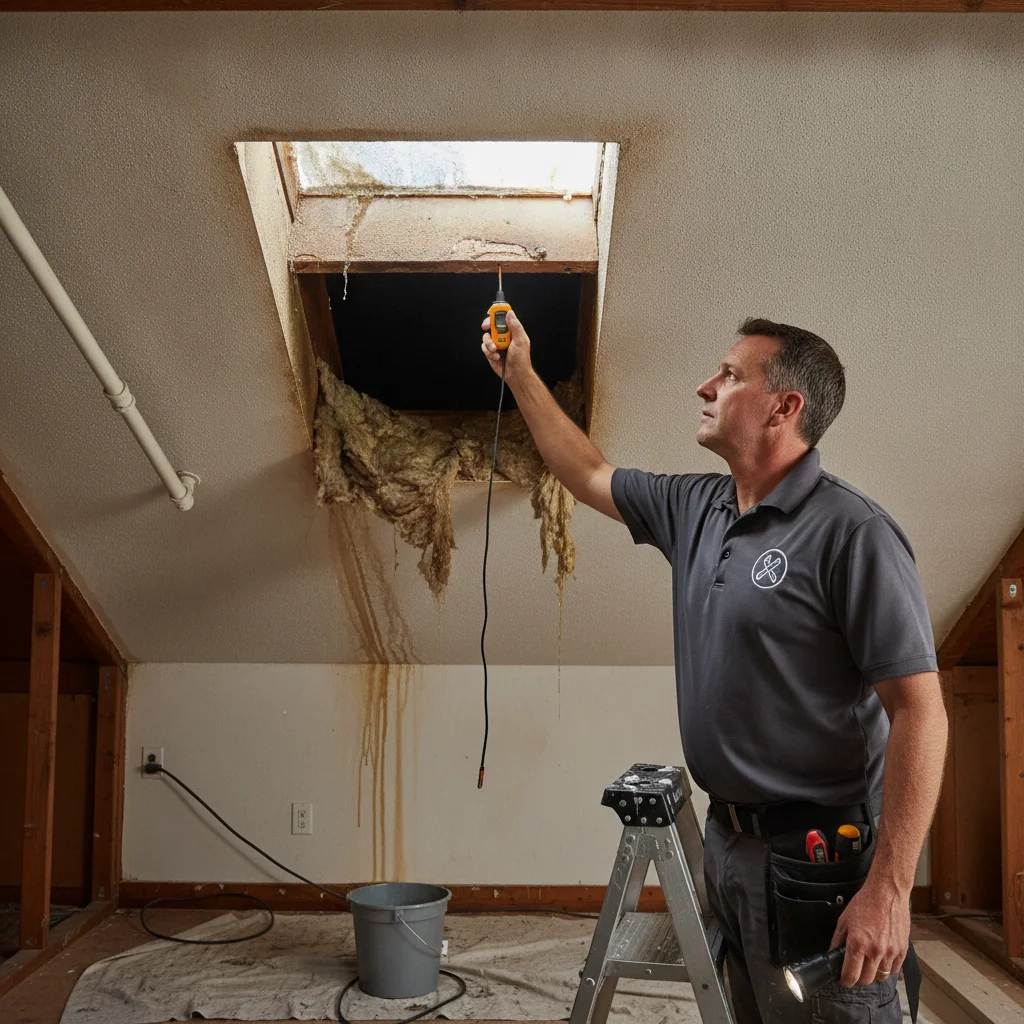
What you see on the paint is the last stop. In many San Diego attics, the skylight well punches through blown-in insulation and wood framing. Water wicks into batts, into paper facing, and along the rafter or truss that forms the shaft. A dry-looking room can still have wet insulation above it.
The independent restoration professional should map that with meters, not guesswork. They check the well drywall, the top and bottom of the opening, nearby joists, and insulation in the leak path. If insulation is soaked, it often has to come out so the wood can dry. Whether a given batt can be dried in place is a job-specific call for that pro. It is not a rule we can publish here.
If mold shows on the well or the lid, size matters for next steps. The EPA says a moldy area under about 10 square feet, roughly a 3 ft by 3 ft patch, can in most cases be cleaned by a homeowner using EPA tips. If there has been a lot of water damage, or mold covers more than 10 square feet, consult EPA mold remediation guidance and bring in a professional experienced with that work. Allergic reactions to mold are common. Mold can trigger asthma attacks in people who are allergic to it. It can irritate eyes, skin, nose, throat, and lungs even without an allergy. That is EPA language, not a diagnosis. Talk to a health professional about symptoms.
Do not paint or caulk over moldy drywall in the well. The EPA says paint over mold is likely to peel. Clean and dry first, or have the matched pro remove what cannot be cleaned. If you suspect the HVAC is contaminated with mold, do not run it. The EPA says that can spread mold through the building. For growth after a leak, see will water damage grow mold.
Separate roof repair from indoor drying
Two trades. Two contracts. The roofer stops water at the roof. The restoration pro extracts what they can, dries the well and framing, and deals with damaged drywall and insulation. If the opening still leaks, structural drying will not finish. You will wet the same cavity on the next storm.
Restore Pro SD refers the indoor water work. We do not install skylights, fold flashing, or warranty a roof. Ask the roofer what they found at the opening. Ask the restoration pro what is wet inside. Share photos both ways. That is how you avoid closing a ceiling under a still-leaking curb.
Permit rules for replacing a skylight in the City of San Diego or unincorporated San Diego County could not be confirmed for this page. Check with the City of San Diego Development Services Department, or the County of San Diego for unincorporated areas, before anyone replaces the unit. Do not treat a blog as the permit answer.
Insurance is the same kind of question. Some policies treat sudden rain entry differently from long-term seepage or poor maintenance. We do not publish coverage rules. Read your policy and ask your carrier. Our overview of whether homeowners insurance covers water damage is a starting point, not a claim decision.
A general roof leak can look like skylight well water damage when water travels to the nearest opening. A roofer has to sort that. Our page on roof leak water damage in San Diego covers the broader roof path. This page stays on the well, the shaft, and the ceiling under it.
Review findings before the ceiling is closed
Do not tape, texture, or paint the well until the wood and drywall are actually dry. Closing a damp shaft traps moisture in a dark cavity. That is how a small stain becomes a musty well a month later.
Ask the matched pro to walk you through meter readings on the well, the surrounding lid, and any exposed framing. Ask what insulation was removed and why. Ask whether they recommend mold remediation or a dry-and-replace of the damaged drywall. Check a contractor’s CSLB license at the CSLB license check before you sign. Restore Pro SD is a referral service. The pro you hire holds the license. The pros we connect you with are licensed and insured.
Keep the photo set: first stain, open well, wet insulation, dry readings, closed ceiling. That file helps you, the roofer, and the insurer. It also keeps a later painter from coating a surface that was never cleaned. EPA guidance on mold and moisture is the cleanup reference if growth was part of the job.
Renters have a separate paper trail. California Civil Code 1941.1 treats a dwelling as untenantable if it substantially lacks effective waterproofing and weather protection of the roof and exterior walls. Give the landlord notice. Civil Code 1942 sets a limited repair-and-deduct path after notice, with caps and timing rules you should read on the California Legislative Information site before you act. Civil Code 1929 still puts ordinary-care damage on the tenant.
If the well is still soft, stained, or smelling earthy, leave it open. A closed ceiling is the last step, not the goal.
When to call us
When rain has entered a skylight well and the ceiling, insulation, or nearby rooms are wet, you need a licensed water damage restoration pro for the indoor drying, and a roofer for the opening. Call us at (858) 400-4586 and we’ll connect you with a licensed local restoration pro.