The handle still turns and the tile still looks fine. Behind a finished San Diego shower wall, a mixing valve can drip into the stud bay for weeks. Hidden shower valve water damage often shows first as a stain, a soft baseboard, or a musty closet, not as a puddle at your feet.
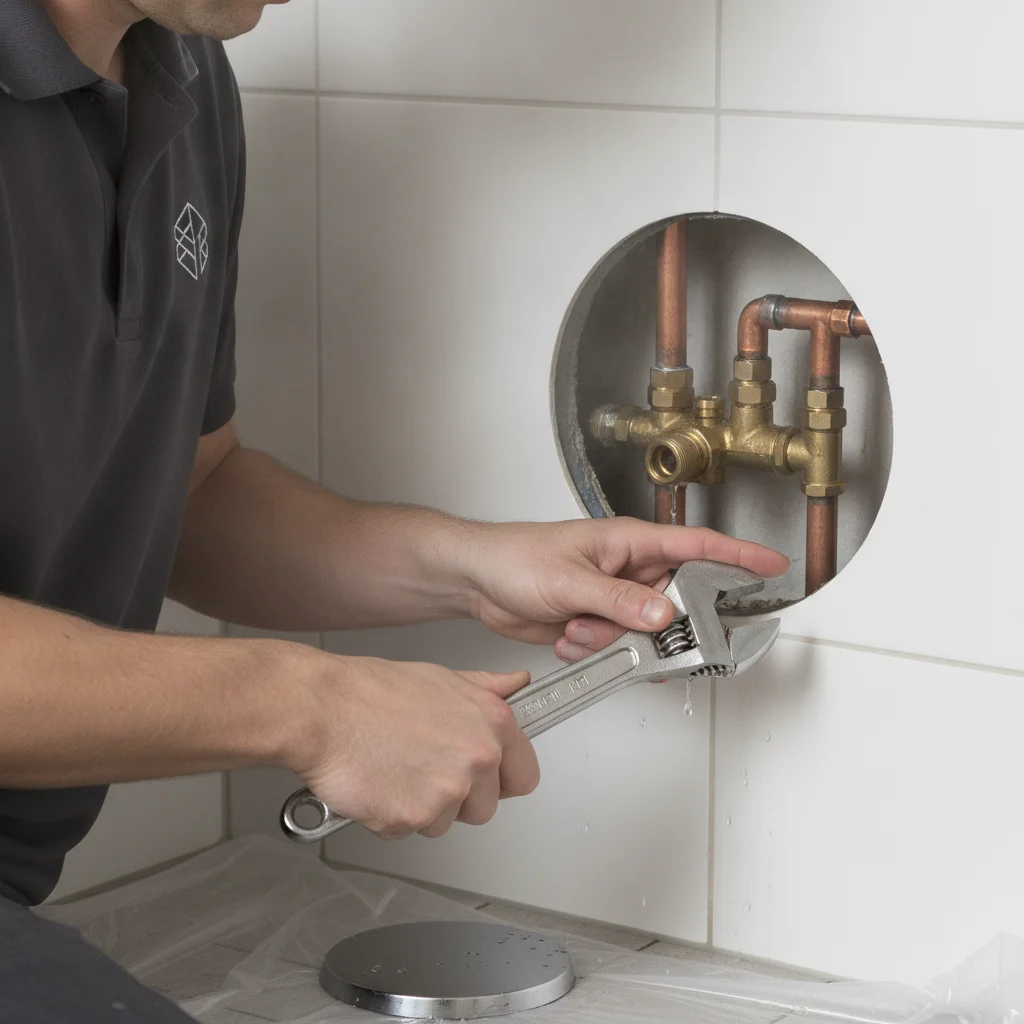
Confirm the valve leak source is being addressed
A shower mixing valve sits in the wall, behind the trim plate. In many San Diego County tract homes, that valve is buried in a tiled wet wall with no access panel. A worn cartridge, a failed seal, or a cracked valve body can weep every time someone showers. The face of the tile stays dry. The cavity does not.
This is not a tub overflow and it is not a failed shower pan. Those dump water onto the bathroom floor. A leaking shower valve inside the wall soaks gypsum, paper facing, and insulation first. In two-story houses in Mira Mesa, Chula Vista, and El Cajon, that same wet wall often backs a closet, a hallway, or a bedroom. You may smell it before you see a stain.
Stop using that shower. If you already know how to shut the water to the house or to that fixture, and you can do it without opening a wall or walking through standing water, shut it. If you do not, leave it. A licensed plumber confirms the valve is the source and stops the supply. Restore Pro SD does not make that repair. We match homeowners with licensed, independent local restoration pros once the leak is controlled and the wall needs drying.
Do not cut tile on a guess. Confirmation comes first. In a rental, California Civil Code 1941.1 lists plumbing that is not in good working order among the defects that can make a dwelling untenantable. Put the landlord on notice. Civil Code 1942 describes the tenant’s repair-and-deduct path after notice. That is a housing issue, separate from the drying work.
If outlets or lights sit in that wet wall, stay out of standing water. The CDC says to shut power at the main breaker only when you can reach it without entering standing water. Never switch power on or off while standing in water. Call an electrician if the panel is not safe to reach.
Trace water through the shower wall and nearby rooms
Once the valve is confirmed, the water still has a path. It follows gravity, then the easiest cavity. In a typical San Diego two-story, that can mean the shared plumbing wall, the bottom plate, and the subfloor. From there it can run into a hallway, a linen closet, or the room on the other side of the wet wall.
Coastal homes in Oceanside, Pacific Beach, and Imperial Beach already carry more ambient moisture. A slow valve leak in those walls can stay damp between showers. Inland, in Escondido or Poway, a wet bay can sit behind tile while the rest of the house feels dry. Stucco and tile hide both. That is why this leak is easy to miss until staining shows.
Look past the bathroom. Check baseboards in the next room. Check the back of a vanity that shares the wet wall. Check carpet edges in a hallway. A musty smell in a closet that backs the shower is a clue, not a cleaning problem. The EPA says to fix plumbing leaks as soon as possible and dry items completely. If the water is sewage or otherwise contaminated, call a professional experienced with contaminated-water damage.
A matched restoration pro maps moisture with a meter, not with a guess. They check the shower cavity, the adjoining rooms, and any chase the supply lines use. That mapping shows whether this is a small wet patch or a wall that needs opening. It is also how this job differs from a burst pipe cleanup where a supply line fails open. A valve leak is often slower. The wet area can still be just as wide.
Check the ceiling below and adjoining cavities
If the shower is upstairs, water can leave the valve bay and show up in the ceiling below. That stain is a symptom. The source is still the valve in the wall above. Do not treat the ceiling as the whole job. The cavity, the insulation, and the floor system between stories may be wet too.
In condos along Mission Valley and downtown, wet walls are often shared. A leak on your side can mark a neighbor’s ceiling or closet. Tell the association and document what you see. The restoration pro still has to map both sides of the assembly before anyone closes a wall.
Adjoining cavities matter as much as the ceiling. Pulling the trim plate is not a full inspection. Moisture moves behind tile, into the next stud bay, and down to the sole plate. In older Clairemont and Linda Vista houses, that plate can sit on a wood subfloor that wicks sideways. In a slab home in San Marcos or Otay Ranch, water can sit at the bottom of the wall and migrate under vinyl or carpet.
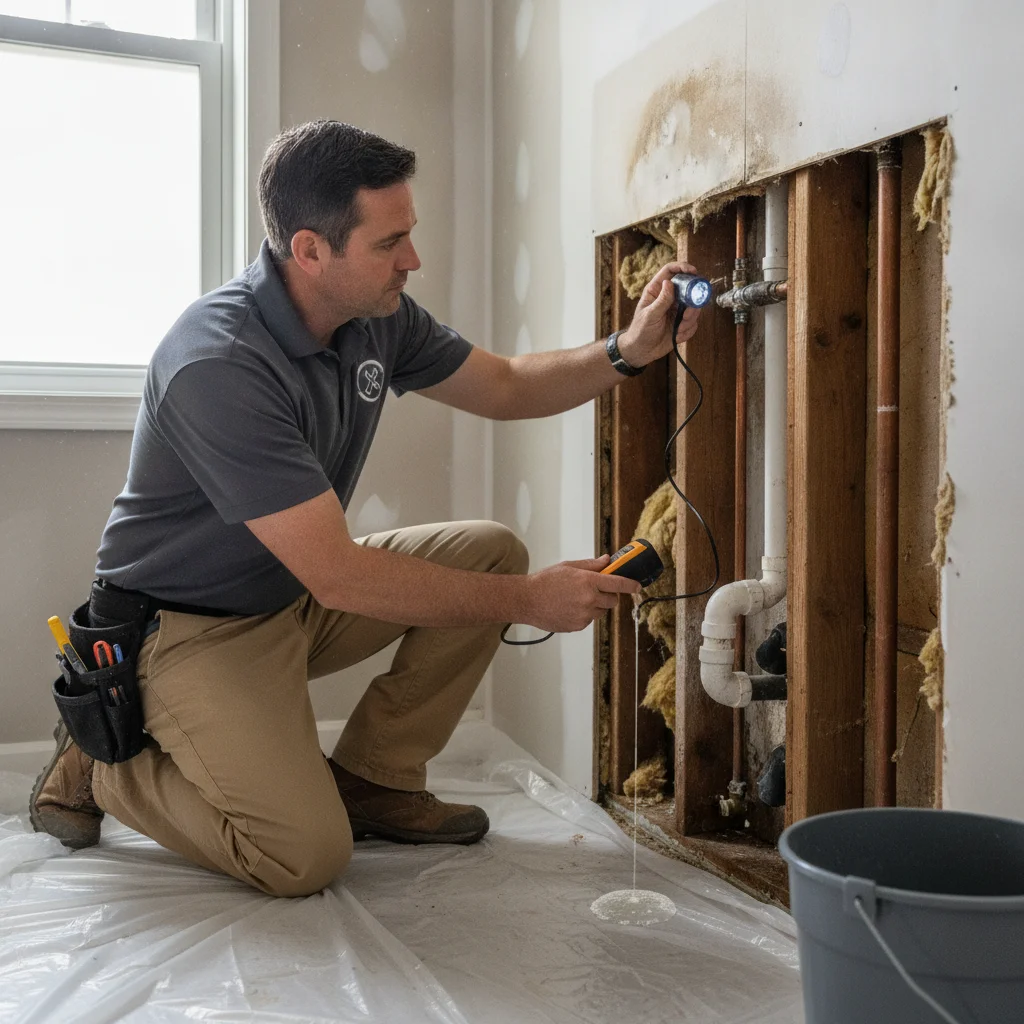
A licensed restoration pro in our network checks the ceiling below, the wall cavities, and the rooms that share that plumbing wall. If the ceiling is stained or sagging, ceiling water damage work may be part of the same job. Leave the cutting to the pro. Opening a wet ceiling from below, without knowing what is in the floor cavity, can drop insulation and wet gypsum into the room.
If you see mold on drywall, do not paint or caulk over it. The EPA says paint over moldy surfaces is likely to peel. Clean and dry first. If the moldy area is less than about 10 square feet, about a 3 ft by 3 ft patch, EPA guidance says a homeowner can often handle cleanup with their tips. If there has been a lot of water damage, or mold covers more than 10 square feet, consult EPA mold remediation guidance and bring in a pro experienced with that work. Mold can irritate eyes, skin, nose, throat, and lungs in allergic and non-allergic people. That is EPA language, not a diagnosis. Talk to a health professional about symptoms.
Separate plumbing repair from drying and removal
The plumber stops the leak and replaces the valve or cartridge. That is one contract. Drying the wall, removing wet materials, and putting the assembly back is another. Mixing those jobs is how wet insulation gets closed back in.
Restore Pro SD is a referral service. We do not hold a contractors license, own no drying equipment, and send no crew. The independent restoration pro you are matched with does the water work. You can verify a California contractor license on the Contractors State License Board site before anyone opens a wall. Check the plumber and the restoration pro as two licenses.
After the valve is sound, the restoration pro decides what can dry in place and what has to come out. Wet drywall and wet batt insulation often cannot be saved. Tile that still looks perfect can hide a soaked backer. The pro’s moisture map, not the look of the finish, drives that call. There is no salvage guarantee on a valve-bay leak. Some assemblies dry. Some have to be removed. Wet drywall is a common removal item on this kind of wall.
Structural drying is the work of moving air and controlling humidity until wood and remaining materials reach a documented dry goal. How long that takes depends on how far the water traveled and what it soaked. There is no honest fixed number for every San Diego shower wall. Closing the wall because the plumber is done is the mistake. The valve can be new and the cavity can still be wet.
If you suspect the HVAC system picked up mold from a nearby return, do not run it to dry the house. The EPA says not to run HVAC you know or suspect is contaminated with mold, because it can spread spores. Ozone machines sold as air cleaners are not a shortcut. EPA research shows ozone has little potential to remove indoor contaminants at levels that stay within public health standards, and ozone can be harmful.
Document moisture before the wall is closed
Photos of a stain are not a moisture record. Before tile and drywall go back, the restoration pro should log meter readings in the shower cavity, the adjoining bays, the ceiling below if it was wet, and the wood at the bottom plate. That log is what you hand an insurer, a landlord, or a buyer later.
A drying log tracks readings over the days the equipment runs. It shows the materials actually dried, not that a fan sat in the bathroom. Ask for those numbers before anyone schedules the tile setter. If a bay is still above the dry goal, it stays open. Closing a wet valve cavity is how the same stain comes back, and how mold starts behind new tile.
Keep the plumber’s invoice and the restoration scope as two files. One proves the valve was repaired. The other proves the structure was dried. If this is a rental, keep your notice to the landlord with those records. Civil Code 1941 still requires the lessor, absent an agreement to the contrary, to keep a dwelling fit for occupation. Civil Code 1929 still puts ordinary-care damage on the person who caused it. Those are separate questions from the drying work.
Do not treat a new coat of paint as the finish line. If mold was present, the EPA is clear: do not paint or caulk moldy surfaces. Clean, dry, then finish. For more on moisture and mold, see the EPA’s mold guidance. When the readings are in writing and the valve is confirmed off, then the wall can close.
When to call us
Call when a shower valve has been leaking into a finished wall, when staining shows in the next room or the ceiling below, or when a plumber has stopped the leak and the cavity still needs drying and removal. Call us at (858) 400-4586 and we’ll connect you with a licensed local restoration pro.