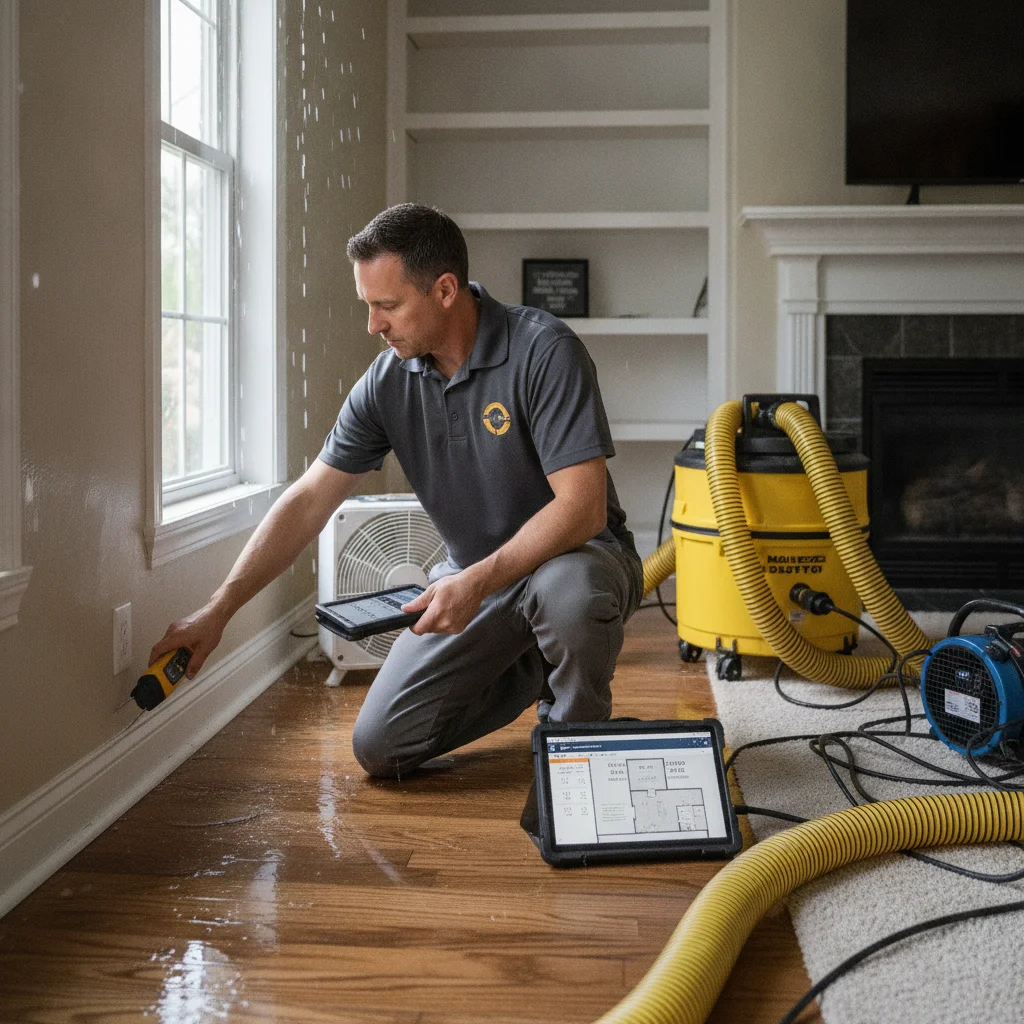
A water damage dry log is a dated record of the areas checked by an independent restoration pro. It helps you follow moisture readings, drying goals, and equipment decisions without relying on memory. No specific form, numeric target, or monitoring schedule could be confirmed in this site’s approved facts, so ask the pro to define those details in writing.
What belongs in a professional drying log
A useful log starts with the property, affected rooms, and independent contractor responsible for the entries. It should identify the San Diego County city and the water-damaged area described by the homeowner. That keeps the record tied to one job rather than a general checklist.
Each entry should make the measurement location easy to find again. Ask for the room, material, surface, and a precise reference point. “Bedroom wall” is vague. “Lower wall beside the closet” is easier for both you and the contractor to recognize later.
Ask the pro to record the date of each entry, the reading, and the tool used. The log should also explain abbreviations and labels. A page filled with unexplained initials won’t help a homeowner understand the work.
Equipment notes can appear beside the readings. Those notes might identify where a unit was placed, moved, added, or removed. They should describe the contractor’s decision without implying that every property follows one fixed plan.
This site’s approved facts don’t confirm a mandatory drying-log template. Ask the independent pro what format will be used before work begins. Our structural drying referral service can connect you with a licensed local pro who can explain their documentation process.
How moisture readings show changes over time
A column of moisture values doesn’t explain itself. Structural drying documentation becomes clearer when each value has a date, material, and repeatable location. That context lets you compare later entries with earlier ones.
Ask the contractor to keep location names consistent. If one entry says “hallway base” and another says “north wall,” you may not know whether both describe the same place. A simple room map or matching location label can remove that confusion.
The contractor should explain what each reading represents. Ask whether the tool, setting, and measurement method stayed consistent. If something changed, the log should note the change. Otherwise, two values may appear comparable when the contractor collected them differently.
Direction also needs explanation. A changing value can show movement, but it doesn’t define completion by itself. Ask the pro to connect each change with the stated goal for that material. If a reading holds steady or changes unexpectedly, request a written note describing the contractor’s interpretation.
There’s no confirmed monitoring schedule in this site’s approved facts. The independent pro should state the schedule they plan to follow for your property. For more context on the work surrounding those measurements, read our guide to what structural drying involves.
How drying goals are set for each material
A drying goal gives each recorded value a point of comparison. Ask the independent restoration pro to state the goal for every tracked material. The log should also explain how the pro selected that goal.
Don’t accept one unexplained target for an entire room. Drywall, subfloor, and wood framing should each have clear labels when they’re being tracked. The contractor can then explain the basis used for each material rather than leaving you to interpret the numbers.
No universal numeric target could be confirmed through this site’s approved claims ledger. That means this page can’t supply a percentage, meter value, or standard completion number. Those details must come from the contractor responsible for the measurements.
Ask whether the pro used a comparison area, material information, or another documented basis. Whatever the answer, it should appear beside the goal. That makes the final record easier to review without guessing why a value was selected.
The same principle applies across San Diego County. Whether the property is in coastal North County, central San Diego, East County, or South Bay, the log should describe the actual materials present. A ZIP code or neighborhood name shouldn’t replace direct documentation of the affected area.
Why equipment changes should follow measurements
Equipment records matter because readings and drying decisions belong in the same timeline. Ask the contractor to identify each unit by room, location, or label. That makes later changes easier to trace.
When equipment is moved, added, adjusted, or removed, the log should state what changed. Ask the pro to connect that decision with the latest measurements and drying goals. A short reason is more useful than an unexplained equipment count.
For example, the record can identify an area being reassessed without inventing a technical conclusion. The independent pro should provide the conclusion and its basis. Homeowners shouldn’t have to infer why one room received a different setup.
If you want an equipment adjustment, ask the contractor how it affects the documented plan before changing anything. The next entry should reflect any approved change. That keeps the physical setup and written record aligned.
No fixed equipment formula or adjustment schedule could be confirmed in this site’s approved facts. The contractor should explain the plan for your specific materials and affected areas. Restore Pro SD doesn’t own drying equipment or direct the physical work. We match homeowners with licensed, independent local restoration pros, and the homeowner contracts with the selected pro directly.
What homeowners should receive at completion
Ask for a readable copy of the water damage drying log when the documented work ends. It should preserve the location labels used throughout the job. That lets you connect the final entries with the earlier record.
Request the starting entries, later measurements, stated goals, and final readings. If the contractor changed tools, methods, locations, or equipment, those changes should be identified. Photos or room maps can also be included when the contractor created them.
The final entry should say whether the contractor considers each documented goal complete. If an area remains unresolved, ask the pro to identify it plainly. Any recommendation for more work should come from the independent contractor, not from an unexplained notation.
Review the document before filing it away. Ask about missing labels, unfamiliar abbreviations, or values that don’t connect to a stated goal. Corrections are easier to understand when the contractor can point to the exact room and material involved.
A drying log isn’t a state license or a warranty. Restore Pro SD holds no trade license and gives no warranty. The homeowner contracts with and pays the independent professional directly. Before hiring, review the contractor’s listed status through the CSLB license check.
When to call us
If several materials are affected or the readings aren’t clear, ask a licensed Water Damage Restoration pro to document the job. Call us at (858) 400-4586 and we’ll connect you with a licensed local restoration pro.