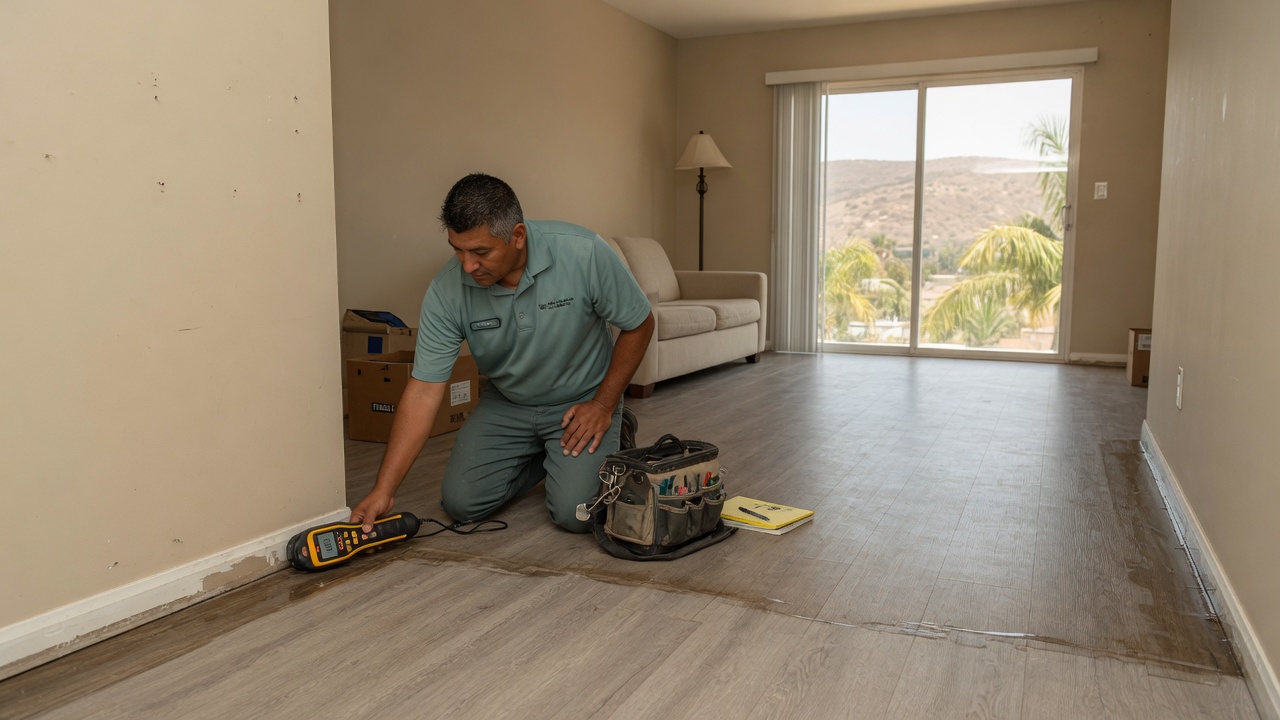
A plumber confirms and isolates the line. Restoration then maps where the water traveled through flooring and walls. Restore Pro SD matches you with that licensed restoration professional. We do not find or repair the pipe, and we do not extract or dry the room ourselves.
The wet spot at the plumber’s cut is not the whole job. Water from a slab leak often sits under vinyl, tile, or carpet long before anyone opens the concrete. Slab leak signs in San Diego is the detection page. This page is slab leak water damage cleanup after the line is off.
Many inland tract homes in El Cajon, Santee, Escondido, and Mira Mesa sit on slab. Some coastal cottages in Ocean Beach and Pacific Beach sit on raised floors. If the plumber confirmed a slab leak, the finish floor sits on or against concrete. The independent restoration pro treats that assembly, not a crawl space.
Confirm the plumber isolated the line first
Cleanup starts after the leak is stopped. EPA mold cleanup guidance is to fix plumbing leaks and other water problems as soon as possible and dry items completely. If the line is still feeding the slab, towels and a box fan are not the job.
Ask the plumber what they isolated and whether they opened the slab or shut the water at a valve. The independent restoration pro needs that written down so they are not drying a floor that is still being fed.
Stay out of standing water. The CDC electrical guidance is to shut the main breaker only when you can reach it without walking through water. Never switch power on or off while standing in water. Floor outlets in a wet kitchen, hall, or garage are a reason to call an electrician.
Photograph the plumber’s access, the wet edges, and the rooms that share that floor before anyone mops the evidence away. If the plumber said the failed line was a sewer or other contaminated pipe under the slab, stop handling the floor yourself. EPA guidance is to call a professional experienced with contaminated-water damage.
If a meter, billing, or shutoff question comes up, ask the plumber or the agency named on the water bill for that property. This page does not set water-district rules.
Map where the water traveled from the slab
The wet ring around the plumber’s hole is a clue. It is not the boundary.
On a Mira Mesa ranch, water can travel under vinyl plank from a hall bath into the living room because the slab pitches that way. In an El Cajon tract kitchen, it can sit under tile and only show at the grout or a cabinet kick. In a Santee hallway, carpet can look almost dry while pad is still soaked against the concrete. In an Escondido great room, the wet front can keep going under a sofa.
A licensed restoration pro maps past the stain. They check at furniture legs, along baseboards, at floor transitions, and in the next room, not only at the cut. Do not peel vinyl or lift tile yourself to see if it is wet.
A water heater in a garage can wet the living-room edge if the slab pitches that way. Leave furniture where it is unless it is blocking a shutoff or creating an electrical hazard you can reach from dry floor.
Check flooring, baseboards, and the concrete
Carpet is the layer you see. Pad and the slab stay wet after the face looks better. Tile and vinyl can act like a lid. Laminate can swell at the joints. None of that is a save rate. Salvage depends on water type, how long it sat, and the materials. This page will not quote a percentage for tile versus vinyl versus carpet.
Ask the independent professional to check the finish floor, any pad or underlayment, the slab surface, how far moisture has moved in the concrete, the bottom of the baseboards, and the wall plate behind them.
On inland slab homes, finish often sits on concrete with little or no wood subfloor. If you are on a raised floor, wet subfloor water damage is the better description of the wood layer. If you are on slab, the question is how long water sat against concrete under a covering that trapped it.
A slab can stay wet after the room air feels dry. Structural drying is the work of pulling that moisture out of concrete, plates, and wall cavities so finishes are not going back over a wet deck. Restore Pro SD does not publish a drying-day clock.
Do not park a box fan on top of closed tile as the whole plan. Do not lay new vinyl over a floor that still reads wet. Do not paint or caulk a moldy baseboard to hide it. EPA guidance is to clean up the mold and dry the surfaces before painting. Paint applied over moldy surfaces is likely to peel.
Check walls and rooms that share the wet floor
Water from a slab leak wicks into the bottom plate and up the drywall paper. The paint can still look fine. The baseboard can hide a wet edge.
The independent pro should check behind baseboards in the mapped rooms, not only wipe the face. They look at the plate, the drywall paper, and whether the wet front has moved into a closet, a hallway, or a shared wall with the next unit in a Mira Mesa condo.
A closed bedroom door does not stop water under the flooring. Check the room on the other side of the hall, the closet on the wet wall, and any cabinet that sits on the same slab. Swelling, crumbling paper, or a musty smell after the leak is stopped is a reason to get readings before anyone textures over it.
Keep plumbing repair off the restoration scope
A slab leak is two jobs, not one. The plumber finds and isolates the line. The restoration professional documents the rooms, extracts standing water if any, and dries the building. Mixing those jobs is how a floor gets closed while the slab is still wet, or how a restoration scope tries to sell a repipe.
Restore Pro SD does not quote repipe packages and does not sell PEX. We match you with a licensed independent restoration professional for the wet flooring and walls. You contract with them.
Isolation and pipe repair stay with the plumber. The moisture map, extraction, and drying stay with the restoration professional. Flooring and drywall replacement stay with whoever you hire after the structure is dry. Water damage restoration is that indoor sequence after the source is stopped. It is not leak detection.
If you rent, tell the landlord in writing. California Civil Code 1941 and 1941.1 treat effective waterproofing, plumbing in working order, and floors in good repair as part of a dwelling being fit to occupy.
Recheck moisture before finishes go back
The last mistake is putting flooring back too soon. New vinyl, carpet, or tile on a damp slab traps moisture again.
The independent pro should recheck the same spots the leak hid the first time: under the furniture, along the wall the bed sits against, at the bath-to-hall transition, and at the plumber’s access. What you want is evidence. Moisture readings that have come down compared with a dry room of the same materials. Pad that is dry or replaced. A slab that is ready to take a covering.
There is no honest fixed drying time for a San Diego slab. Coastal humidity holds moisture longer than a dry East County afternoon. If the floor face looks fine and the baseboard still smells sour, the job is not done. If the pro removed a strip of flooring, ask whether the remaining edge is dry before anyone orders matching plank.
When to call us
Call when a plumber has isolated a slab leak and you still have wet flooring, wet baseboards, or rooms that share that slab. Stay out of standing water. Call us at (858) 400-4586. The line takes a recorded message. You get a call back. We match you with a licensed local restoration pro. They contract with you directly.