The dry-looking living room can still have a wet strip under the sofa. A leak from a supply line, an AC drain, or an upstairs bathroom often travels under furniture first. That hidden carpet is the part a licensed restoration pro has to reach before carpet water extraction can even start.
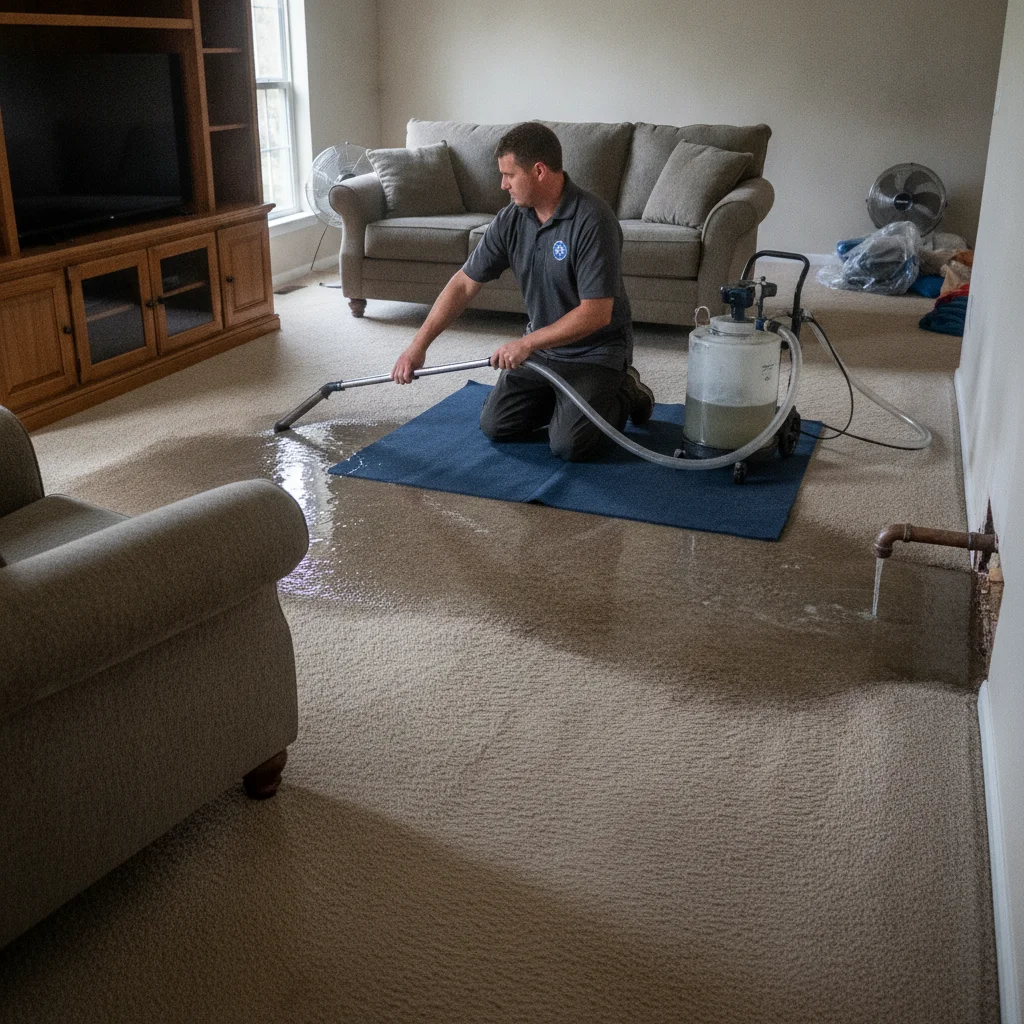
Document the room before contents are moved
A sofa, bed, or cabinet can hide the worst of a leak. Before anyone lifts a piece, the independent restoration pro documents the room as it sits. That means photos of furniture in place, wet edges at the legs, and a written note of what is sitting on the carpet. A king bed in a Clairemont ranch is a different access problem than a leather sectional in a Mission Valley condo.
That record is not busywork. Insurers later ask what was wet, what moved, and in what order. You want that written down while the furniture still shows the water line.
The pro also notes weight and the house type. Many inland San Diego County homes in El Cajon, Santee, and Escondido sit on slab. Heavy furniture on carpet over pad over concrete can trap moisture against the slab. Older beach cottages in Ocean Beach and Pacific Beach often sit on raised floors. Water under a bed there can soak pad and subfloor and drift toward a crawl space. Coastal humidity holds that moisture longer than a dry East County afternoon.
Do not drag a soaked dresser across wet carpet. Sliding can smear dye, tear backing, and push water into a dry corner. The matched pro decides what gets lifted, what gets blocked, and what waits for contents handling. You can photograph from a dry doorway. Stay out of standing water. If a lamp, power strip, or outlet sits in the wet zone, do not stand in water to kill power. The CDC says to shut the main breaker only when you can reach it without walking through water. Otherwise call an electrician.
First job: a record of the furnished room. Not a rushed rearrange.
Check carpet beyond the visible wet area
The wet ring you can see is rarely the whole map. Carpet wicks. Water that pooled under a sofa can travel along the backing into a hallway, a closet, or under the dining table on the other side of the room. In a Chula Vista apartment, that path may stop at a threshold. In an open Mira Mesa great room, it can keep going.
A licensed restoration pro checks past the stain. Moisture meters and thermal cameras are tools they bring, not something you need to buy. They lift a corner only when it is safe to do so. They probe at furniture legs, along baseboards, and at the far side of the piece, not just the face that looks dark.
Pay attention to rooms that share a wall with the leak. An AC condensate drip in a hallway can run under a bedroom dresser. A washing machine leak in a San Marcos laundry closet can show up as damp carpet under the bed one room over. A water heater in a garage can wet the living-room edge if the slab pitches that way. The visible puddle is a clue. It is not the boundary.
If the water came from sewage or another contaminated source, stop handling the carpet yourself. The EPA mold guidance is clear: fix the leak as soon as you can, dry materials completely, and call a professional experienced with contaminated-water damage when sewage is involved. Restore Pro SD is a referral service. We connect you with those independent licensed pros. We do not extract, lift, or dry the room ourselves.
Until the pro maps the wet area, leave furniture where it is unless it is blocking a shutoff or creating an electrical hazard you can reach from dry floor.
Assess padding and subfloor beneath furniture
Carpet is the layer you see. Padding and subfloor are the layers that stay wet after the face looks better. Furniture makes that worse. A loaded bookcase or a platform bed presses the pad into a wet sandwich. Air cannot move. The face of the carpet can feel almost dry while the pad under the nightstand is still soaked.
The independent pro assesses those layers after the piece is moved, not before. They look at pad color, odor, and how far the wet front has spread. They check the subfloor for swelling, staining, and moisture that has reached wood or the slab. On a coastal raised floor, that check can include the joist bay. On an inland slab home, it is often a question of how long water sat against concrete under a heavy sofa.
None of that tells you the carpet will be saved. Salvage depends on water type, how long it sat, the pad, and the backing. A separate page covers whether water-damaged carpet can be saved. Padding that stays wet after extraction is its own problem, and the pro may need to open or replace pad so the floor can dry. Wet subfloor under a bed is not a cosmetic issue. It is a drying and repair question the licensed contractor has to answer on site.
Do not peel a corner of pad yourself to “see if it is wet.” You can tear the carpet, spread contamination, and lose the photo record of how the furniture sat. Let the pro do the lift, the meter readings, and the written notes.
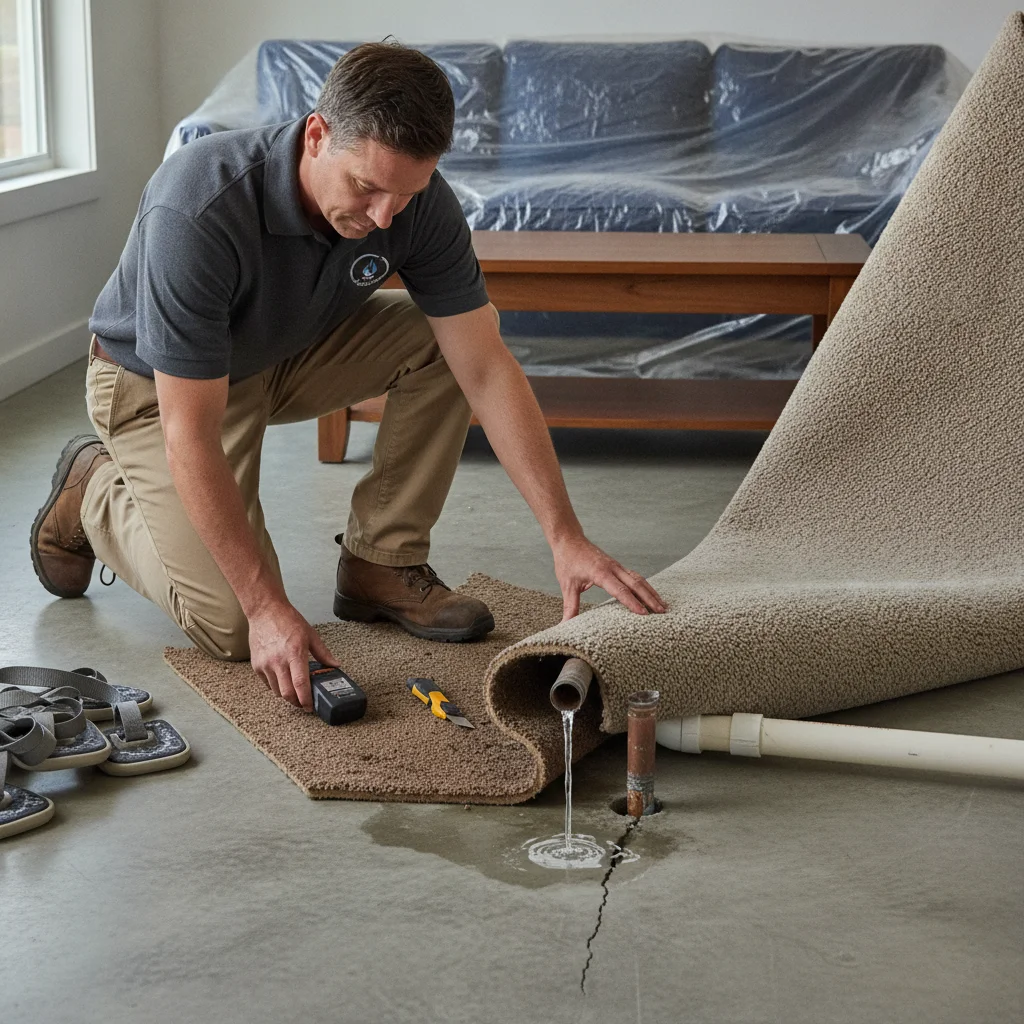
Separate contents handling from extraction and drying
A furnished room is two jobs, not one. Contents have to be protected, moved, or packed out. Carpet and structure have to be extracted and dried. Mixing those jobs is how a sofa gets set on still-wet pad, or how an extractor cannot reach the wettest strip because a dresser is still in the way.
The independent restoration pro should keep those tracks separate in the scope. Contents handling covers what sits on the floor: beds, sofas, cabinets, electronics, and the stuff in the drawers. Extraction and structural drying cover the carpet, pad, and building materials. If the room needs a packout, that is a documented contents process, not a side errand during extraction. Our water damage packout page walks through how that coordination is supposed to look on paper.
Ask who is moving what. A restoration technician is not automatically a contents specialist. Heavy oak in a Rancho Bernardo dining room, a sleeper sofa in a Pacific Beach rental, and a wall of IKEA cubes in a downtown condo all move differently. Unsupported DIY lifting is how backs get hurt and how wet feet punch through carpet backing. If the pro says a piece stays until a contents crew arrives, that is access planning, not delay for its own sake.
Keep the paper trail split too. Photos of contents in place. Photos after the lift. Meter readings on the exposed carpet. A note on where each piece will sit while the floor is open. Renters should also tell the landlord in writing. California Civil Code 1941 and 1941.1 treat effective waterproofing and floors in good repair as part of a dwelling being fit to occupy. That is the landlord’s repair duty, not a reason to skip professional drying. Civil Code 1929 still puts ordinary-care damage on the person who caused it.
You contract with the licensed contractor, not with Restore Pro SD. Check a California license on the CSLB license lookup before work starts.
Review conditions before furniture returns
The last mistake is putting the bed back too soon. Furniture returned onto damp carpet traps moisture again. You get odor, staining, and a second round of hidden wet pad. The independent pro should recheck the floor after extraction and drying equipment have done their work, then say whether the piece can return.
That review is a condition check, not a promise on the calendar. How long a room takes depends on the water, the pad, the slab or wood, and coastal versus inland humidity. There is no honest fixed drying time for a furnished San Diego bedroom. What you want is evidence: moisture readings that have come down, pad that is dry or replaced, and a floor that is ready to take weight.
Look at the same spots the leak hid the first time. Under the sofa. Under the dresser feet. Along the wall the bed sits against. If the carpet face looks fine and the pad still smells sour, the job is not done. If the pro replaced pad in one strip, ask whether the furniture will sit on that new pad or on a remaining wet edge.
Do not park a plastic bin or a folded blanket under the sofa “to keep it off the carpet.” That still blocks airflow. Follow the pro’s placement plan. If contents went to storage, they should not come home until the floor check is written down.
IICRC S500 is the industry playbook many restoration contractors use for drying. It is a voluntary standard, not a California license. CSLB licensing is what lets a contractor perform the repair work. Restore Pro SD holds neither. We match you with independent licensed local pros.
When to call us
Call when furniture is sitting on wet carpet and you cannot see or dry what is underneath, or when the water may be contaminated. Stay out of standing water and leave the lift to a licensed restoration contractor. Call us at (858) 400-4586 and we’ll connect you with a licensed local restoration pro.