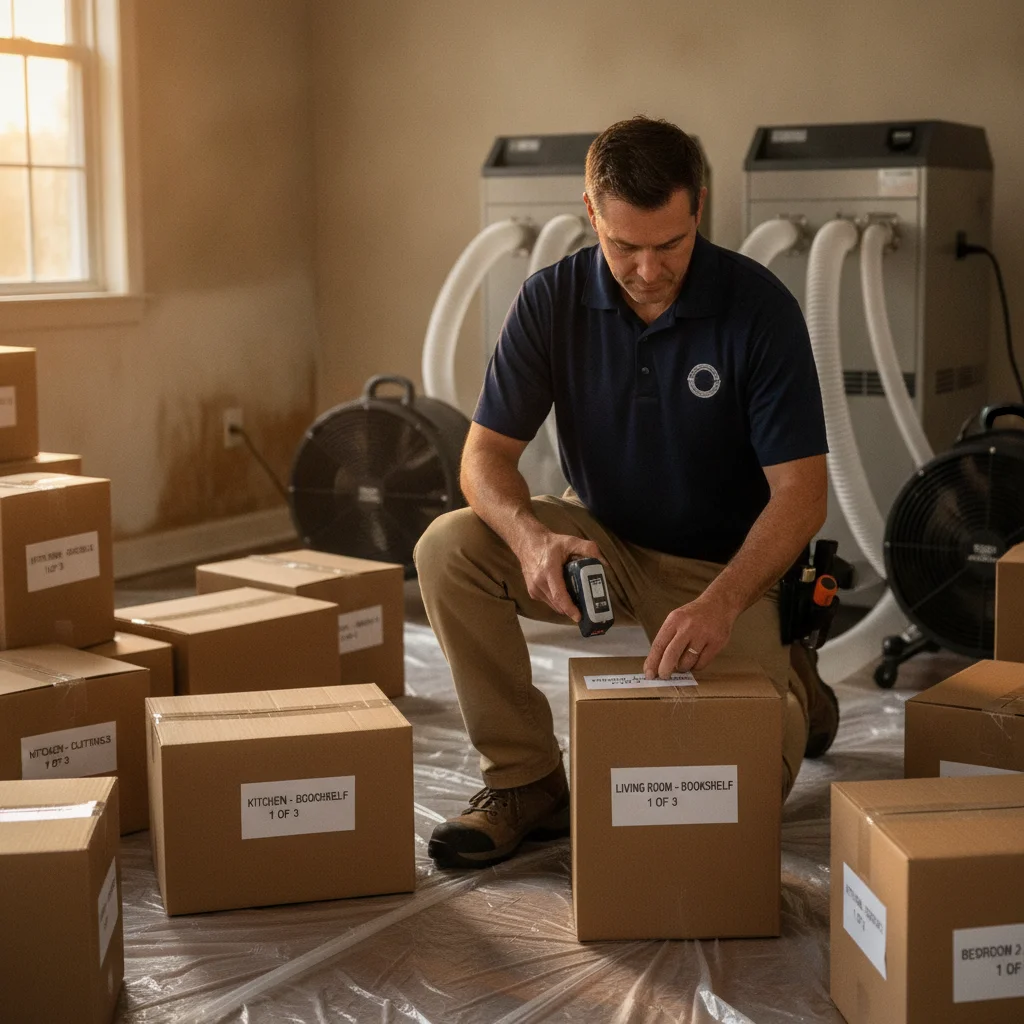
In San Diego, a typical pack-out starts with a written scope and room-by-room inventory. Selected belongings are packed, tracked off site, then returned after the affected space is ready. The homeowner and independent restoration pro decide what moves, what stays, and how each item is documented.

An independent restoration professional labeling boxed household contents inside a home being prepared for drying

What a pack-out is and when one is proposed

A pack-out is a plan for moving household contents during restoration. It can cover an entire affected room or selected belongings only. The scope depends on the damage, needed access, and the homeowner’s approval.

A restoration pro may propose one when belongings block access to wet surfaces. It may also help when selected items need separate inspection or cleaning. Moving contents can give the pro room to assess walls, floors, cabinets, and other affected areas.

The pack-out should connect directly to the planned water damage restoration work. It shouldn’t be treated as an unrelated moving job. Ask the pro to explain which restoration step requires each group of items to move.

The route out of the home matters too. A downtown San Diego elevator presents different handling questions than a City Heights stairway or a Chula Vista garage entrance. The written plan should address the actual route, building access, and any homeowner or property rules.

A proposal doesn’t mean everything must leave. The homeowner can ask why each area is included. They can also request a clear distinction between items moving off site and items shifting elsewhere inside the home.

There isn’t one fixed pack-out procedure for every San Diego loss. The independent pro should explain the proposed scope before packing starts. That explanation should match the home, affected rooms, and restoration plan.

How contents are inventoried before anything moves

Inventory creates a shared reference for the homeowner and restoration pro. It should happen before boxes or furniture leave their original locations. A clear record makes later questions easier to resolve.

The pro may document contents by room, container, or individual item. The exact method should be stated in the authorization. Photos, written descriptions, box labels, and item identifiers can help connect each belonging to its starting location.

Ask how grouped items will appear on the inventory. A label such as “kitchen box” may not tell you enough later. The homeowner and pro should agree on the level of detail before packing. Items needing individual attention should be identified separately.

Condition notes also matter. The record can distinguish visible water effects from marks or wear already present. If the homeowner disagrees with a description, that concern should be added before the item moves.

Personal records, medication, keys, identification, jewelry, and devices may need special decisions. The homeowner should tell the pro which items must remain accessible. Nothing should be assumed based only on where it was found.

Ask for a copy of the completed inventory. Confirm whether both parties will acknowledge it and how later corrections will be recorded. If photos are part of the record, ask how the homeowner can review them.

The inventory should also identify the planned destination. That may be another room, an approved on-site area, or off-site storage arranged under the authorization. The homeowner should know the destination before approving removal.

What usually stays on site and what leaves

There’s no universal list of belongings that must leave. The decision belongs to the homeowner and the independent restoration pro. It should reflect the affected area, required access, item condition, and handling plan.

Items may stay when they don’t obstruct the planned work. A large piece of furniture might be shifted and wrapped if the room allows it. Contents in an unaffected area may also remain where they are.

Items may leave when the pro needs clear access to surfaces. Boxed contents from an affected room may be moved together. Selected belongings may also leave for evaluation or other handling described in the written scope.

Ask the pro to mark each planned outcome clearly. Useful categories may include staying in place, moving elsewhere on site, leaving the property, or awaiting a homeowner decision. Those labels should describe the actual plan, not hide uncertain decisions.

The homeowner should also identify anything that cannot be moved normally. That could include fragile belongings, private documents, sentimental items, or property owned by someone else. The pro should explain how those exceptions will be handled before work begins.

Don’t assume an item absent from the pack-out list will be discarded. Disposal, cleaning, storage, and return are separate decisions. Each should require clear documentation and homeowner approval.

This contents work fits within the broader water damage restoration process. Keeping the two scopes aligned helps prevent confusion about what must move and why.

A room where furniture has been moved and wrapped while drying equipment runs along the wall

How contents are tracked while the structure dries

Once contents move, the inventory becomes the working tracking record. Each box, furniture piece, or grouped entry should connect to a known location. The homeowner should know who maintains that record.

A practical tracking system may use identifiers on boxes and inventory entries. The same identifier should follow the contents through any approved handling stages. If an item changes location or status, the record should show that change.

Ask how access requests work while contents are away. Some belongings may be difficult to retrieve once packed or stored. The authorization should state who handles requests and whether any limits apply.

Contents tracking and structural restoration records serve different purposes. The contents log follows belongings. The restoration documentation follows work inside the property. Homeowners can review what affects a restoration schedule without assuming that pack-out storage follows the same schedule.

No universal storage charge, facility condition, access rule, or holding period could be confirmed from the approved site sources. The independent contractor or storage provider sets those details. Request the current terms in writing before authorizing off-site storage.

Ask where the contents will be held and who controls that location. Confirm how loss, new damage, or an inventory mismatch should be reported. The written terms should identify the responsible business and its contact process.

Before return, compare the current record with the original inventory. The homeowner and pro should address missing notes or disputed entries before boxes are moved back into the restored space.

What to confirm before signing a pack-out authorization

A pack-out authorization should identify the business doing the work. Restore Pro SD is a referral service. We connect homeowners with licensed, independent local restoration pros, but we don’t pack, transport, store, clean, or restore belongings.

Confirm which rooms and contents are included. The document should distinguish on-site movement from off-site removal. It should also identify any excluded belongings and unresolved decisions.

Review the inventory method before signing. Ask who prepares it, how conditions are recorded, and when you’ll receive a copy. Confirm how additions or corrections will be approved after packing begins.

Pricing and payment terms should be written clearly. Restore Pro SD doesn’t set the contractor’s prices. No verified San Diego pack-out rate appears in the approved site sources, so request current itemized charges directly from the independent pro or storage provider.

Insurance coverage also can’t be assumed. A policy, insurer, or other authorized claim representative determines what applies to a specific claim. Ask for written clarification about approvals, limits, deductibles, and payment responsibility before relying on coverage.

The authorization should explain storage, access, return, and unpacking. Confirm who decides when the home is ready for returned contents. Ask whether placing furniture and unpacking boxes are included or handled separately.

Review responsibility for fragile items, owner-packed boxes, valuables, and property that isn’t being moved. The document should also explain how to report a missing or newly damaged item.

Before authorizing repair work, check the independent contractor through the CSLB online license check. Compare the business name on the authorization with the record you find. Keep the signed authorization, inventory, photos, and later revisions together.

When to call us

Call when water damage requires contents to be moved so a licensed restoration pro can assess and work in the affected space. Call us at (858) 400-4586. The line plays a recording-consent notice, then takes a recorded and transcribed message. It isn’t answered live and doesn’t forward.