The puddle on a Vista floor can be gone while the wall is still wet. Structural drying is how leftover moisture comes out of drywall, framing, and floors after a leak. Inland North County heat can dry the room air, and it can hide a damp cavity behind stucco until the house smells wrong.
Confirm the water source is being addressed
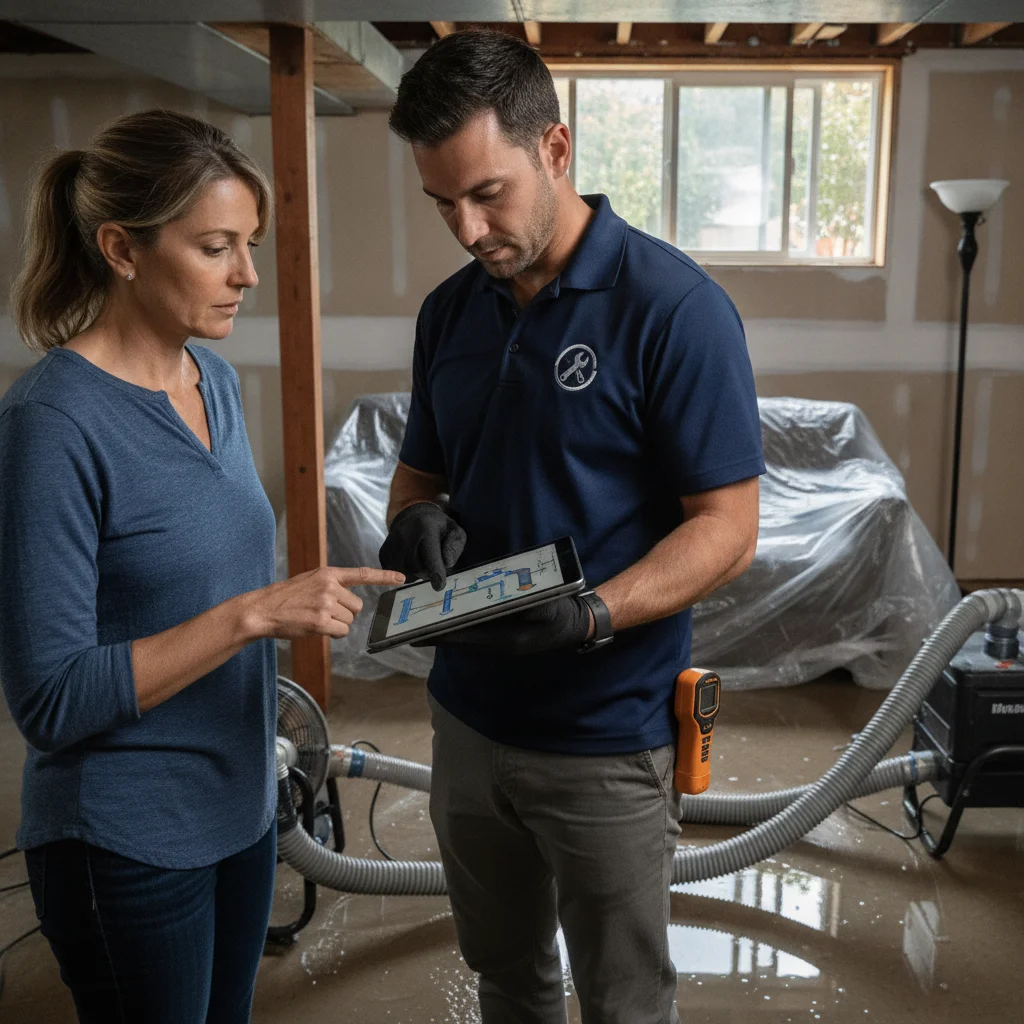
A drying plan fails if water is still entering the house. Before structural drying starts, someone has to stop the source. That might be a supply line, a water heater, a slab leak, a roof, or water that came in from the street. Fans on a live leak only move the problem.
In Vista, a lot of this starts inside. Older plumbing near Vista Village and the streets around Santa Fe Avenue can fail at a fitting you never see. Newer tracts in Shadowridge still get washer hoses, ice-maker lines, and water-heater pans that dump onto slab. Hillside lots around Brengle Terrace Park take roof and stucco leaks when winter storms hit inland North County. If runoff came in from the curb, treat that as its own cleanup path. It is not just a wet carpet.
The EPA’s mold guidance is blunt on the first move. Fix plumbing leaks and other water problems as soon as you can, and dry items completely. If the water was sewage or another contaminated source, that is not a household fan job. Call a professional experienced with contaminated-water damage. The EPA mold pages are the public version of that advice.
Watch the electrical side while you wait. If circuits or equipment are wet or sitting near water, turn power off at the main breaker only when you can reach it without walking through standing water. Otherwise call an electrician. Never switch power on or off while you are standing in water.
If you rent, California Civil Code 1941 puts a duty on the landlord to keep a dwelling fit to occupy, including working plumbing and weather protection, unless you agreed otherwise. Civil Code 1942 is the repair-and-deduct path after notice. It is limited, and it is not a drying protocol. Get the leak stopped, then get the structure measured.
Extraction is not drying. Pulling the puddle is the first pass. Moisture left in drywall, plate, subfloor, and insulation is the actual drying job. If you already had urgent water extraction in a Vista home, ask the next pro to start from those wet materials, not from a floor that looks dry.
What structural drying covers in a Vista home
Structural drying is controlled drying of the building itself: walls, floors, ceilings, framing, and cavities you cannot see. It is not a box fan in the hallway. The independent restoration pro maps where water went, what it soaked, and how air movement and dehumidification will pull that moisture back out.
Vista sits inland in North County, east of Oceanside and Carlsbad. That matters for Vista water damage drying. Coastal marine air is not the default here. Summer days run hotter and drier than Encinitas or Del Mar. Winter storms still soak stucco, slab edges, and older roofs. A room that feels dry at 3 p.m. can still have a wet bottom plate. Surface air is not the same as dry lumber.
Housing stock in Vista is mixed, so the drying path is mixed. Slab-on-grade tract homes are common. Water from a washer or water heater often runs along the slab, under baseboard, and into the first few feet of wall. Stucco and paper-faced drywall can look intact while the cavity is wet. Some hillside and older homes have crawl spaces. Those hold a different moisture path than a slab. Attached garages and lower-level rooms trap cool, still air. That is a different drying problem than a sunny living room off Hacienda Drive.
A written drying scope should name the rooms, the materials, and the hidden paths. Typical items: wet drywall and insulation, baseboard and bottom plate, subfloor or slab edge, cabinets that wicked water, and any ceiling that took an upstairs leak. Carpet and pad are finishes, not the structure. They may still have to come up so the floor can dry. The pro should say which materials stay, which come out, and why.
What drying does not cover: rebuilding the wall, matching texture, new flooring, or paint. Those are repairs. They come after remaining materials are actually dry. The EPA is clear that you do not paint or caulk over moldy surfaces. Clean and dry first. Paint over mold is likely to peel.
If the HVAC system might be wet or moldy, do not run it to “help dry the house.” EPA guidance says not to run HVAC you know or suspect is contaminated with mold, because it can spread spores through the building. Ask the independent pro to treat that system as its own question, not a free drying tool.
How moisture readings shape the written scope
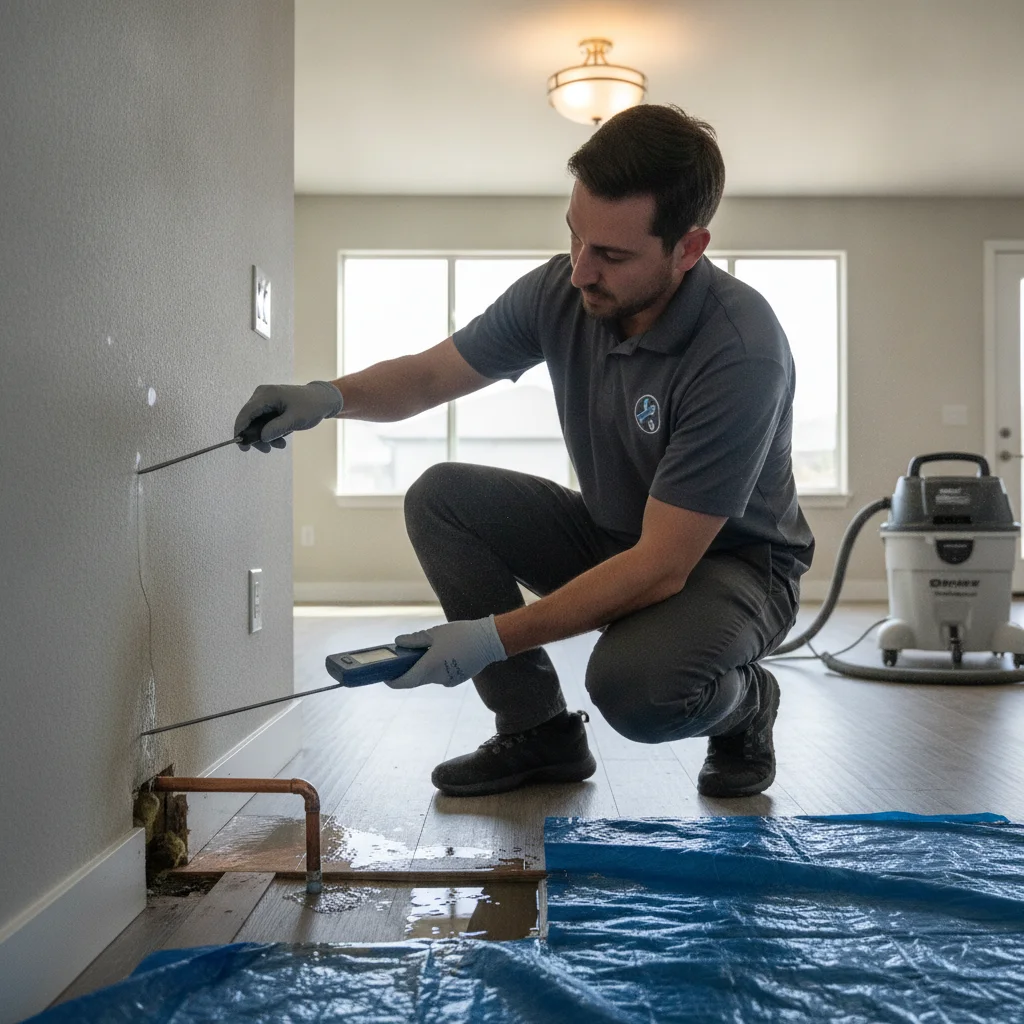
You cannot see most of a leak once the puddle is gone. The independent pro should measure, not guess. Moisture meters on drywall, wood, and flooring, plus a look at adjacent rooms, show whether water stayed in one bay or traveled. Thermal cameras can hint at cool, wet spots. They do not replace a meter reading on the material itself.
Unaffected material in the same house is the comparison. A dry closet on the other side of the slab is more useful than a number copied from another job. Ask for those comparison readings in writing. A scope that says “dry the living room” without a map of wet walls is not a scope. It is a wish.
The written plan should follow the readings. Wet only the lower two feet of one wall is a different job than wet insulation in three rooms plus a cabinet run. How much material is wet, and how wet it is, changes equipment layout and how long the pro needs access to the house. This page will not give you a target moisture percentage or a day count. Those numbers belong to the materials in your house, the indoor air, and the weather that week. Inland Vista heat can move moisture faster on a dry afternoon. A cool, closed room off the garage can lag. The log should show both.
Regular readings are how you know the plan is working. If numbers are not moving, the pro changes airflow, containment, or what gets removed. If they are moving toward the dry standard they set from your own unaffected materials, you keep going. Ask to see that drying log. You want dates, locations, and readings, not a verbal “it should be fine.”
Hidden signs that the first pass missed something: a musty smell after the fans leave, drywall that feels cool or soft at the base, cupping at a floor edge, swollen toe-kicks, or a stain that keeps spreading. Water that reached more than one room, or sat in a wall, is past a towel-and-fan fix. The EPA’s homeowner mold cutoff is about a 10 square foot patch for simple surface cleanup. A lot of water damage, or growth larger than that, is a reason to use their professional remediation guidance.
Separate drying from repairs and reconstruction
Drying and rebuilding are two contracts, even when one company can do both. Drying ends when remaining materials have been brought back to a documented dry condition. Reconstruction starts when you open, replace, or refinish what the water ruined. Mixing them too early is how people close a wet wall.
In Vista, the repair side often hits the City of Vista Building Division. Structural drying itself is moisture work. New drywall, electrical repairs, water-heater replacement, and some flooring or framing repairs can need a permit. This page could not confirm a Vista ordinance that sets a permit trigger for drying equipment. Check the Building Division before you rebuild. Ask the independent pro which line items are drying and which are construction. If a figure or rule is not on the city’s published materials, treat it as unconfirmed and call the city.
Keep the sequence honest. Stop the source. Extract standing water. Map moisture. Dry or remove wet materials. Confirm with readings. Then repair. Cabinets, trim, and texture come after the cavity is dry. If mold is already visible, cleanup and drying come before paint. Do not caulk over it.
Insurance paperwork likes that split too. A drying invoice documents mitigation. A rebuild invoice documents what you put back. One blurry “restore the room” line makes both the adjuster and the next contractor guess. You do not need a speech about coverage here. You need a paper trail that matches what happened in the house.
If the loss started as street water in Vista, say so in the notes. Dirty water changes what can be saved. Clean supply-line water is a different hygiene problem than sewage. The EPA’s rule on contaminated water still applies: get a professional who has done that work, not a general handyman with a fan.
Verify the independent pro through official sources
Restore Pro SD is a referral service. We match you with licensed, independent local water damage professionals. We do not run the drying equipment, own the trucks, or hold a California contractor license. The person who writes your structural drying Vista CA scope should.
Water damage repair work in California is licensed by the Contractors State License Board. Look the company up on the CSLB license check before they set a dehumidifier in your hallway. Confirm the business name, the license status, and that the license matches the work. IICRC classes such as water restoration training are voluntary certifications. They are not a state license and they do not replace CSLB.
Ask who will be on site, who is writing the moisture map, and who is signing the drying log. Ask how they will protect the rest of the house. Ask what happens if readings stall. Then compare that to a second written scope if the job is large. Our guide to verifying a water damage restoration company walks through the same checks.
For mold and moisture science, stay with the EPA, not a sales flyer. For flood basics, FEMA’s flood resources are public. None of those agencies license the brand on this site. They are how you check the story you are being told.
You get a call back when you leave a message on our line. There is no published arrival window. The match is the point: a licensed local pro, a written drying scope, and a Vista house that is actually dry before anyone hangs new drywall.
When to call us
Call when a leak has reached walls, floors, cabinets, or more than one room, or when the house still smells damp after the visible water is gone. That is structural drying work for a licensed Water Damage Restoration pro, not a weekend fan setup. Call us at (858) 400-4586 and we’ll connect you with a licensed local restoration pro.