A sewage backup in an Oceanside rental rarely stays in one bathroom. Wastewater can reach vinyl in the hall, carpet in a bedroom, and the bottom of a shared wall before anyone has a full picture. Owners, managers, and residents comparing sewage backup cleanup Oceanside rentals need the same first cut: what came up, which rooms it touched, and what a licensed independent pro is offering to remove, clean, and dry.
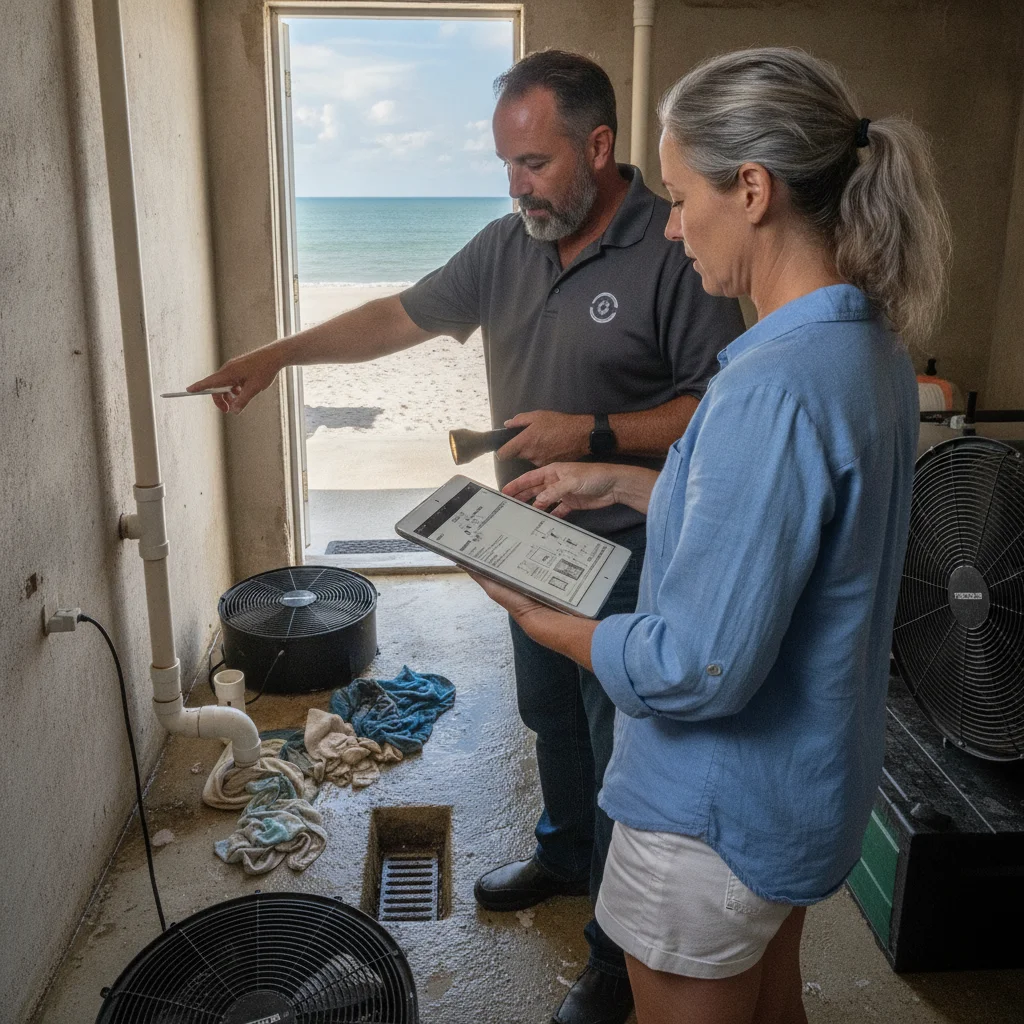
Identify the backup source and affected areas
Name the source before anyone wades in. A single toilet overflow is a different map than water coming up a shower, a floor drain, or every fixture at once. Several fixtures backing up together often points to a building drain or a sewer line, not one clogged bowl. A licensed plumber may still need to confirm the line. The cleanup scope is not honest until that answer is on the table.
Stay on the dry side of the unit if you can see the rooms without entering standing water. Note every wet floor, wet baseboard, and adjoining closet. In older South Oceanside cottages, wastewater often tracks along low floors toward a hallway. Inland tract rentals toward Fire Mountain and the SR-78 corridor sit on slabs, so moisture can hide at vinyl edges and under cabinets. In stacked apartments near Mission Avenue or the 78, check the unit below and any laundry on the same stack.
Keep people and pets out of the wet area. If outlets, cords, or equipment are wet or near water, turn off power at the main breaker only when you can reach it without entering standing water. Otherwise call an electrician. Never switch power on or off while standing in water. That is CDC electrical guidance in the same disaster-cleanup family as staying out of contaminated rooms.
The EPA is direct on sewage. Fix the plumbing problem as soon as you can, dry items completely, and if the water is sewage or otherwise contaminated, call a professional experienced with contaminated-water damage. A mop and household spray do not set the boundary for sewage cleanup. Independent restoration pros working to IICRC S500 and S520 practice treat this as contaminated water, with containment, removal, and drying planned as one job, not a surface wipe.
From a dry doorway, write what you can see: the fixture, the odor, any standing water, and which rooms still look dry. That list starts the scope. It is not the whole job.
Document conditions before belongings are moved
Photograph the unit before a couch moves. Once contents shift, it is hard to show what was wet, what was clean, and what got carried through a hallway.
Shoot each affected room from the doorway, then closer frames of flooring, baseboards, lower drywall, and anything that sat in the water. Put a sheet of paper with the date and the unit address in one shot. Do the same for rooms you believe are dry. A dry bedroom next to a wet bath belongs in the file.
Do not pack out through clean carpet if a wet path is the only route. The independent pro can set a dirty path and a clean path. Residents often want clothes and kids’ items first. Note those items in place, then ask how they will be bagged and separated. Wet contents in a dry kitchen expand the job.
California Civil Code section 1941.1 treats a dwelling as untenantable when it substantially lacks listed characteristics, including plumbing maintained in good working order. That is a condition standard, not a cleanup invoice. Who pays, who relocates, and who calls an insurer is a lease, policy, and advice question. This page does not assign those duties. Keep the photos anyway. They keep later talks attached to the same rooms.
If the property already has a unit file, drop the photos in before anyone talks about cutting drywall. A toilet overflow and a main-line backup can look similar in a doorway shot and very different once the baseboards come off.
Compare removal, cleaning, and drying boundaries
Cleanup quotes for the same Oceanside rental can match on the first line and diverge on the last. Ask where removal stops, where cleaning starts, and whether drying is in the price of the rooms you named.
Removal is the cut line. Porous materials that held sewage, such as carpet, pad, and swollen baseboard, often leave the building. Vinyl plank may lift. Lower drywall may be cut to a marked height. If a quote leaves carpet in place “to dry,” ask how the pad and tack strip will be handled. Cleaning a face is not the same as removing a reservoir.
Cleaning is sanitation of what stays. Hard surfaces, framing, and some contents can be cleaned when the independent pro says they can. Ask which rooms are in the clean set and which are only called adjacent. A hallway used as a traffic path belongs in that talk even if it never held a puddle.
Drying is its own boundary. After extraction, structural drying covers moisture left in studs, subfloor, and plaster. Ask whether moisture readings and a drying log are part of the work. A sewage cleanup estimate that skips drying leaves the next problem unnamed.
The EPA’s roughly 10-square-foot mold cutoff is for small mold patches in ordinary conditions. It is not a DIY green light after sewage. If later mold covers more than about 10 square feet, or the water damage was large, use EPA mold remediation guidance. Do not paint or caulk moldy surfaces. Clean and dry first. Paint over mold is likely to peel. If you suspect the HVAC is contaminated with mold, do not run it. It can spread mold through the building.
How much sewage backup cleanup costs is not a figure this site can publish. No verified market range sits on our claims ledger, including any national franchise rate. Compare rooms, materials, and drying. Let the independent pro price that list.
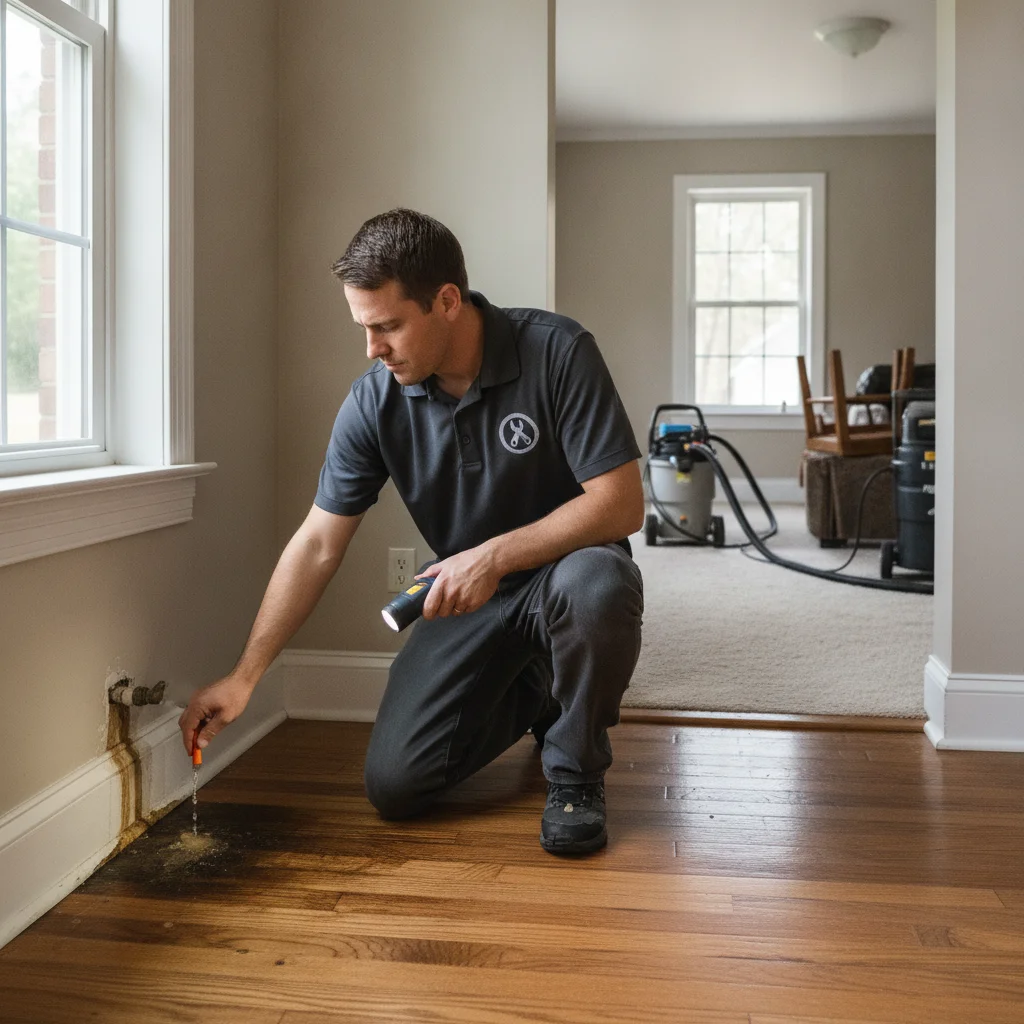
Coordinate access without assuming legal duties
Access is logistics, not a verdict on the lease. Do not assume who must hand over keys, stay elsewhere, or open a garage. Read the lease. Ask the owner and the resident. If you need legal or insurance advice, get it from a qualified adviser. Restore Pro SD does not decide those duties.
What you can coordinate is the physical path. Confirm who will be on site, which locks work, and whether a neighboring unit shares a cleanout, a laundry, or a wall. In a duplex near Coast Highway, a backup on one side can show up at a shared cleanout. In a courtyard building off Mission Avenue, parking for equipment may need the manager’s map, not the resident’s stall. Harbor-adjacent units and San Luis Rey flats add tight alleys and shared walls that a single-family rental on a slab does not.
Keep children and pets out. Agree on a dirty zone and a clean zone before contents move. If the resident needs medications or work clothes, pull those from a dry closet first, with photos.
The work is done by an independent licensed restoration pro, not by Restore Pro SD. We are a referral service. We match you with local pros. We do not own trucks, employ crews, or hold a contractors license. Water damage repair in California is licensed by the Contractors State License Board. Check a contractor’s CSLB license before work starts. IICRC credentials such as WRT or ASD are voluntary industry certifications. They are not a state license.
If a plumber is still clearing the line, the cleanup pro needs that status. Cleaning a bathroom twice because the line is still live is a scope failure.
For the rental-side paper trail, see rental water damage for California tenants and landlords. For how we match Oceanside jobs, see choosing water damage help in Oceanside.
Verify the wastewater authority for the address
Oceanside is not one sewer you can guess from the city name on a lease. The agency that owns the public wastewater system can differ by address, especially near city limits, newer tracts, and county pockets. A single, countywide rule naming one wastewater authority for every Oceanside rental could not be confirmed in our verified claims file. Treat the address as the lookup.
Start with the current utility bill for that unit. The sewer or wastewater line usually names the agency. If the bill lives in the owner’s portal, pull it before the walkthrough. If the bill is silent or split, check City of Oceanside utility information and San Diego County resources for that street, then call the agency they name. Ask how they classify a backup at that address: public main, private lateral, or a fixture inside the unit. Do not take a neighbor’s story as the answer. The person who sets the rule is the current authority for that property.
That distinction changes cleanup. If wastewater is still coming in from the public system, extraction inside the unit will not hold. If the stoppage is in a private line, a plumber and the restoration pro may both be on site. None of that assigns payment. Payment sits with the lease, any insurance, and advisers you choose.
California Civil Code section 1941 requires a lessor, absent an agreement to the contrary, to put a building intended for human occupation into a condition fit for occupation and to repair later dilapidations that render it untenantable, except those in section 1929. Section 1929 says the hirer must repair deteriorations caused by a want of ordinary care. Section 1942 describes a limited repair-and-deduct path after notice, with a cap of one month’s rent, a twice-in-12-months limit, and a rebuttable 30-day timing presumption. Read the statute and your lease. Do not treat this paragraph as a decision about who writes the check.
North County coastal rentals are not Encinitas bungalows and not South Bay stucco. Harbor blocks, San Luis Rey flats, and inland boxes toward Vista do not share one pipe age or one agency desk. Verify the authority for the address you are standing in.
When to call us
When sewage has entered an Oceanside rental, the EPA’s position is to bring in a professional experienced with contaminated-water damage. That is the moment to call. Call us at (858) 400-4586 and we’ll connect you with a licensed local restoration pro. You get a call back. The independent pro handles the physical cleanup.