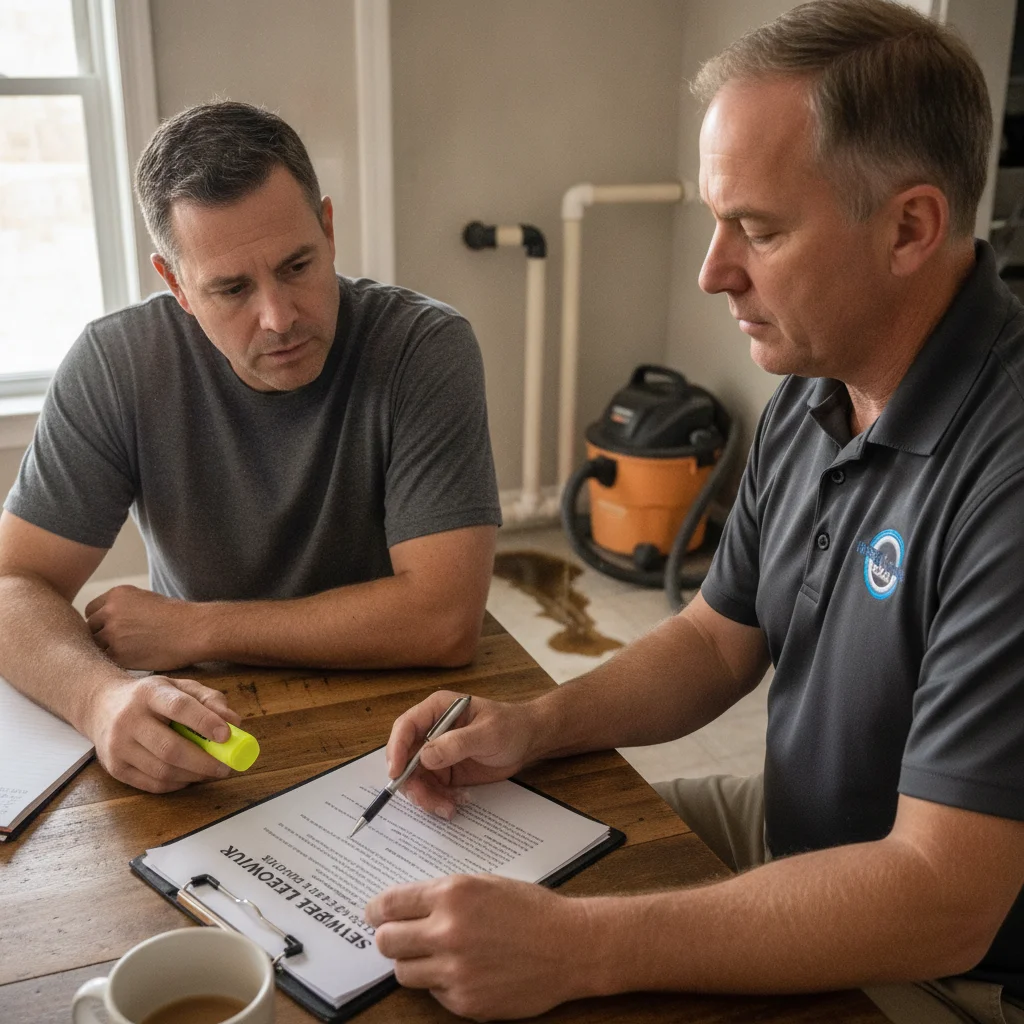
A useful sewage cleanup estimate defines the work, its boundaries, and every exclusion. Compare those details before comparing the totals. A vague scope can leave two proposals describing very different jobs.
Separate source control from contaminated-water cleanup
A sewage backup can present two separate work areas. One addresses the source of the backup. The other covers cleanup of the affected rooms, materials, and belongings. Your written estimate should clearly separate them.
Look for a description of the condition that prompted the estimate. Then check who will address the active source. The scope might mention a blocked drain, an overflowing fixture, or a failed pipe. That wording should describe the observed issue without guessing at an unconfirmed cause.
Ask whether source control is included, excluded, or assigned to another professional. If outside work is needed, the estimate should identify that boundary. It shouldn’t bury plumbing or repair assumptions inside a broad cleanup line.
Next, find the starting point for contaminated-water cleanup. The scope should name each affected room and surface. It should also distinguish visible impact from areas that still need evaluation. A general phrase such as “clean affected area” doesn’t show where the work begins or ends.
Our sewage cleanup service page explains how Restore Pro SD connects customers with licensed independent local professionals. Restore Pro SD doesn’t perform cleanup or prepare the contractor’s estimate. The customer contracts with and pays the matched professional directly.
Before choosing a proposal, ask both bidders to describe the same source condition. If their starting assumptions differ, their scopes can’t be compared fairly.
Compare removal, cleaning, and disposal boundaries
Read each estimate room by room. Mark every material identified for removal, every surface listed for cleaning, and every item left outside the scope. This creates a more useful comparison than checking totals alone.
Removal language should identify the material and location. Broad terms such as “damaged materials” leave too much open. Ask the professional to name the flooring, wall material, cabinet component, insulation, or personal property being discussed. The scope should also state whether the listed quantity is fixed or subject to change after access.
Cleaning lines need similar detail. Ask which rooms, surfaces, fixtures, and contents are included. If a proposal mentions treatment without naming the target area, request clearer wording. You should be able to trace each task to a specific part of the property.
Disposal deserves its own boundary. Ask what the professional expects to remove from the site, who handles it, and which related charges appear in the estimate. Also ask how newly discovered material would be documented before disposal.
The approved sources for this page don’t confirm one disposal rule for every San Diego County sewage job. Ask the bidder to identify the current local authority governing the proposed disposal method. Confirm the requirement with that authority before accepting it as mandatory.
When you compare sewage cleanup companies, place matching scope lines side by side. Note missing tasks, exclusions, allowances, and unclear wording. A shorter proposal isn’t automatically narrower, but every boundary should be visible.
Ask how affected areas will be documented
Documentation should show how the professional defined the sewage cleanup scope. Ask what will be recorded before work starts, while materials are accessible, and when the listed cleanup ends.
The estimate should identify the affected rooms using consistent names. A Chula Vista home shouldn’t receive a generic scope that could be reused unchanged for a property in City Heights or San Ysidro. The document should match the actual address, layout, access points, and observed conditions.
Ask whether the professional plans to provide photographs, diagrams, written notes, or another record. The approved claims ledger doesn’t establish a required documentation format. That means the bidder should explain what the proposal includes instead of presenting one format as a universal rule.
The scope should also explain how changes will be handled. If concealed material becomes visible, ask who documents it and how you’ll review the proposed addition. A written change process helps keep newly identified work separate from the accepted starting scope.
Create your own comparison copy. Highlight each room, removal item, cleaning task, disposal line, exclusion, and repair note. Record questions beside the relevant language. Don’t rely on a verbal answer when it changes the proposed work. Ask for the estimate to be revised or clarified in writing.
For more context on the cleanup decision, read our guide to sewage backup cleanup in San Diego.
Identify repairs and outside work in the scope
Cleanup and property repair shouldn’t be blended into one undefined task. Check whether the estimate ends after removal and cleaning or includes any repair work. Then identify every excluded trade or outside service.
Ask what happens to opened walls, removed flooring, detached cabinets, and displaced contents. The estimate should state whether those items will be repaired, replaced, reset, stored, or left for another professional. If the bidder won’t perform part of that work, the exclusion should appear beside the related cleanup task.
Also check responsibility for source repair. A cleanup scope may depend on separate work before it can proceed. Ask who coordinates that work and whether its cost appears anywhere in the proposal. Don’t assume a reference to “source control” includes a complete repair.
Testing, permits, and outside inspections require the same care. No single current requirement for every San Diego County sewage cleanup could be confirmed from the approved sources for this page. Ask the professional to name the city, county, agency, or other authority that sets any claimed requirement. Then verify it directly with that authority.
Access can affect the written boundary too. Ask whether moving contents, opening enclosed areas, protecting unaffected spaces, or returning removed items is included. These details should be tied to actual rooms, not covered by vague language.
A clean comparison separates cleanup, source repair, property repair, and outside work. Once those columns match, you can see what each proposal truly covers.
Verify the independent pro through current sources
Restore Pro SD is a referral service. It matches San Diego County customers with licensed independent water damage professionals. It doesn’t hold a trade license, perform physical work, set contractor prices, or provide warranties.
The independent professional should appear clearly on the estimate. Ask for the business name, contact information, and the license details connected to the proposed work. Check that information through the CSLB license lookup before signing. Use the current result rather than relying on a screenshot or an old document.
Confirm who will contract with you and receive payment. The estimate should also identify who controls scope changes and who answers questions about exclusions. If another company will handle part of the job, ask for that company’s role in writing.
Don’t treat a badge, training statement, or unfamiliar acronym as proof of a current state license. The approved sources for this page don’t confirm any specific certification held by a bidder. Ask the professional for the issuing organization, credential name, and current verification source. Then check it with the organization directly.
Review any warranty language as a contractor-specific term. Restore Pro SD doesn’t give warranties. Ask the independent professional to put any offered coverage, limits, exclusions, and responsible business name in writing.
Your final comparison should answer four points: who performs the work, what areas are included, what remains excluded, and how changes receive approval. If one answer is missing, request a revised scope before choosing.
When to call us
When sewage affects floors, walls, cabinets, or contents, you may need a licensed Water Damage Restoration pro to define the cleanup scope. Call us at (858) 400-4586. The line plays a recording-consent notice, then takes a recorded and transcribed message. It isn’t answered live and doesn’t forward.