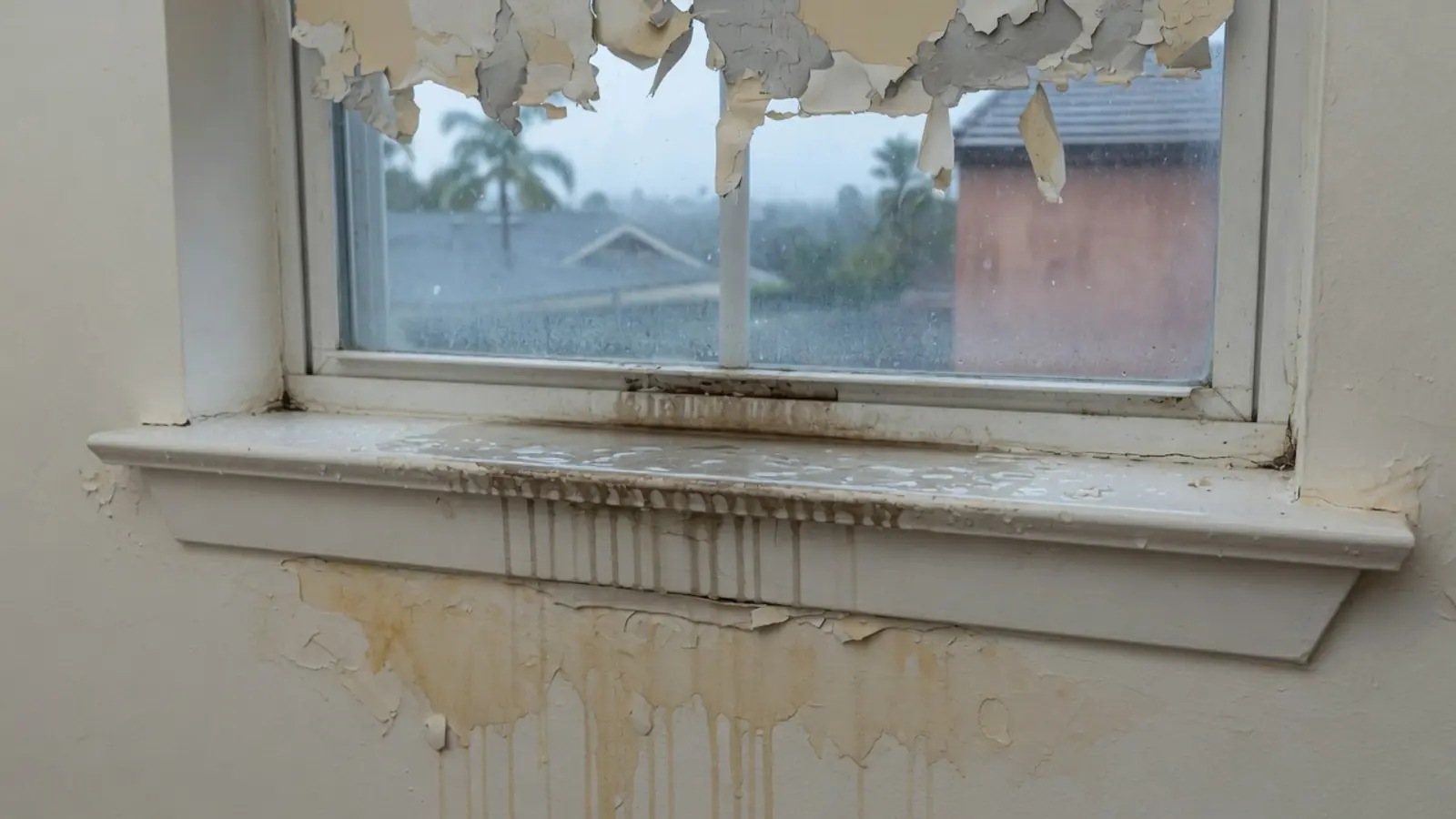
Rain hits the glass and a dark line shows up on the sill, the drywall under the window, or the floor below. That is window leak water damage: water at the assembly or the flashing, not a roof hole and not a whole-storm soak of every wall.
This is not wind-driven rain in Oceanside, not a stucco wall leak, and not overflowing gutters. Those enter somewhere else. This one starts at one opening.
Restore Pro SD matches you with a licensed independent restoration professional. We do not replace windows or dry the house ourselves. You contract with that pro.
Confirm the window is the indoor entry
Watch the opening in the next rain from inside, from a dry spot. Water at the head, the sill, or a corner of the frame points at the window or its flashing. Water at the eave with a clean window points at a gutter or roof edge. Water at a slider track in a coastal unit can be the same family as a window leak, with a different trade to stop it.
Stay off ladders in the rain. Stay out of standing water. CDC guidance is not to switch power on or off while standing in water.
A window installer or a building contractor stops the source. Restoration does not. Mixing those scopes is how a new window goes into a wet bay.
Check the sill, the cavity, and the floor below
The first stain is a marker. Water at a window head can run the cavity, sit on the plate, and show up at the baseboard a room away. In a two-story house in Clairemont, Chula Vista, or Encinitas, the ceiling below a second-floor window can stain first.
Coastal openings in Oceanside, Pacific Beach, and Imperial Beach take more wind-driven rain. Inland openings in Escondido and El Cajon take fewer storms and still hide a wet bay behind stucco and drywall. Both need a moisture map, not a towel on the sill.
EPA guidance is to fix water problems as soon as possible and dry items completely. If the water mixed with sewage or other contamination at the foundation, call a professional experienced with that work.
Separate window repair from indoor drying
A window or stucco contractor owns flashing, sealant, and replacement. The restoration pro owns the wet drywall, the insulation, the plate, and the floor. Storm damage restoration is the matching page when weather drove the leak. Ceiling water damage applies when the stain is on the lid below.
A City of San Diego or County window-replacement permit rule could not be confirmed for this page. Check with the building authority for the property before anyone replaces a unit.
If you suspect HVAC picked up mold from a nearby return, do not run it to dry the wall. The EPA says not to run HVAC you know or suspect is contaminated with mold.
Review readings before the wall is closed
Ask the matched pro for meter readings at the sill, the bay, the plate, and the floor below if it was wet. A drying log is the paper trail. Do not paint the stain and call it done. The EPA says not to paint or caulk moldy surfaces.
If this is a rental, California Civil Code 1941.1 lists effective waterproofing and weather protection of roof and exterior walls among the characteristics a dwelling can lack. Put the landlord on notice.
Check the restoration pro on the CSLB license lookup. Restore Pro SD does not hold that license.
When to call us
Call when a window leak has reached drywall, a cavity, insulation, or flooring, or when the window is sealed and the wall is still wet. Call us at (858) 400-4586 and we’ll connect you with a licensed local restoration pro.