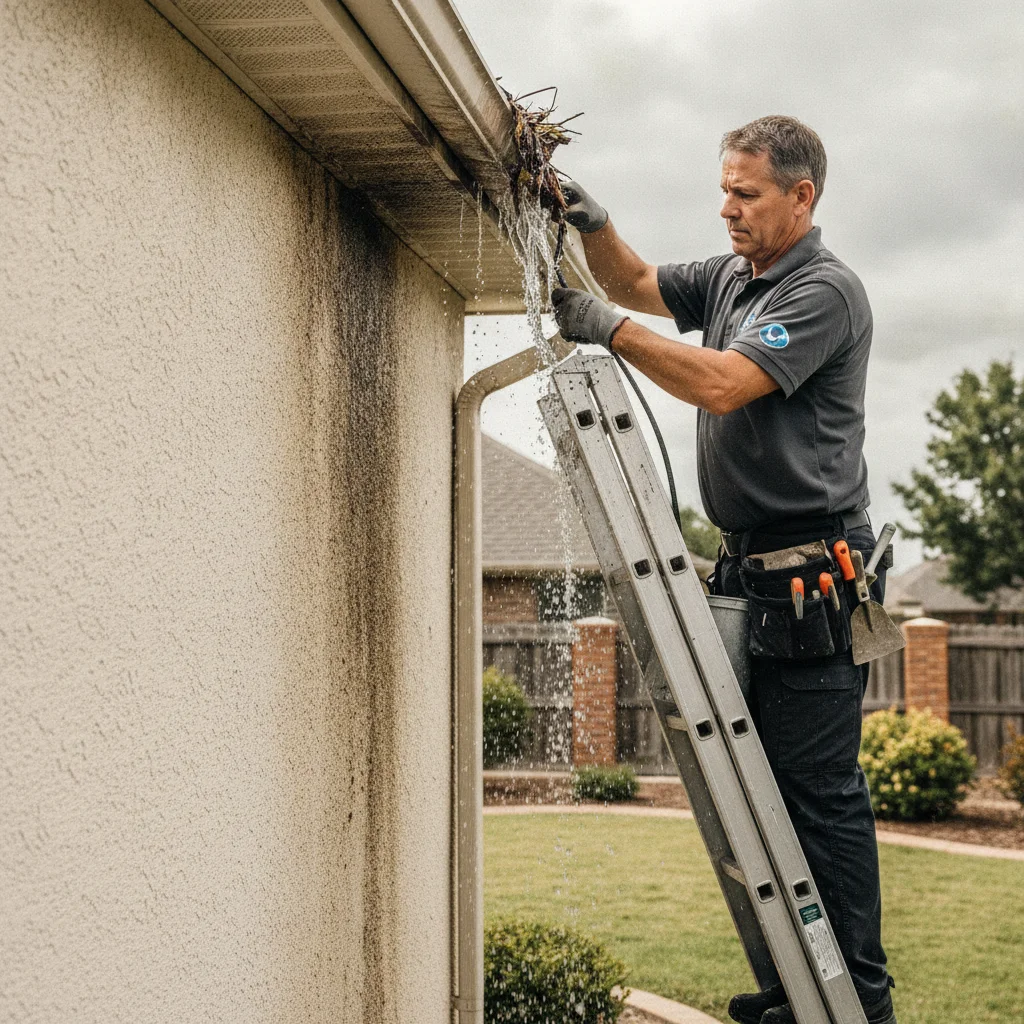
Rain sheets over a clogged gutter and a dark ring shows up on the bedroom ceiling. That path is overflowing gutter water damage, not a leak through the shingles. In San Diego County it often follows a winter storm, when eucalyptus bark or a packed downspout dumps roof runoff down the wall.
Document where rainwater entered when it’s safe
Stay off the ladder while it’s raining. Stay out of standing water. If circuits or equipment are wet or near water, turn off power at the main breaker only when you can reach it without walking through water. If you can’t, call an electrician. Never switch power on or off while standing in water. That’s CDC guidance for electrical hazards around water.
Document the indoor side first. Note which rooms got wet, and whether the stain is on the ceiling, an exterior wall, or a window head. Photograph the stain, peeling paint, and any wet carpet along the exterior wall. Write down when the rain started and when you first saw water.
When the rain stops and the yard is safe, look from the ground. Water sheeting over the front lip is overflow. A downspout that only dribbles while the roof is still wet often means a clog at the outlet, even if the trough looks empty. Splash marks on stucco, washed-out soil at a corner, and dark fascia streaks all point the same way. A light drip at a joint in a hard rain isn’t the same as a sheet of water running the wall.
Gutter overflow means the trough or downspout can’t carry the roof’s runoff, so water spills over the lip, behind the gutter, or both. Eucalyptus bark, pine needles, and packed elbows do that across San Diego County. Water held at the roof edge is how this gets confused with a roof leak. The indoor stain still needs drying. The eave itself is a roofing diagnosis. EPA mold and moisture guidance is blunt: fix the water problem as soon as you can, and dry items completely.
Separate gutter repair from indoor drying
Gutter work and indoor drying are different jobs. A gutter or roofing contractor handles pitch, hangers, clogs, downspout size, and where the pipe dumps. The restoration pro you get matched with handles the wet ceiling, the wall cavity, and the flooring. Restore Pro SD is a referral service. It doesn’t repair gutters, and it doesn’t dry the house itself.
Mixing those scopes is how stains come back. A cleaned trough over wet drywall still leaves a wet assembly. The EPA says not to paint or caulk moldy surfaces. Clean the mold and dry the surface first.
If overflow mixed with soil at the foundation, don’t treat it as bottled water. The EPA says that if water or mold damage was caused by sewage or other contaminated water, call a professional experienced with that kind of damage. Roof runoff isn’t sewage. The matched pro should decide how to handle water that sat in a dirty cavity.
This indoor path is storm damage restoration, not a gutter sales call. Keep it distinct from a stucco wall leak, a failed yard drain, or garage flooding in heavy rain. This one is clogged gutter water damage indoors: overflow at the eave that soaks the rooms.
Coastal north county homes under eucalyptus clog differently from East County houses under oaks. Short-eave bungalows in North Park wet the wall faster than deep-eave tracts in Mira Mesa. A specific City of San Diego or County permit rule for gutter replacement couldn’t be confirmed for this page. Check with City of San Diego Development Services, or the County building authority for unincorporated areas, before you replace a system.
Check ceilings, walls, and nearby rooms
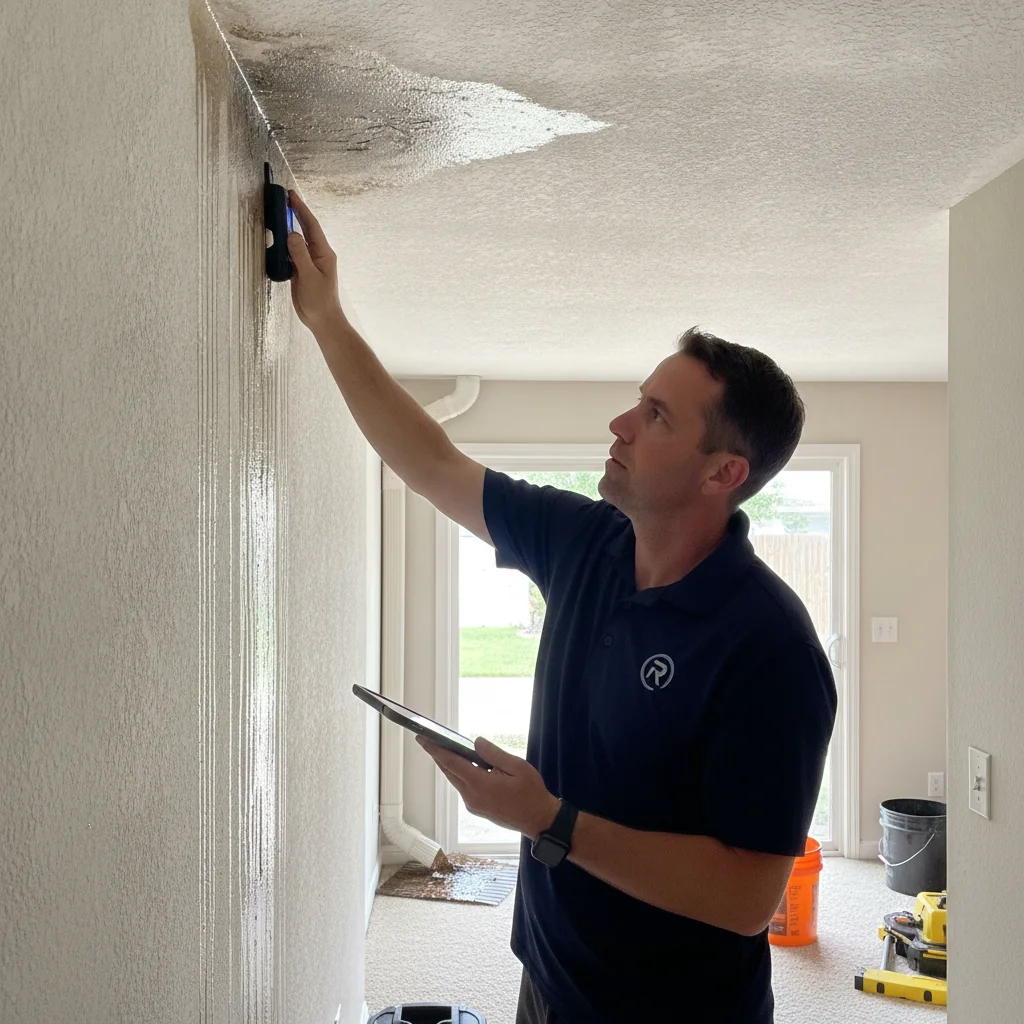
The first stain is a marker, not a map. Water that came over the gutter often runs the exterior, finds a gap at the fascia or window head, and then moves sideways in the cavity. Check the ceiling along the exterior wall, the closet on the other side of that wall, and the room under the eave. On the floor below, check baseboards and the carpet edge.
San Diego housing doesn’t hide water the same way in every ZIP code. Older plaster in coastal bungalows can stay closed while the lath is wet. Newer drywall in inland tracts shows bubbling sooner. Stucco can look fine from the street while the paper behind it is soaked.
Look for soft drywall, peeling paint, and a musty smell in rooms that share the wet wall. If you can see the attic eave from a hatch, look for wet insulation at the edge. Don’t walk the insulation. If a supply vent sits in a wet ceiling, and you suspect mold in the system, don’t run the HVAC. The EPA says a contaminated system can spread mold through the building.
Renters should tell the landlord in writing. California Civil Code 1941 and 1941.1 speak to a dwelling that lacks effective waterproofing and weather protection of the roof and exterior walls. Civil Code 1942 covers notice and the limited repair-and-deduct path. Details for tenants are in our rental water damage guide.
Trace moisture beyond the first stain
A stain the size of a dinner plate can sit over a wet cavity that runs the length of the wall. The matched independent pro traces that with moisture meters, and sometimes with a small opening in the drywall. Guessing from the stain alone is how people close a wall that’s still wet at the bottom plate.
Overflow water can run down the cavity, sit on the plate, and wick into the subfloor. It can show up a room away at a closet or hallway. That’s why structural drying is a different step from wiping the ceiling. Downspout overflow indoor flooding often looks like a floor problem when the water actually started at the eave.
If the wet area is small and clean, some homeowners handle surface cleanup. The EPA says that if the moldy area is less than about 10 square feet, roughly a 3 ft by 3 ft patch, a homeowner can handle cleanup in most cases using its published tips. If there’s been a lot of water damage, or mold covers more than 10 square feet, consult the EPA’s mold remediation guidance. Allergic reactions to mold are common. Mold can irritate the eyes, skin, nose, throat, and lungs, and it can trigger asthma attacks in people with asthma who are allergic to mold. See whether water damage grows mold if the wall stays damp.
Review findings before finishes go back
Don’t close the wall until the assembly is actually dry. Don’t paint the stain and call it done. Paint over moldy surfaces is likely to peel, and the EPA says not to paint or caulk moldy surfaces. Clean up the mold and dry the surfaces first.
Ask the matched pro to walk you through what was wet, what was removed, and what was dry before texture and paint go back. If insulation at the eave was soaked, ask whether it can dry in place. That’s a job-specific call, not a brand promise.
If the gutter still overflows in the next rain, the indoor finish will fail again. Confirm the gutter or roofing contractor finished their side. Restoration doesn’t replace that trade. Before you hire the restoration contractor, check the license on the CSLB license lookup. Restore Pro SD doesn’t hold that license. The independent pro you contract with does.
A ceiling water damage scope is common when overflow stained the lid. Keep photos from the storm with the drying notes. That file is what you review before anyone hangs new drywall.
When to call us
If rain from an overflowing gutter has reached a ceiling, a wall cavity, insulation, or flooring, the indoor side needs a licensed restoration pro. Cleaning the trough doesn’t dry the assembly. Call us at (858) 400-4586 and we’ll connect you with a licensed local restoration pro.