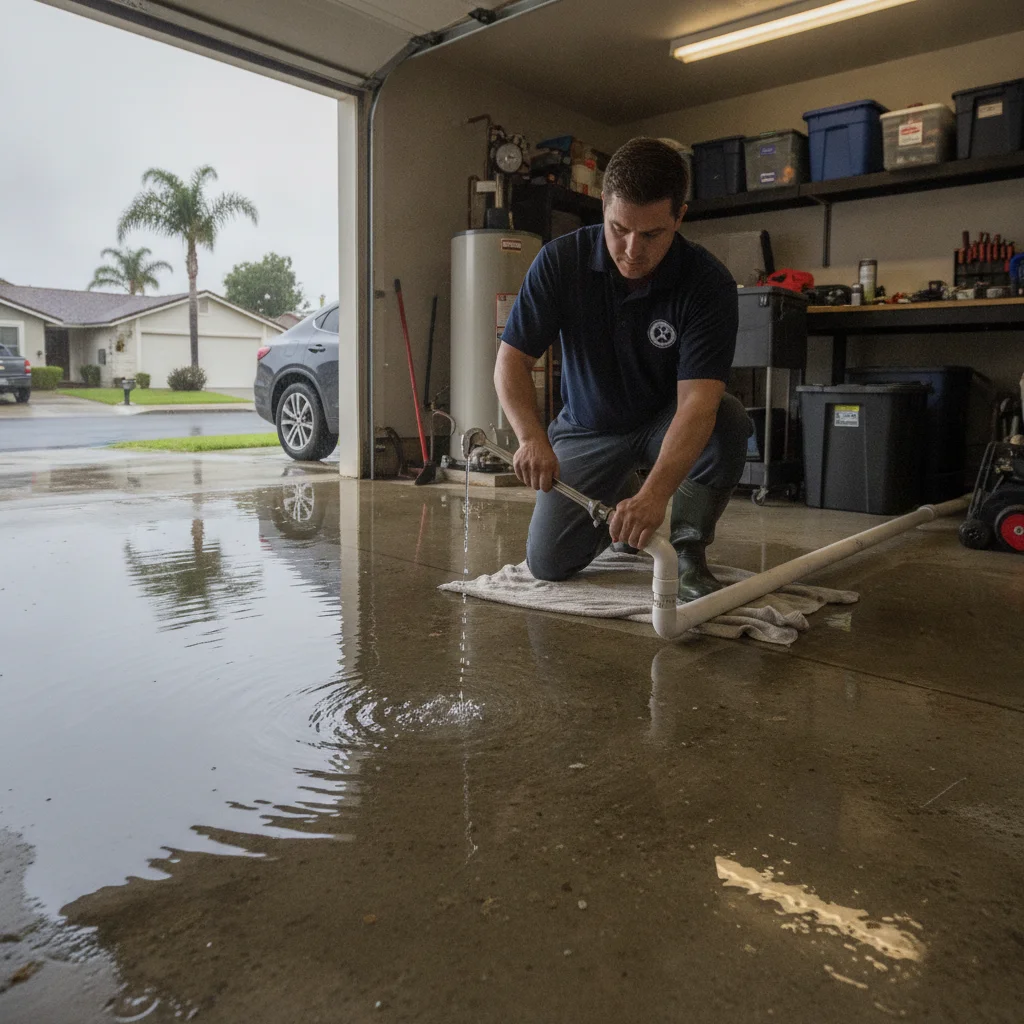
A San Diego garage has shallow rainwater across its concrete floor after a storm. For garage flood cleanup in San Diego, first limit new water only when entry is safe. Then document its path and have a licensed local restoration pro inspect the affected materials.

A San Diego residential garage with shallow rainwater covering the concrete floor after a storm

Stop new rainwater from entering when it’s safe

Rain may still be entering when you discover the flooded garage. This article can’t determine whether your garage is safe to enter. If water surrounds electrical equipment, shifting materials, or an unknown drain backup, stay outside. Follow directions from emergency officials, your utility, or a qualified professional.

From a dry position, look for the visible entry path. Note whether water appears near the garage door, a side opening, or a wall. Don’t step through standing water to investigate an uncertain source.

Temporary source control should stay limited to actions you can perform safely. Don’t alter wiring, open electrical panels, or disturb structural materials. A cleanup professional can address wet materials after the entry point is identified.

No property-specific drainage or permit rule could be confirmed from the approved evidence for this article. Before changing a driveway edge, drain, curb, or drainage path, identify the authority for your address. Ask your city or San Diego County which department has jurisdiction and whether approval is required.

Once safe access is confirmed, keep new rainwater away from stored items where practical. Leave permanent drainage and exterior repairs to the appropriately licensed professional.

Document water paths before moving belongings

Photograph the garage before changing the scene, but only from a safe location. Start with wide images showing the floor, walls, doors, and stored belongings. Take closer photos of visible water lines, stains, openings, and affected materials.

Record when you found the water and whether rain was still falling. Write down which door was open or closed. Keep any storm alerts, contractor messages, and property records connected to the event.

Describe observations without assigning an unconfirmed cause. “Water was visible along the west wall” is useful documentation. “The street drain caused the flood” needs evidence from the authority responsible for that system. Keeping observation separate from assumption helps the restoration pro review the site.

If belongings must be moved, photograph their original locations first. Create a basic inventory with the item, location, and visible condition. Don’t discard damaged property based only on an assumption about insurance coverage. Ask your insurer what documentation it wants and who can authorize disposal.

Share the photos and timeline with the matched restoration professional. Ask the pro to identify which observations affect the cleanup scope. You can also review FEMA’s flood resources when preparing questions about the property and your next steps.

Check drywall, framing, and adjoining rooms

Garage flood cleanup shouldn’t focus only on visible water across the concrete. Ask the restoration pro to examine drywall edges, wall framing, door trim, and storage platforms. If the garage shares a wall or doorway with the home, include that boundary in the inspection request.

Have the pro check adjoining rooms that show stains, odors, damp finishes, or changed flooring. Request a clear explanation of what was inspected and how each finding was evaluated. Ask whether any areas couldn’t be reached without opening or removing materials.

The written scope should distinguish observed damage from suspected damage. It should also identify any material the professional recommends cleaning, drying, removing, or monitoring. Ask what evidence supports each recommendation before approving the work.

Don’t label drywall, framing, cabinets, or stored property as salvageable based only on appearance. Instead, ask the licensed professional to explain the condition and available options. If the pro raises mold or moisture concerns, request the basis for that assessment.

For general information, review the EPA’s mold and moisture guidance. That resource can help you prepare questions, but it doesn’t replace a property-specific assessment. Restore Pro SD also can’t determine material condition or safety from a phone message.

An independent restoration professional mapping moisture along a garage wall and the adjoining interior room

Separate cleanup from drainage and exterior repairs

Flood cleanup and source repair are related, but they aren’t the same scope. A restoration professional evaluates the wet garage and affected materials. Drainage changes, garage-door repairs, grading, or exterior construction may require different qualified professionals.

Keep those scopes separate in written proposals. Ask each professional to identify the work they’ll perform and what falls outside their contract. That makes it easier to see whether cleanup addresses the current damage while another project addresses future rain entry.

Our flood damage cleanup service explains how Restore Pro SD connects property owners with licensed independent local pros. For broader storm context, read our guide to atmospheric river storm damage in San Diego. Use those pages to organize questions, not as approval for a specific repair.

No single drainage requirement for every San Diego County garage could be verified from the approved evidence. The responsible authority and required review may depend on the property address and proposed work. Before modifying an exterior drain, curb connection, driveway, or shared drainage feature, ask the city or county authority what applies.

Restore Pro SD is a referral service. It doesn’t perform cleanup, set the contractor’s price, or provide a warranty. You’ll contract with and pay the independent professional directly.

What to ask the matched restoration pro

The first conversation should produce more than a general promise to clean up. Ask direct questions about the inspection, scope, documentation, and contractor responsible for the work.

Useful questions include:

  • Which licensed contractor will be named in my agreement?
  • Which garage surfaces and adjoining rooms will you inspect?
  • How will you document the visible water path?
  • What materials do you recommend cleaning, drying, or removing?
  • Which findings are confirmed, and which still need investigation?
  • Does your scope include belongings or only building materials?
  • Is exterior source repair included or excluded?
  • How will scope changes be documented before work continues?
  • Who sets the price and provides any warranty?
  • What records will I receive when the work is complete?

If the professional cites IICRC S500 or S520, ask how that guidance applies to your garage. Request plain explanations tied to observed conditions. A certification reference shouldn’t replace a clear scope, written contract, or state license verification.

Use the CSLB license check to verify the contractor information provided to you. Confirm that the business name and license details match your agreement. Restore Pro SD doesn’t hold a trade license or perform the physical restoration work.

When to call us

Call when rainwater has reached garage walls, stored property, or adjoining interior rooms and you need a licensed Water Damage Restoration pro to assess the cleanup. Restore Pro SD matches San Diego County customers with licensed independent local water damage professionals. Call us at (858) 400-4586. The line plays a recording-consent notice, then takes a recorded and transcribed message. It isn’t answered live and doesn’t forward.