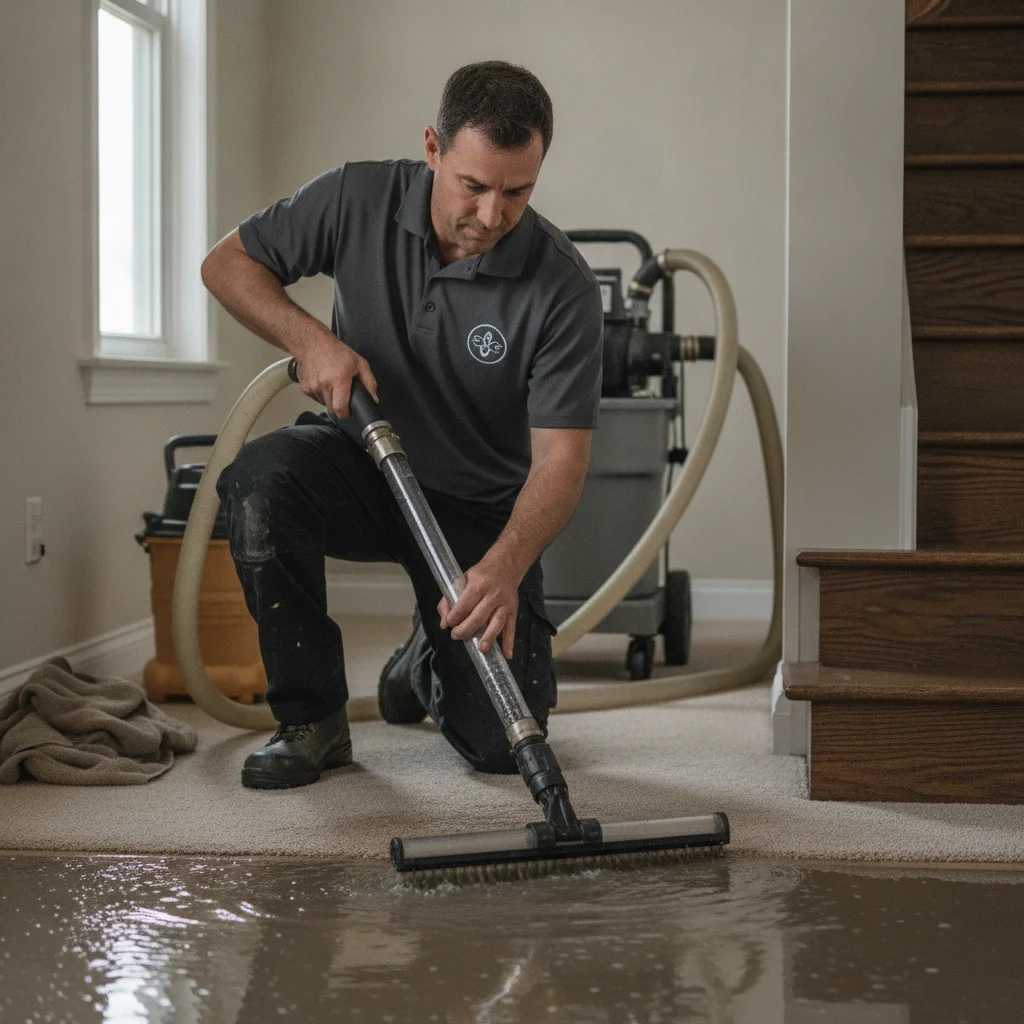
Water extraction in a two-story Del Mar home needs a level-by-level plan. The restoration pro should trace the upper-floor source, remove accessible water, inspect the ceiling below, and document any materials that remain wet.

An independent extraction professional working a wand across soaked carpet at the base of a staircase

Why water from an upper floor is found late

An upper-floor leak may begin out of sight. Water can move beneath flooring, behind baseboards, or through openings around pipes. The first visible clue might appear downstairs instead.

That clue could be a ceiling stain, a soft floor edge, or damp carpet near the stairs. It doesn’t show the full path by itself. The visible area may be separate from the point where the water started.

This matters during Del Mar water damage extraction. Treating only the obvious spot can leave connected materials unchecked. A restoration pro should inspect the source room and the rooms below it. Adjacent walls and floor edges may also need readings.

Tell the pro what happened before anything was moved. Note where you first saw water and where it appeared later. Mention any changes in ceiling texture, flooring, trim, or odor. If you shut off a fixture or appliance, identify it clearly. Don’t guess about the source if it hasn’t been confirmed.

Photos can preserve the sequence. Capture the source area, the path toward the stairs, and every visible mark below. Include wide views and close details. Those images give the independent pro useful context before materials dry or stains change.

When requesting a Del Mar match, include the nearest cross street. References such as Camino Del Mar, Jimmy Durante Boulevard, or Del Mar Heights Road can clarify the location without relying on a neighborhood label alone.

Where water collects on its way down

Water doesn’t always travel straight beneath the source. It can follow flooring seams, framing edges, plumbing openings, and gaps around fixtures. That’s why the room below deserves more than a quick visual check.

On the upper floor, the pro may inspect carpet, padding, finished flooring, baseboards, and the layer beneath them. A wet surface doesn’t confirm how far moisture has traveled. A dry-looking surface doesn’t confirm that the material below is dry.

The wet subfloor guide explains why the layer under finished flooring needs its own assessment. In a two-story loss, that layer may sit directly above a finished ceiling. Moisture can therefore affect both sides of the same floor assembly.

At the lower level, common inspection points include the ceiling under the source, nearby wall tops, trim, and flooring beneath any drips. Recessed fixtures, vents, and pipe openings may also mark possible paths. These areas shouldn’t be opened or disturbed without a reason.

Ask the pro to show you the moisture map. It should identify where readings were taken and which materials were checked. The map can also separate confirmed wet areas from places that were only visually inspected.

If a ceiling is bowed, loose, or actively dripping, keep people away from the area until a licensed pro evaluates it. Point out every visible change before anyone begins extraction or moves furniture.

How extraction order changes on a two-story loss

A multi-level loss needs an order based on the water path. The work shouldn’t focus only on the room with the deepest visible water. Conditions on both floors affect the plan.

The pro should first confirm whether water is still entering. The source may need separate repair before extraction can continue effectively. Restore Pro SD matches homeowners with restoration professionals, but the independent professional performs the physical work.

The lower area comes next when water is dripping or collecting there. Furniture and belongings may need to be moved away from the affected zone. Accessible water can then be removed while the ceiling and surrounding surfaces are evaluated.

Upstairs extraction should follow the affected flooring and edges. Carpet, padding, and hard flooring require different access decisions. The pro should explain what’s being extracted, what’s being measured, and which material may conceal moisture.

After accessible water is removed, the inspection returns to the path between floors. Readings should guide decisions about ceilings, walls, trim, and subflooring. This is where a single-room plan often becomes a two-level drying plan.

Our emergency water extraction service connects Del Mar homeowners with licensed, independent local pros. For a broader look at the process, see the San Diego emergency extraction guide.

A restoration professional checking a ceiling below an upstairs bathroom for spreading moisture

What gets opened and what stays closed

Not every wet assembly needs immediate removal. It also shouldn’t stay closed merely because the surface looks intact. The decision should follow observed conditions, moisture readings, material type, and access needs.

Ask the restoration pro to explain each proposed opening. A small inspection opening may answer the question. In another area, wet material may block access to the space behind it. The reason should be clear before work begins.

Ceilings need careful evaluation in an upper-floor loss. Staining alone doesn’t reveal the condition above. Bowing, soft areas, dripping, or changes around fixtures should be documented and evaluated before anyone works below them.

Baseboards and trim may conceal the edge of a wet wall or floor. Finished flooring may conceal wet padding or subflooring. Cabinets can also limit access near a bathroom, laundry area, or other source. None of these conditions proves that removal is needed. They show where measurements and inspection matter.

Ask what can remain in place and how it’ll be monitored. If a pro recommends opening a wall or ceiling, request the location and purpose in writing. If the recommendation changes, ask what new reading or observation changed the scope.

Moisture can also raise questions about visible growth or odor. Don’t ask for a diagnosis based only on appearance. For federal background, review the EPA’s mold and moisture guidance. A qualified professional can explain what applies to the actual materials in your home.

What to ask before extraction equipment leaves

Equipment removal shouldn’t be treated as the end of the conversation. Before it leaves, ask the pro to review the affected areas, the latest readings, and any remaining concerns.

Start with the moisture map. Which materials were tested? Which locations changed during drying? Were the upstairs floor, downstairs ceiling, adjoining walls, and nearby trim checked again? The answers should match the path identified at the beginning.

Ask what drying criteria the pro used. Request the final readings and the comparison points behind the decision. If a material couldn’t be tested directly, ask how its condition was evaluated. A clear limitation is more useful than an unsupported assumption.

Also ask whether any openings remain. Confirm who’ll handle removed trim, flooring, ceiling material, or access panels. Restoration, plumbing repair, reconstruction, and finish work may involve different professionals. Don’t assume one scope includes another.

Review the photos and written notes before the job moves forward. The record should identify the source area, affected levels, extraction work, access decisions, and final observations. Keep those materials with invoices and any insurance correspondence.

The contractor’s identity should also be clear. Restore Pro SD is a referral service, not the contractor. You’ll contract with and pay the independent professional directly. You can check contractor information through the California Contractors State License Board before agreeing to work.

Finally, ask what signs should prompt another inspection. New staining, changing flooring, renewed dripping, or a returning odor should be reported to the professional who evaluated the loss. Don’t rely only on how the room feels at the final walkthrough.

When to call us

Call when an upstairs leak has reached flooring, walls, stairs, or the ceiling below and needs evaluation by a licensed Water Damage Restoration pro. Call us at (858) 400-4586. The line plays a recording-consent notice, then takes a recorded and transcribed message. It isn’t answered live and doesn’t forward.