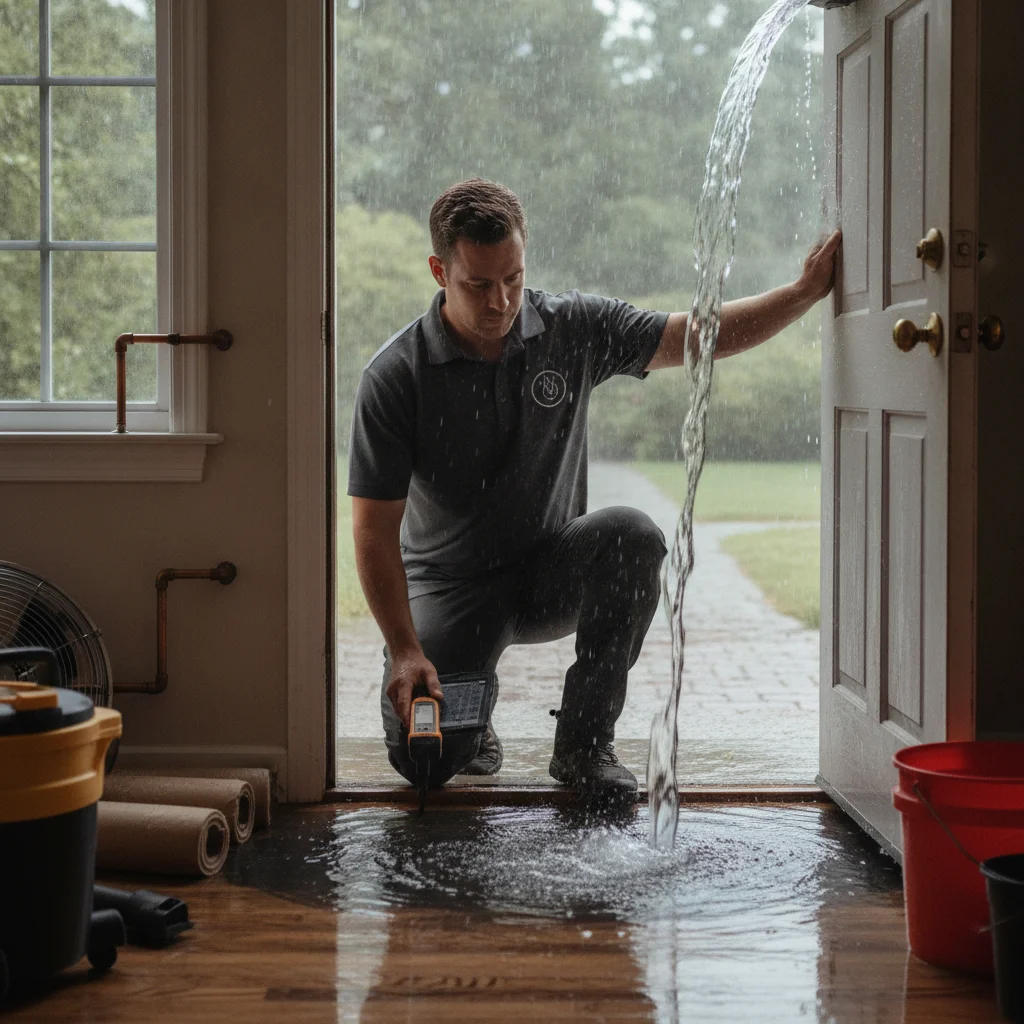
Storm water has crossed a doorway, wall, or garage opening in your Carlsbad home. The cleanup decision now depends on where that water traveled and which materials it reached. A licensed restoration pro can inspect the affected areas and prepare a documented scope.
What separates storm water from a clean-water leak
The practical difference begins with the water’s origin and path. A supply-line leak starts inside the plumbing system. Storm water reaches the house from outside, then passes over exterior surfaces before entering.
Color and odor don’t settle the question. Clear-looking water may have crossed a patio, soil, a walkway, or a garage threshold. Its route matters because that route helps the restoration pro classify the loss and plan the work.
Show the pro the apparent entry point before moving wet items. Explain when you first noticed the water and how it spread. Mention whether it crossed a doorway, appeared at a wall edge, or rose through another opening. If the source isn’t clear, say that plainly. Don’t turn an uncertain path into a confident explanation.
Ask the pro to document the source, affected rooms, visible material damage, and proposed cleanup boundaries. You can also ask how the water’s path affects handling decisions. Those answers should connect directly to the written scope.
Our guide to water damage categories and classes explains terminology that may appear during the inspection. The category shouldn’t be chosen from a photograph alone. The independent pro needs to evaluate the actual conditions.
This distinction helps keep the conversation focused. You’re not just dealing with wet flooring. You’re dealing with outside water that followed a specific route into the building.
What the first walkthrough looks for outside the house
Start the walkthrough where the water appears to have entered. The goal is to connect the outdoor path with the indoor damage. Walk the area with the restoration pro when conditions allow, and point out anything that changed during the storm.
Look at exterior doors, patio transitions, garage openings, wall penetrations, and visible gaps. Note where water collected or moved. Photograph those conditions without assigning a cause you can’t confirm.
The pro may ask whether water arrived from one opening or several. That distinction can change which rooms and concealed areas need attention. It can also explain why damage appears away from the most obvious wet spot.
Keep city drainage questions separate from restoration findings. This page doesn’t claim that any Carlsbad address lies within a flood zone. It also doesn’t state which drainage rules apply to a specific parcel. Those details couldn’t be confirmed from the approved claims ledger for this page.
For flood-zone information, use FEMA’s flood resources and check the specific property address. Confirm current local drainage or property questions with the City of Carlsbad. Ask the city which department handles the exact issue before relying on general advice.
An outdoor walkthrough isn’t a permit decision or flood-zone ruling. It gives the restoration pro context for the cleanup. Keep photos of the exterior path together with photos from each affected room.
How exterior entry points change the cleanup scope
A doorway entry can create a different moisture pattern than water appearing along a wall. Water may remain near the opening, or it may continue beneath adjoining materials. The scope should follow what the pro finds, not the size of the visible puddle.
Ask the pro to identify every inspected boundary. That can include the entry point, flooring edge, baseboard line, adjacent wall, nearby contents, and the next dry area. Each finding should be tied to the proposed work.
Don’t assume one wet surface means one affected material. Flooring, trim, wall finishes, and the layers beneath them are separate decisions. The pro should explain what can be reached, what needs closer inspection, and what remains uncertain.
A written scope also helps distinguish cleanup from repairs. Ask which tasks address water removal and drying. Then ask which tasks, if any, involve replacing damaged finishes. The referral service doesn’t set the price or provide a warranty. You’ll contract with and pay the independent professional directly.
Our flood damage cleanup service connects Carlsbad homeowners with licensed local restoration pros. Before hiring, you can review the contractor through the CSLB license check.
Keep the exterior cause in the file even when most damage is indoors. It helps preserve the connection between the storm, the entry point, and the requested scope.
What is removed rather than dried
The answer shouldn’t be a blanket rule about everything wet. Each material needs its own decision. Ask the restoration pro to identify what they plan to dry, remove, clean, or monitor.
For every proposed removal, request a plain explanation. The scope should name the material, its location, the observed condition, and why removal is proposed. A photograph can connect that line item to the affected area.
Use the same approach for materials the pro plans to dry. Ask how progress will be documented and how the endpoint will be determined. Don’t accept vague wording that leaves the affected boundary unclear.
Floor coverings and baseboards often make the damage easy to see. The less visible layers still need an explicit assessment. Ask about material beneath the floor covering, the wall edge behind trim, and any adjoining area where water may have traveled.
Contents need a separate inventory. Grouping every item as “damaged” loses useful detail. Photograph each affected item in place when possible. Record its room and visible condition. Let the contractor and your insurer address the next decisions.
Don’t discard a material only because it looks stained or swollen. Don’t keep it only because the surface looks dry. Those conclusions require an onsite assessment. If removal begins, photograph the area before and during that work.
This process gives you a record of why each choice was made. It also gives another contractor or an insurer enough context to understand the proposed cleanup.
What to document while the weather is still bad
Begin with wide photographs of each affected room. Then take closer images of the entry point, water line, flooring edge, baseboards, walls, and contents. Keep the original files instead of editing over them.
Write a simple timeline. Record when you noticed the water, where it first appeared, and what changed afterward. If you don’t know when entry began, write “unknown.” Accuracy matters more than filling every blank.
Capture exterior conditions from a location you can reach without taking unnecessary risks. Photograph visible water paths, doorway thresholds, and other suspected openings. Don’t describe an opening as the confirmed cause unless a qualified person confirms it.
Save messages and documents in one folder. Include contractor scopes, photographs, notes, receipts, and insurer correspondence. Ask your insurer what documentation it requires. This page can’t confirm a carrier’s policy terms or claim requirements.
If the storm is part of a larger weather event, our San Diego atmospheric river guide provides related context. This Carlsbad page stays focused on water that entered the home and the resulting cleanup decisions.
Note unresolved questions before the walkthrough ends. Which entry point remains uncertain? Which material hasn’t been assessed? Which part of the scope still lacks an explanation? A short written list helps you compare later answers without relying on memory.
Keep flood-zone research in the same file, but label its source. FEMA and the City of Carlsbad are the places to confirm current address-specific information. A restoration contractor’s cleanup scope isn’t a flood-zone determination.
When to call us
Call when storm water enters your Carlsbad home and the cleanup needs a licensed Water Damage Restoration pro. Restore Pro SD is a referral service that matches homeowners with licensed, independent local professionals and performs no physical restoration work. Call us at (858) 400-4586. The line plays a recording-consent notice, then takes a recorded and transcribed message. It isn’t answered live and doesn’t forward.