Wind across inland North County can lift tile, peel underlayment, or open a gap at a ridge long before anyone sees a hole from the street. In San Marcos, the water problem starts when that opening meets rain. The stain on a bedroom ceiling is the indoor job, and it is a different job from the roof.
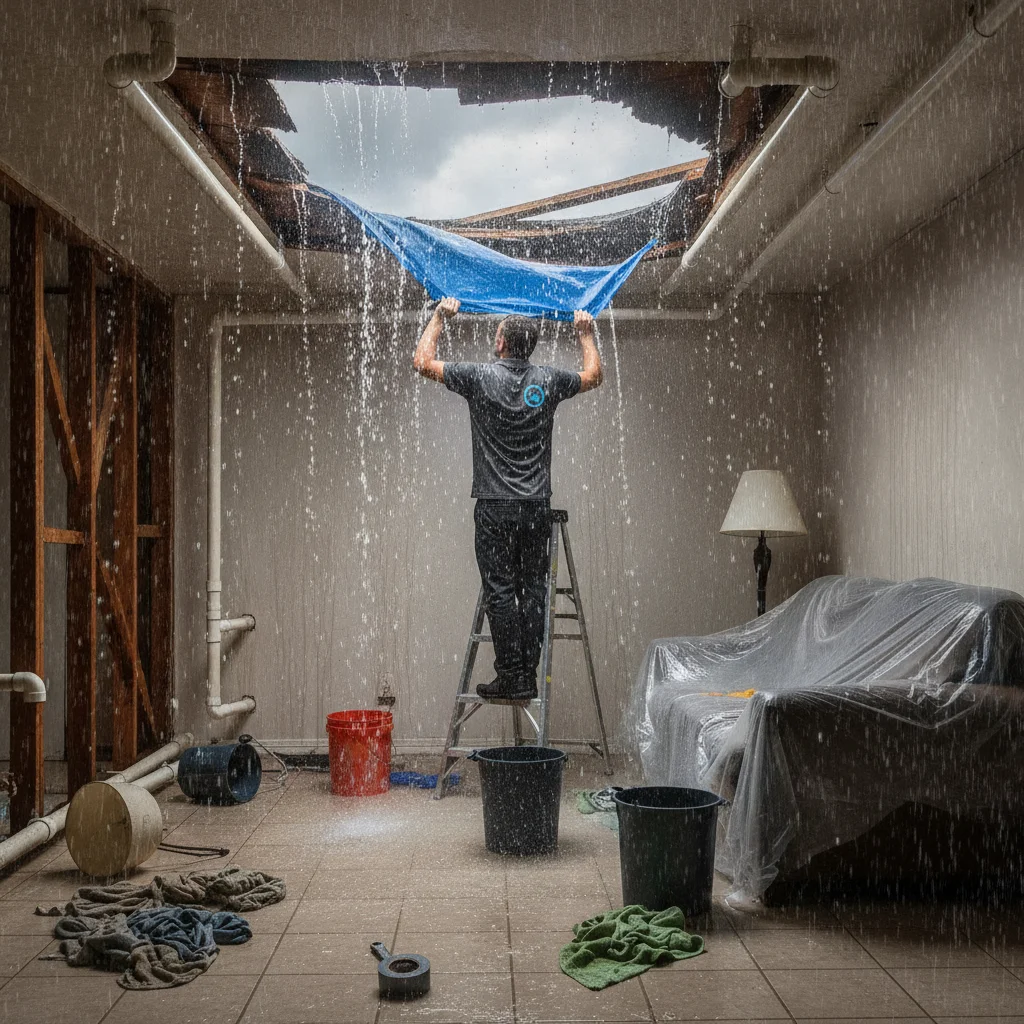
Document the entry area when it’s safe
Stay off the roof. Wind-loosened tile and wet decking are a fall risk, and this page is not a roofing guide. Work from the ground and from inside the house.
From the yard, photograph the slope you can see without climbing. Note missing tiles, flipped pans, or debris on the driveway along Twin Oaks Valley Road or San Marcos Boulevard. Those photos help a licensed roofer later. They do not tell you how far water traveled indoors.
Inside, start with the rooms under that slope. Look for new drips, brown rings, blistered paint, and sagging drywall. Granules in a gutter or wet insulation after a wind-then-rain sequence are clues that the weather opening is real. They still are not a roof diagnosis. A licensed roofing contractor has to inspect the roof. Your job today is the water that already came in.
If the attic hatch is dry and easy to reach, a look from the hatch can show dark, heavy insulation. Do not crawl a wet attic in the dark. Do not step on saturated drywall. A ceiling that feels soft can give way.
If water is near outlets, fixtures, or the panel, treat it as an electrical hazard. The CDC says to shut power at the main breaker only when you can reach it without entering standing water. Never switch power on or off while standing in water. If the panel sits in a wet garage or laundry, leave it and call an electrician.
Set out buckets. Move furniture, rugs, and boxes off the wet line. Photograph every stained ceiling, every wet wall, and the time on your phone. Write down which rooms you checked, including closets. That log is for you, your insurer, and the restoration pro.
This is San Marcos in San Diego County, not San Marcos, Texas. Tornado copy and Texas tile-roof pages do not apply here. Inland North County wind, then a rain band, is the usual pair that soaks a ceiling.
If you rent, tell the owner in writing as soon as you see water. California Civil Code 1941.1 treats a dwelling as untenantable when it substantially lacks effective waterproofing and weather protection of the roof and exterior walls. The lessor still has repair duties under Civil Code 1941, with limits in Civil Code 1929 when the tenant caused the harm. Do not start a repair-and-deduct path until you have read Civil Code 1942 and confirmed the notice rules. Our rental water damage guide walks through that in plain language.
Keep roof repair separate from indoor restoration
A wind-opened roof is two contracts. A licensed roofing contractor stops the weather. A licensed restoration contractor handles the water that already entered. Mixing those scopes is how stains get painted, cavities stay wet, and the next rain repeats the same ceiling ring.
Restore Pro SD is a referral service. We match you with licensed, independent water damage professionals. We do not roof houses, we do not dry structures ourselves, and we do not hold a contractor license. The pro you are connected with contracts with you directly.
Have the roofer address the opening. Temporary covering, tile reset, and flashing belong to that trade. Do not treat a box fan and a coat of ceiling paint as the fix. Restoration that follows IICRC S500 practice starts after the source is controlled enough that new water is not still feeding the cavities. The indoor pro maps moisture, extracts what can be extracted, and runs structural drying until wood and drywall are actually dry, not just surface-dry.
If you already have a slow roof leak from age or a plumbing penetration, the indoor pattern can look similar. Wind is different because the opening can be sudden and wide. More water hits insulation in one weather cycle, then tracks along joists into rooms that never sat under the hole.
Storm damage restoration is the indoor side of that event: water that arrived because weather opened the building, not because a supply line failed. Roofing stays with the roofer. Cleanup, drying, and salvage stay with the restoration pro. Check a restoration contractor’s California license on the CSLB license lookup before work starts. IICRC classes such as WRT or ASD are voluntary industry certifications. They are not a state license and they do not replace CSLB.
Do not hire one company to handle the whole storm unless you can see, in writing, which trade is roofing and which trade is drying. San Marcos homes along the SR-78 corridor and up in San Elijo Hills often have concrete tile. Tile work is not drywall work.
Trace moisture through ceilings and wall cavities
Rain that enters at the roof rarely falls in a neat column. It hits decking, soaks insulation, and runs along the low edge of a joist. In a two-story house near Lake San Marcos, or a hillside plan in San Elijo Hills, that path can skip the room under the opening and show up in a hallway light or a first-floor closet.
Follow the wet. Check the attic side of the ceiling if you can do it safely. Wet blown-in insulation holds water and keeps feeding drywall after the sky has cleared. The EPA says to fix water problems as soon as possible and dry items completely. Leaving a damp cavity to air out is how a small stain becomes a larger mold job.
A restoration pro uses moisture meters and, often, thermal imaging to trace that path. They are looking for wet gypsum, wet plate lumber, and wet insulation, not just the brown ring you can see. Ceiling water damage work may mean opening a section of drywall so the cavity can dry. Painting over a stain while the paper face is still wet does not close the job.
Watch wall cavities under the drip. Water that hits a top plate can travel down the cavity and show up at the baseboard two rooms away. Check both sides of shared walls. In townhomes west of Twin Oaks Valley, a wet party-wall cavity is easy to miss if you only photograph the stained bedroom.
If the wet area is small, EPA mold guidance says a homeowner can often clean less than about 10 square feet, roughly a 3 ft by 3 ft patch, using its cleanup tips. If there has been a lot of water damage, or mold covers more than 10 square feet, consult that same EPA remediation guidance and bring in a pro. Do not paint or caulk moldy surfaces. Clean and dry first. Paint over mold is likely to peel.
If you think the HVAC system picked up mold, do not run it. The EPA warns that a contaminated system can spread mold through the house. Get guidance before you switch the air back on.
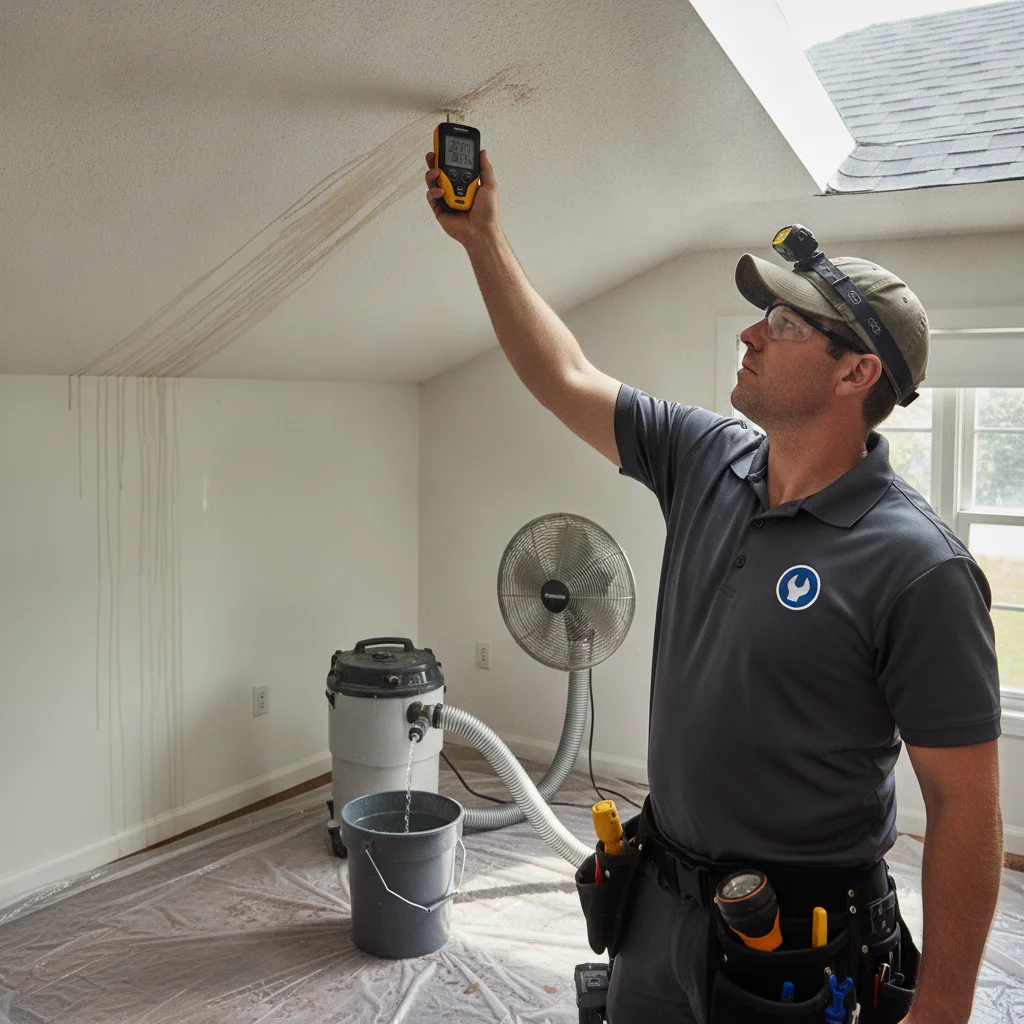
Check adjoining rooms beyond visible staining
The stain is a marker, not a map. Open closets on the same floor. Check the room on the other side of the wet wall. Look at the garage attic, the upstairs laundry, and any room that shares a ceiling joist run with the drip.
San Marcos production homes north of SR-78 often have long, open attic runs. Water can travel farther than it does in a small coastal cottage. A ridge opening above a bonus room can wet the hall, then the entry, while the bonus room ceiling still looks only faintly tan.
Press gently on stained drywall with the back of your hand. Soft or sagging sections are a collapse risk. Do not poke a bulging ceiling unless a restoration pro has told you how to relieve it with a bucket in place. Uncontrolled draining spreads water into carpet and baseboards.
Check flooring under the drip line, even if the carpet feels dry on top. Padding holds water. Laminate edges swell. If water reached a bathroom exhaust or a can light, treat that fixture as wet until a qualified electrician says otherwise.
Walk the adjoining unit if you live in a condo or attached plan near the university district. A shared attic does not respect your demising wall. Tell the association in writing if the opening sits on a common roof.
Mold can start on paper-faced drywall and on the back of baseboards while the living room still smells fine. Allergic reactions can be immediate or delayed. Mold can trigger asthma attacks in people who are allergic to it, and it can irritate eyes, skin, nose, throat, and lungs even in people who are not. That is EPA language, not a diagnosis. A clinician handles health questions. For the indoor timeline after wetting, see whether water damage grows mold.
If the water was only rain through a roof opening, it is still a water problem that needs complete drying. If anything in the mix was sewage or another contaminated source, the EPA says to call a professional experienced with contaminated-water damage. Do not guess the category. The restoration pro classifies it on site.
For a wider indoor sequence after weather opens a building, see how wind-driven rain plays out on the coast. Oceanside takes rain through exterior openings. San Marcos more often sees a roof entry after inland wind, then rain. Same county, different path.
Verify local details before repairs begin
Confirm you are hiring for San Marcos, California. National storm pages and Texas roof articles talk about hail, tornadoes, and a so-called 25 percent roofing rule. We could not confirm a 25 percent rule that applies to San Marcos roofs from a California statute or from the City of San Marcos. Ask your insurer what your policy actually requires. Do not let a sales pitch set that number.
The City of San Marcos building division is the local authority on whether a given roof repair or drywall opening needs a permit. This page does not claim a permit is required, because that depends on the scope. Call the city and ask about your address before anyone cuts a large opening or replaces a roof plane. County of San Diego rules can also apply in pockets just outside city limits. Verify which jurisdiction your parcel sits in.
Check the restoration contractor on the CSLB site linked above. Confirm the license is current and covers the water work. Restore Pro SD does not hold that license. The independent pro does.
Local geography matters for the moisture path. Homes in San Elijo Hills sit on ridges with more wind exposure than streets around Lake San Marcos. Tracts along Twin Oaks Valley Road and near Palomar College sit in the inland valley, where wind can funnel along the SR-78 and I-15 corridors. None of that replaces an on-site inspection. It is why a page written for Encinitas salt air or El Cajon east-county heat is the wrong template for this search.
Do not run ozone machines as air cleaners while you wait. The EPA’s review of ozone generators found little potential to remove indoor contaminants at concentrations that stay within public health standards, and ozone itself can be harmful.
Keep roofing invoices and restoration drying logs separate. Photos, moisture readings, and a room-by-room list are what an adjuster can use. A painted ceiling with no dry log is not a record that the cavity is dry.
If you want EPA’s homeowner mold pages in one place, start at the EPA mold and moisture guidance. For disaster-related cleanup health notes, the CDC mold cleanup page is the federal starting point. Neither site replaces a licensed local pro walking your San Marcos house.
When to call us
Call when rain has entered through a wind-opened roof and you can see staining, dripping, or soft ceilings in a San Marcos home. A licensed restoration pro needs to map the wet cavities, dry the structure, and keep that work separate from the roofer’s repair. Call us at (858) 400-4586 and we’ll connect you with a licensed local restoration pro.