TL;DR

  • Mold under hardwood floors grows in the dark, unventilated gap between the boards and the subfloor, so you usually smell it before you see it.
  • Cupping, a musty smell, and a floor that feels cool or slightly soft in one spot are the three signs worth acting on.
  • A moisture meter and, if needed, a small inspection cut confirm what’s actually underneath without tearing up the whole room.
  • Wood-safe treatments only kill surface growth. If moisture has been sitting under the boards for more than a couple of days, the mold problem is a subfloor problem.

You noticed it before you saw anything. A faint mustiness near the hallway, or a spot on the living room floor that feels cooler underfoot than the rest of the room. Maybe a board or two has started to cup at the edges, catching your sock every time you walk past. None of that looks dramatic, which is exactly the problem. Mold under hardwood floors does its worst work out of sight, in the gap between the finished boards and the subfloor, and by the time it’s visible on top, it’s usually been established underneath for a while.

This is a different animal from the surface mold you’d wipe off a bathroom tile. Hardwood flooring creates a tight, dark, poorly ventilated cavity right where moisture likes to collect, whether that’s a slow leak from a slab crack, condensation off an uninsulated crawl space, or a spill that never fully dried. Once mold under hardwood floors gets started, cleaning the surface does nothing for what’s growing an inch below it.

What actually causes mold under hardwood floors

Three moisture paths account for most of the calls we see. The first is a slab leak, common in San Diego’s slab-on-grade tract homes from the 1960s through the 80s, where a pinhole in aging under-slab copper lets water seep up through the concrete and into the subfloor before anyone notices a puddle. The second is crawl-space moisture, typical in older raised-foundation homes, where ground humidity or a slow plumbing leak under the house feeds moisture into the subfloor from below with nothing to dry it out. The third is a surface event that wasn’t fully dried, a dishwasher overflow, a pet accident, a slow window leak during an atmospheric-river storm, where enough water worked between the boards to soak the subfloor while the visible mess got mopped up and the hidden moisture stayed put.

Coastal humidity plays a supporting role everywhere in the county, especially near the water in Ocean Beach, Point Loma, and Coronado, where marine-layer moisture keeps ambient humidity elevated enough to slow any drying that isn’t forced. A wet subfloor that would dry out in a few days inland can stay damp for weeks in a poorly ventilated coastal home, and that extra time is exactly what mold needs.

Older housing stock adds its own wrinkle. Historic-village neighborhoods, the kind of 1920s-50s inventory along La Mesa Boulevard and similar-era pockets around the county, often still have original hardwood over raised-foundation crawl spaces built to a much lower moisture-control standard than anything built today. A slow leak under one of those houses can feed mold into the subfloor for months before anyone smells it from inside.

The signs worth paying attention to

A musty, earthy smell that’s stronger in one room than the rest of the house is the most reliable early flag, and it often shows up before any visible damage to the boards. Cupping, where the edges of individual boards rise slightly higher than the centers, is the flooring’s own moisture alarm: wood swells unevenly when it absorbs water from underneath, and cupping is that swelling made visible. A section of floor that feels cool, slightly springy, or faintly soft underfoot usually means the subfloor beneath it has stayed wet longer than the wood above it. Dark staining along seams or in the grain, especially near a wall, appliance, or exterior door, is worth a closer look too.

None of these signs on their own proves there’s mold under hardwood floors specifically, as opposed to just moisture that hasn’t reached the colonization stage yet. That’s why the next step matters more than guessing.

Confirming it without tearing up the whole floor

A moisture meter reading taken directly on the boards, compared against a dry reference area elsewhere in the house, tells a restoration crew whether the wood is still holding water, which is the first real data point. If readings come back elevated in a specific zone, the next step is usually a small, targeted inspection, lifting one board or drilling a discreet access point rather than demolishing an entire room, to see what the subfloor actually looks like. In slab-on-grade homes, this pairs with a plumber’s leak-detection pass to rule out an active slab leak feeding the moisture from below.

Air sampling or a swab test can confirm species if that matters to you or your insurance, but for most homeowners the practical answer doesn’t change much based on species. What changes the mold remediation process is how long the moisture has sat and how far it’s spread, not which mold is growing in it.

Why surface treatments don’t fix this

A lot of DIY mold sprays are built for hard, nonporous surfaces, tile, sealed grout, glass, where the mold sits entirely on top. Hardwood is porous, and the space underneath the boards is even more so once it’s absorbed water. Spraying a treatment on cupped boards might kill what’s visible on the finish, but it does nothing for colonization already established in the subfloor plywood or the underside of the boards. Some treatments even add moisture at the exact time the wood needs to be drying out.

The honest fix has two parts, in order: stop the moisture source first, whether that’s a slab leak repair or a crawl-space vapor barrier, then dry and remediate the affected wood and subfloor. Skipping straight to remediation while the source is still active just buys you a repeat call in a few months.

The professional process, and the save-or-replace question

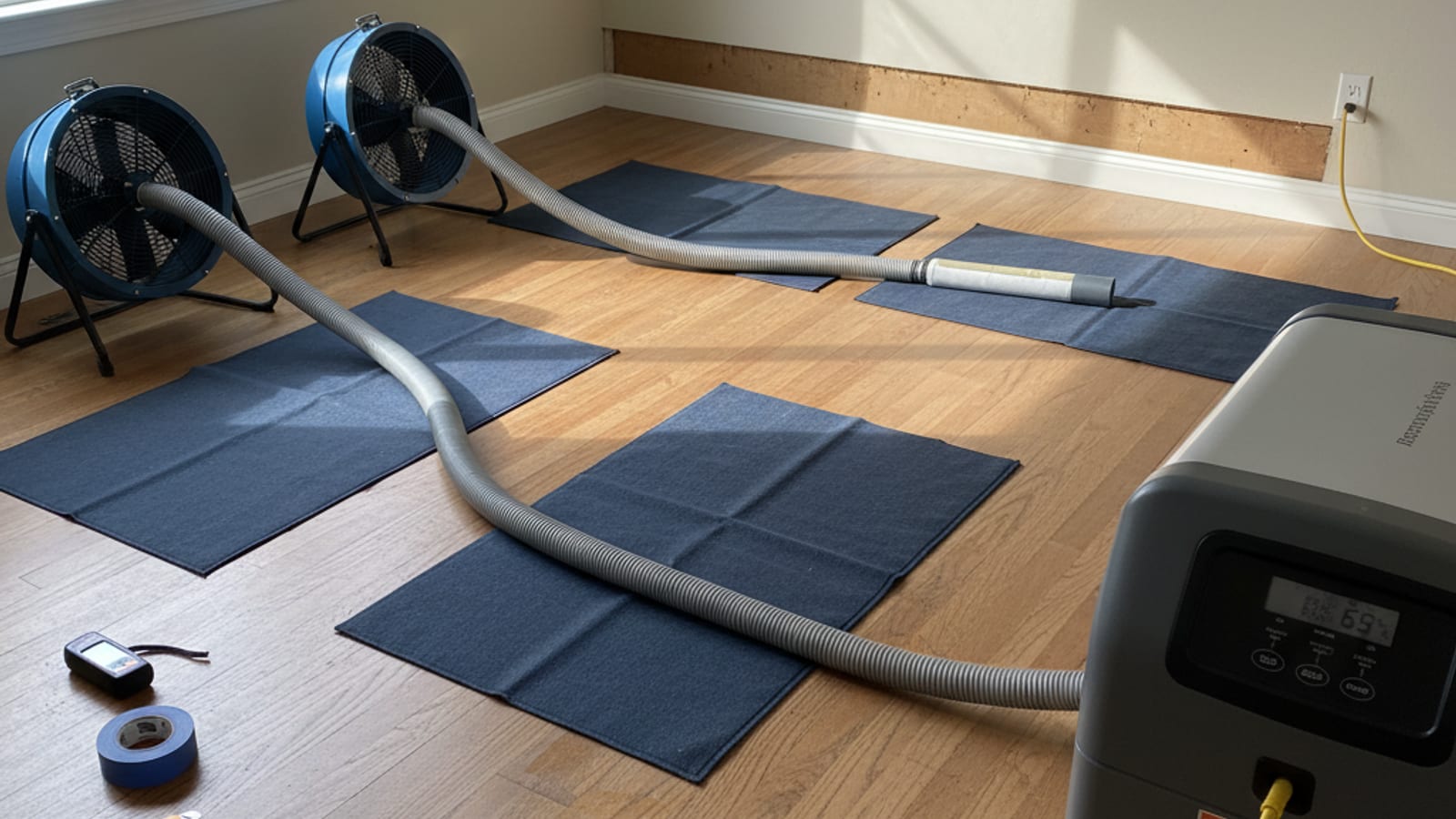
Once the source is confirmed and stopped, the standard sequence is moisture mapping across the affected area, controlled removal of the boards showing cupping or contamination, HEPA-filtered cleaning of the subfloor and any exposed framing, and structural drying with air movers and a properly sized dehumidifier, run until the subfloor hits a verified dry moisture-content target rather than “feels dry.”

Whether the removed boards can be refinished and reinstalled, or need replacing outright, comes down to how far the swelling and staining go. Boards with mild cupping and no deep discoloration in the tongue-and-groove joints sometimes sand down clean once fully dried and re-acclimated. Boards with visible buckling, crowning, or staining through the full thickness usually don’t come back, and blending replacement boards into an existing floor takes a careful color and finish match. When mold is confirmed in the subfloor itself, that panel gets replaced regardless of what happens with the boards above it.

Real cost ranges, and what drives them

For a contained job limited to one room, San Diego homeowners typically see restoration costs in the range of $1,500 to $4,500, covering moisture mapping, containment, board removal, subfloor treatment, structural drying, and disposal, before any flooring replacement. A slab leak needs the plumbing repair priced separately, and a subfloor panel that needs full replacement across a larger footprint pushes toward the higher end or beyond it. Insurance sometimes covers the water-damage and mold-remediation portion when the source was sudden and accidental, but a slow leak a homeowner reasonably should have caught earlier is a common point of dispute, so read your policy’s language on gradual versus sudden losses before assuming coverage.

What to do if you’re seeing the signs right now

Don’t spray anything on the floor yet, and don’t start lifting boards yourself if you’re not sure what’s underneath. Run a fan or dehumidifier in the room to slow further growth while you get an inspection scheduled, and keep foot traffic light over any section that feels soft. If the smell or cupping is limited to one room, water damage restoration with a moisture inspection is the right first call; if you already know it’s mold, mold remediation is the more specific service to ask for. Either way, find the moisture source, confirm what’s growing, then fix both in the right order.

Homeowners in La Mesa, where original hardwood over raised-foundation crawl spaces is common in the historic village blocks, see this pattern often enough that it’s worth a proactive crawl-space check even before symptoms show up on the floor above.

Frequently asked questions

Can mold grow under hardwood floors without any visible damage on top?

Yes, especially early on. Mold can establish in the subfloor or the underside of the boards for weeks before enough moisture works upward to cause visible cupping or staining on the finished surface. A musty smell with no visible floor damage is a real reason to get a moisture check, not something to wait out.

Is it safe to sand and refinish boards that had mold under them?

Only after the moisture source is fixed and the wood has fully dried to a verified moisture-content target, and only if the mold didn’t penetrate deep into the tongue-and-groove joints or the board’s full thickness. Sanding surface staining on wood that’s still damp underneath just spreads spores into the air and doesn’t solve anything.

How long does it take for mold to grow under a hardwood floor after water damage?

Under typical indoor conditions, mold growth can start within 24 to 48 hours of the subfloor staying wet, which is why fast extraction and drying after any spill, leak, or flooding matters more than almost any other step in preventing this exact problem.

Does homeowners insurance cover mold remediation under hardwood floors?

It depends on the cause. Sudden, accidental water damage, like a burst pipe, that leads to mold is often covered, subject to your policy’s mold sub-limits. A slow leak that went unaddressed for a long time is frequently treated as a maintenance issue and excluded. Check your specific policy language on gradual versus sudden losses.

Can I just put a fan on it myself instead of calling someone?

A fan helps slow things down while you get an inspection scheduled, but it won’t tell you whether the subfloor underneath has already reached a moisture level that supports mold growth, and it won’t fix an active leak feeding the problem. Airflow is a stopgap, not a diagnosis or a cure.

What’s the difference between this and the water-damaged hardwood floor cupping and buckling covered elsewhere on this site?

Cupping and buckling from water damage can happen with or without mold ever developing, if the wood dries out fast enough. This post covers what happens when moisture sits long enough for mold to actually establish underneath, which changes both the health consideration and the remediation steps involved.