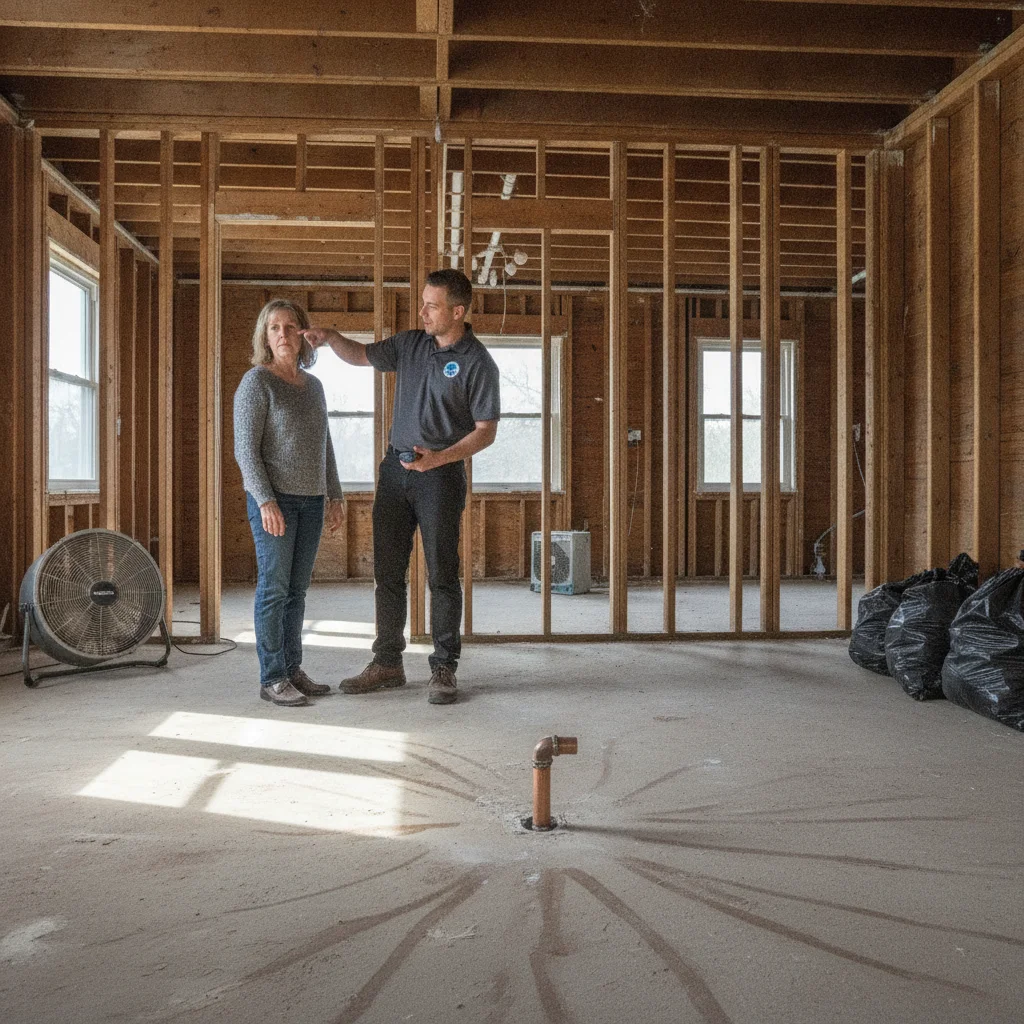
Insurance reconstruction services in San Diego address the rebuild after water damage mitigation ends. The drying phase focuses on moisture and documented conditions. Reconstruction restores removed or damaged parts under a separate project scope.

An independent restoration professional walking a homeowner through a stripped and dried interior before rebuilding begins

Why drying and rebuilding are two separate phases

Water damage work often reaches a clear handoff point. First, the licensed restoration pro addresses wet materials and affected areas. The goal is to stabilize conditions, remove water where needed, and complete the planned drying work.

Reconstruction comes afterward. It deals with the building materials and finishes needed to make the affected rooms usable again. Keeping these phases separate helps everyone understand what has happened and what remains.

The separation also keeps the paperwork easier to review. A mitigation record can describe affected areas, removed materials, drying activity, and measured conditions. A reconstruction scope can then identify the repair work being proposed.

One pro may be involved in both phases. Different independent pros may also handle them. The homeowner should confirm who is responsible for each part before authorizing work. An insurer may review each phase separately, but the homeowner should ask how that insurer will handle the specific claim.

The handoff shouldn’t happen because equipment simply disappeared from the room. Ask the mitigation pro to explain the final documented conditions. Then ask the reconstruction pro what information supports the proposed repairs.

Our step-by-step water damage restoration guide shows how the broader process can be organized. The exact sequence still depends on the property, the affected materials, and decisions made by the homeowner and independent pro.

What reconstruction usually covers after the drying equipment leaves

The water damage reconstruction phase concerns what must be repaired or replaced after mitigation. Its contents should come from the actual condition of the home, not a generic room template.

A reconstruction proposal may address opened walls, removed flooring, detached trim, cabinets, paint, or other affected finishes. Those items aren’t automatic on every project. The independent pro should identify each proposed item and connect it to a specific room or affected area.

Ask the pro to separate confirmed work from possible work. That distinction matters when a wall or floor cavity hasn’t been fully evaluated. It also helps prevent assumptions from entering the contract.

The scope should explain what is included and excluded. It should identify the materials being proposed, the areas receiving work, and who handles related tasks. If contents were moved during mitigation, confirm who will return them and under what agreement.

San Diego County homeowners comparing insurance restoration services in San Diego should also separate repair decisions from insurance decisions. A proposed repair doesn’t, by itself, confirm what an insurer will accept. Ask the insurer to respond to the written scope and explain its position in writing.

Restore Pro SD is a referral service. We connect homeowners with licensed, independent local pros who perform the physical work. The homeowner contracts with and pays that pro directly. For help finding the right type of professional, review our water damage restoration service.

How the mitigation record feeds the rebuild scope

A useful mitigation record gives the reconstruction pro a starting point. It can include photos, room notes, moisture readings, drying logs, and records of removed materials. The contents will vary by project, so ask what was created for your home.

The record should make the affected area understandable. A reconstruction pro can compare that documentation with current site conditions. The pro can then explain why each proposed repair appears in the scope.

For example, a room label should match across the paperwork. Materials listed as removed should correspond with visible openings and supporting photos. If the records conflict, ask both pros to resolve the difference before rebuilding starts.

Don’t assume the mitigation record and reconstruction scope will use identical wording. Different companies may organize their documents differently. Focus on whether the rooms, affected materials, and proposed repairs align.

Homeowners should keep their own copies. Send documents through a method that preserves the original file and date. Keep written responses from the insurer beside the related scope version. This creates a cleaner trail when someone requests clarification.

Our guide to the water damage insurance claim process explains how homeowners can organize claim communication. It doesn’t predict coverage or approval. Those decisions belong to the homeowner’s insurer under the specific policy and claim.

A homeowner and an independent contractor reviewing paperwork at a kitchen counter in a partially rebuilt room

Who writes the reconstruction scope and who approves it

A licensed independent reconstruction pro may prepare the repair proposal. That pro should inspect the affected rooms, review available mitigation records, and discuss the homeowner’s goals. The resulting scope is the pro’s description of the proposed work.

The homeowner decides whether to sign a contract with that pro. Before signing, confirm the business name on the agreement. You can also check the independent pro through the CSLB license lookup.

The insurer has its own role in the claim. Send the proposed scope to the assigned insurer contact and ask what documentation is needed. Don’t assume silence means approval. Don’t assume a contractor’s proposal determines coverage.

If the insurer and pro describe the work differently, ask for written explanations. The homeowner can then compare the disputed items instead of relying on phone summaries. Each document should identify its author and version date.

Restore Pro SD doesn’t write reconstruction scopes, approve claims, set prices, or perform repairs. We match homeowners with licensed, independent local water damage pros. Any work agreement is between the homeowner and the selected professional.

Approval can also mean different things during one project. An insurer’s written position isn’t the same as the homeowner authorizing a contract. A contractor’s readiness to begin isn’t proof of insurance acceptance. Keep those decisions separate and confirm each one with the responsible party.

Questions to ask before the rebuild phase starts

Start with the scope. Ask the independent pro to walk through it room by room. Every proposed task should connect to a visible condition, mitigation record, or agreed repair decision.

Ask these questions in plain language:

  • Which mitigation documents did you review?
  • What work is included in this scope?
  • What work is specifically excluded?
  • Which materials and finishes are being proposed?
  • Who handles contents, cleanup, and final walkthrough items?
  • What happens if hidden damage is found?
  • How will scope changes be documented?
  • Does this project require permits or inspections?
  • What written authorizations are needed before work begins?

Questions about permits and inspections must be answered for the actual property and scope. Ask the licensed pro to identify the relevant local authority. Confirm current requirements directly with that authority before work starts.

Send the same scope to the insurer. Ask which items it accepts, questions, or declines to address. Request written answers tied to the current scope version. Avoid relying on general statements about what insurance “usually” covers.

Also decide how communication will work. Identify one contact for the independent pro and one for the insurer. Keep scope revisions clearly named. If an item changes, ask for the reason and updated wording before authorizing it.

Finally, inspect the proposed agreement for names and responsibilities. Confirm who performs the work, who receives payment, and who addresses later questions. Restore Pro SD isn’t the contractor and doesn’t provide a warranty. Any warranty terms must come directly from the independent pro in writing.

When to call us

A licensed Water Damage Restoration pro should be involved when mitigation leads into drying, material removal, or rebuilding decisions. Call us at (858) 400-4586. The line plays a recording-consent notice, then takes a recorded and transcribed message. It isn’t answered live and doesn’t forward.