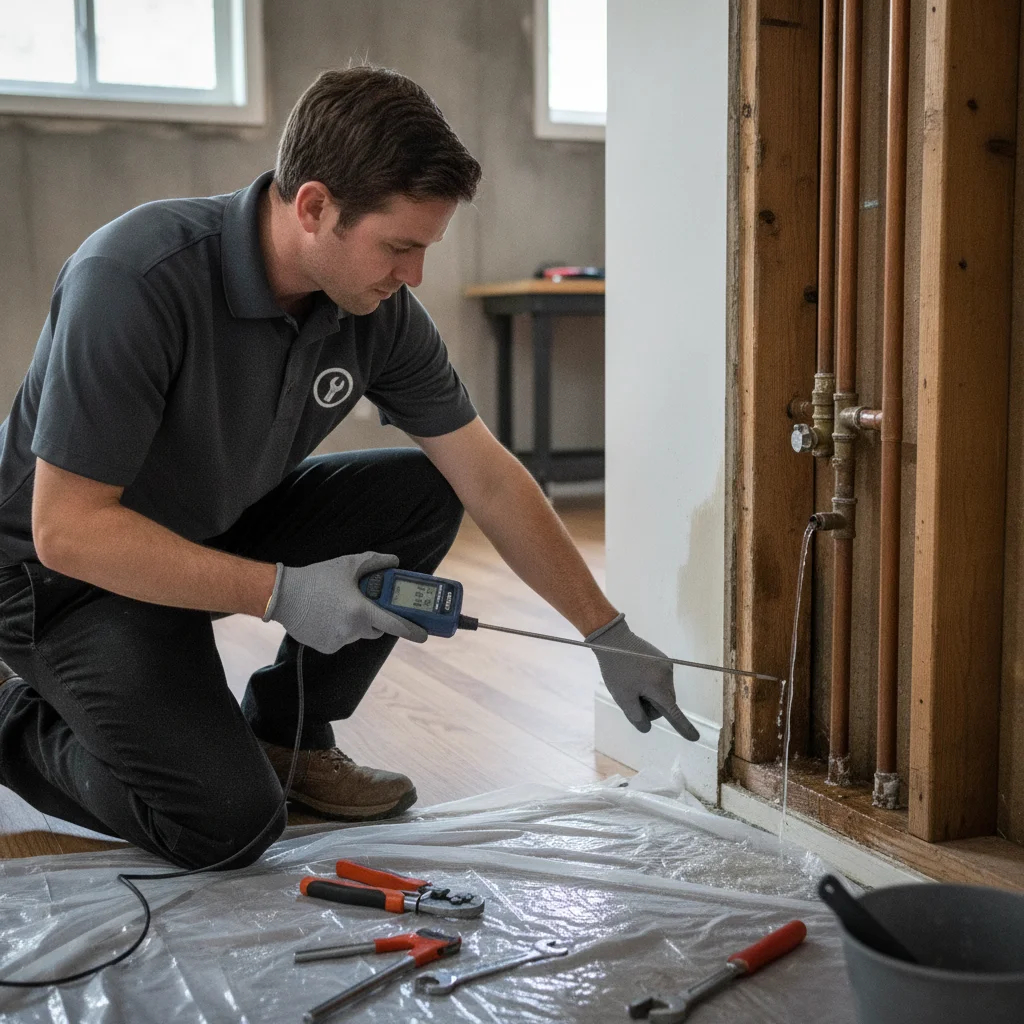
Water damage restoration in Santee should start with one clear answer: where is the water coming from? Drying materials before controlling the source can leave the central problem unresolved. A licensed local pro can trace the moisture, explain the evidence, and separate source work from restoration work.
Signs a leak is running behind a finished surface
Hidden water rarely arrives with a label. You may first notice a changed surface, odor, sound, or repeated damp area. None of these signs proves where the leak began. They give the matched professional a place to start checking.
Record details such as:
- A stain that changes shape or color
- A baseboard edge that feels different from nearby sections
- Paint or a finished surface that begins changing
- Flooring seams that look different from surrounding areas
- Dampness that returns after the surface is wiped
- A musty odor concentrated near one wall or cabinet
- A sound that appears when a fixture or appliance runs
Note when each sign appears. Also record which fixtures, appliances, or water-using features were active. Photos can show whether a mark is changing between observations. Don’t cut into a wall simply because one spot looks suspicious.
The visible sign may not identify the source by itself. A professional should compare the affected area with nearby materials and likely water paths. That process can keep the investigation focused before any surface is opened.
If the moisture seems to rise from a floor or appears without a clear wall source, review these signs associated with a possible slab leak. Treat that page as a starting checklist, not a diagnosis. The independent pro still needs to evaluate the Santee property itself.
Why drying cannot start until the source is stopped
Restoration and source control are connected, but they aren’t the same task. The source might involve a fixture, appliance connection, pipe, roof opening, drain, or another building component. The person assessing the damage should identify what’s known, what remains uncertain, and who will handle each part.
If water is still entering the area, moisture readings can keep changing. Materials may also become wet again after drying work begins. That makes it harder to define the affected area or judge whether the drying plan is addressing the actual problem.
A clear sequence helps:
- Trace the moisture to the most supportable source.
- Confirm that the active water entry has been controlled.
- Map the materials that still show moisture.
- Decide what can remain in place for drying.
- Identify anything that may need removal or later repair.
Restore Pro SD is a referral service. We match Santee homeowners with licensed, independent water damage professionals. The customer contracts with and pays the independent professional directly. We don’t perform leak detection, drying, demolition, or repairs ourselves.
Our water damage restoration referral service can connect you with a local pro when the source and affected materials need professional evaluation. Ask the matched pro to state whether source control falls within that professional’s scope. If another trade is needed, get that distinction in writing before restoration proceeds.
What non-destructive checks are used first
A professional may begin with checks that don’t require cutting a finished surface. The exact approach depends on the room, visible damage, available access, and the suspected source. Ask why each check is being used and what its result can actually establish.
The first step is often a careful history. Explain when you noticed the change, whether it has returned, and what was operating nearby. Point out previous stains or repairs, but don’t assume they’re connected to the current moisture.
The pro may then compare visible surfaces and accessible areas. A moisture meter can help compare readings across baseboards, walls, cabinets, floors, or other materials. A thermal camera may also help identify surface patterns that deserve closer checking. Neither tool should be treated as a complete explanation on its own. Ask the professional to connect each observation to the suspected source.
Accessible plumbing connections, appliance lines, cabinets, adjacent rooms, and the opposite side of a wall may also be checked. A wider moisture map can help avoid focusing only on the most obvious stain.
Santee-specific meter and service-line rules couldn’t be confirmed from the approved information for this page. Don’t guess based only on the city name. For questions involving the water meter, service line, or provider responsibility, contact the water provider listed on the property’s current bill.
When opening a surface becomes the only option
Non-destructive checks can narrow the search, but they may not reveal enough access. A small, targeted opening may be proposed when the suspected source sits behind drywall, cabinetry, trim, or another finished surface.
Before authorizing an opening, ask the pro to identify the exact location and purpose. The answer should explain what evidence points there and what the opening is expected to confirm. It should also distinguish exploratory access from removal required for restoration.
Discuss the boundaries before work begins. Who will open the surface? How large is the planned access area? Who will evaluate the exposed pipe or building component? Who will restore the finish afterward? These questions matter because leak tracing, water damage restoration, plumbing work, and finish repair may involve different scopes.
Ask for photos before and after the surface is opened. The exposed area should either support the suspected source or give the pro a reason to revise the working explanation. If the evidence changes, request an updated plan before approving a larger opening.
Restore Pro SD doesn’t hold a contractor license or perform physical work. The independent professional is responsible for the work you authorize. Before hiring that professional, use the CSLB online license check to review the current license record. Confirm that the name on the agreement matches the professional you checked.
What to ask the matched pro about the source
A good source discussion should be specific. You shouldn’t leave with only “the wall is wet” or “it’s probably a pipe.” Ask the matched professional to separate observations from conclusions and explain any remaining uncertainty.
Useful questions include:
- What evidence identifies the suspected source?
- Which materials showed moisture during the assessment?
- Were nearby rooms or the opposite side of the surface checked?
- Is water still entering the affected area?
- How was source control confirmed?
- Does the source require another independent professional?
- What needs to happen before drying begins?
- Is a surface opening needed, and why there?
- Who will handle the finish repair after access?
- What photos or readings will document the affected area?
Ask whether the scope covers source work, restoration work, or both. A narrow description such as “dry affected wall” doesn’t explain how the underlying leak will be addressed. Likewise, a source repair alone doesn’t describe what happens to materials that remain wet.
Get the proposed scope in writing before authorizing work. Review the independent professional’s name, license information, tasks, exclusions, payment terms, and any separate repair responsibilities. Restore Pro SD doesn’t set prices or provide warranties. Those terms belong between you and the professional you hire.
Once the immediate issue is understood, use this guide to help prevent future water damage. Prevention steps should match the actual source found at your property, not a citywide assumption about Santee homes.
When to call us
Call when hidden moisture, a recurring stain, or an uncertain source is blocking restoration at your Santee property. This kind of investigation needs a licensed Water Damage Restoration pro when the source and affected materials require professional evaluation. Call us at (858) 400-4586. The line plays a recording-consent notice, then takes a recorded and transcribed message. It isn’t answered live and doesn’t forward.