The rain has stopped over Chula Vista or Oceanside, but the water at your slider hasn’t. A patio drain, yard catch basin, or area drain at the garage apron failed to carry runoff away, and that sheet of water found the lowest threshold. Cleanup has to start from that outdoor entry, not from a guess about indoor plumbing.
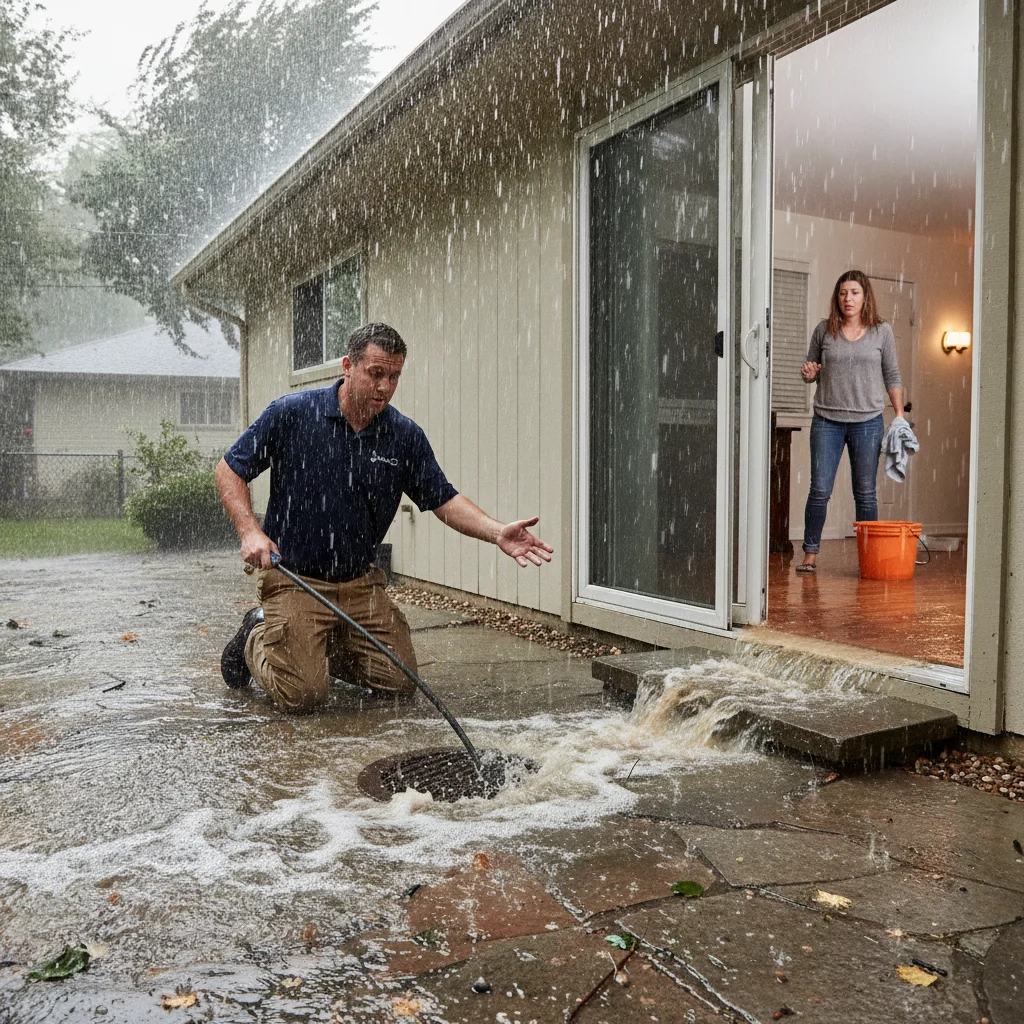
Document the exterior entry path when it’s safe
Don’t walk into standing water to take pictures. If electrical circuits or equipment are wet or near water, turn off power at the main breaker only when you can reach it without entering standing water. Otherwise call an electrician. Never switch power on or off while standing in water.
From a dry doorway or a covered porch, photograph what you can. Shoot the drain grate, the ponded water around it, and the slope of the patio or walk. Then shoot the threshold, the weatherstrip, the first few feet of flooring, and the wall beside the opening. If you have a tape measure, put it in a photo so the water line on stucco or the door jamb is readable later.
San Diego housing makes this path local. Coastal north county homes in Encinitas and Carlsbad often sit on slabs with courtyard patios and low sliders. Inland, El Cajon and Escondido lots can grade toward the house on clay that holds water after a long rain. South Bay courtyards in National City and Chula Vista pack drains between walls where leaves and soil clog the grate. A photo of that layout beats a generic flooded-room shot. An atmospheric river can load those drains in a single night.
Write down when the rain started, when you first saw water inside, and whether the drain was already overflowing. Note adjoining rooms. Don’t guess the drain’s design or whether a city storm line is involved. You’re recording the indoor loss and the outdoor entry, not diagnosing the drainage system.
If you rent, give the landlord written or oral notice of the water and the failed drain. California Civil Code 1941 requires a lessor, absent an agreement to the contrary, to put a dwelling into a condition fit for occupation and to repair later dilapidations that render it untenantable. Civil Code 1941.1 lists effective waterproofing and weather protection of exterior walls among the characteristics a dwelling must not substantially lack. That is habitability law, not a verdict on your particular drain.
Keep people and pets out of the wet rooms until a licensed restoration pro in our network can assess the water.
Separate rainwater entry from an indoor backup
Patio drain overflow water damage looks a lot like a plumbing flood once it’s across the living room. It isn’t the same source. Rain that ponded at a failed yard drain and crossed a threshold is outdoor runoff. Water coming up a floor drain, a shower, or a toilet is an indoor backup. A washing machine pan or a water heater on the garage slab is a third story.
The distinction matters because the trades and the cleanup scope split. A plumber or drain contractor may need to clear or rebuild the exterior drain. That work sits outside flood damage cleanup. The restoration pro we connect you with extracts indoor water, maps moisture, and dries structure. Mixing those jobs in one verbal “just fix it” request is how drain work gets billed as restoration, or wet drywall gets left while someone digs in the yard.
Don’t assume the water is clean because it started as rain. Yard and patio water can pick up soil, fertilizer, pet waste, and whatever sat in the catch basin. EPA mold guidance says to fix water problems as soon as possible and dry items completely. If water or mold damage was caused by sewage or other contaminated water, call a professional experienced with contaminated-water damage. A matched independent pro decides how to treat the water after seeing it. You don’t have to name a category on the phone.
Street water is a neighbor of this problem. If runoff came from the curb, through a driveway, then into a failed yard drain and under a door, say that in your notes. A garage that flooded in the same storm is often the same sheet of water, not a second indoor leak. Compare that path to a garage that flooded in heavy rain so you don’t treat two rooms as two unrelated losses.
If the only water you see is at an interior fixture and the patio is dry, stop calling it an exterior drain failure. Send photos of both the drain and the indoor fixture so the pro isn’t chasing the wrong source.
Check walls, flooring, and adjoining rooms
Visible water at the slider is the easy part. Slab-on-grade floors common from Mira Mesa to San Marcos let moisture travel under vinyl, laminate, and carpet long after the surface looks only damp. Baseboards wick. Bottom plates in exterior walls hold water that never pooled in the middle of the room.
Have the restoration pro check the first interior wall on either side of the wet door, closets that share that wall, and carpet and pad in the next room, even if it feels dry at the doorway. Check the garage if the drain sits on the apron. Check lower cabinets if the water reached a kitchen or bath on the same slab. A yard drain flooded house often soaks more than the room you noticed first.
Don’t pull up whole rooms of flooring yourself just to see. Don’t run the HVAC if you know or suspect the system is contaminated with mold. The EPA says that can spread mold through the building. If you only suspect it, consult EPA duct-cleaning guidance before you do more.
EPA’s homeowner mold page also says that if the moldy area is less than about 10 square feet (roughly a 3 ft by 3 ft patch), in most cases a homeowner can handle cleanup using EPA tips. If there has been a lot of water damage and/or mold growth covers more than 10 square feet, consult EPA’s mold remediation guidance. A failed drain that soaked several rooms is the second case. Don’t paint or caulk moldy surfaces. Clean the mold and dry the surfaces first. Paint over mold is likely to peel.
Allergic reactions to mold are common and can be immediate or delayed. Molds can also cause asthma attacks in people with asthma who are allergic to mold. Mold can irritate eyes, skin, nose, throat, and lungs in allergic and non-allergic people. That comes from the EPA’s brief mold guide. It does not list every health effect. Talk to a health professional if someone in the house is reacting.
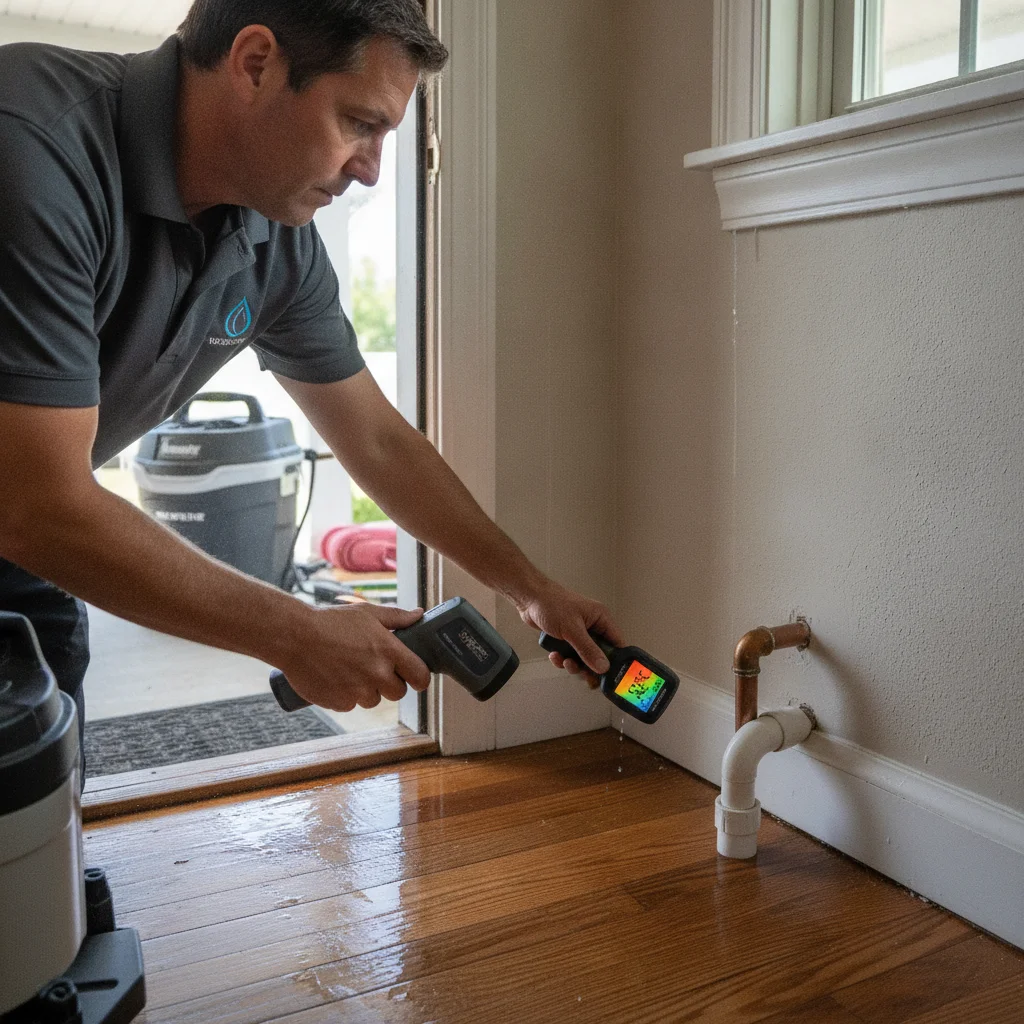
Keep drain repair outside the cleanup scope
The restoration job inside the house is extraction, moisture mapping, removal of materials that won’t dry, and structural drying. The drain in the patio is a separate repair. A landscaper, a plumber, or another contractor may own that outdoor work. The matched restoration pro should not be asked to “fix the drain while they’re here” unless that company actually holds the right Contractors State License Board classification for that work. Check any contractor’s license on the CSLB license lookup before they dig.
Restore Pro SD is a referral service. We match you with licensed, independent local water damage professionals. We don’t hold a contractor license, we don’t own trucks, and we don’t repair drains. The customer contracts and pays the restoration pro directly. Drain repair is a different contract with a different trade.
If the drain still overflows, indoor drying fights a new flood the next time it rains. If you only repair the drain and skip indoor drying, wet plate and pad stay in the wall. Sequence it: stop active indoor entry if you can do that from dry ground (a towel or sandbag at the threshold is not a drain repair), then indoor extraction and drying, then the outdoor drain as its own job. Don’t wait on the drain contractor to start indoor moisture control. The EPA’s rule is still to fix the water problem and dry completely.
Don’t treat ozone machines as a shortcut for wet rooms. EPA evidence shows that at concentrations that don’t exceed public health standards, ozone has little potential to remove indoor air contaminants. Ozone can be harmful. It doesn’t react with some chemicals, and where it does, the reaction can form harmful or irritating by-products.
Ask for two written scopes if both trades are on site: one for indoor flood cleanup and drying, one for the exterior drain. That keeps insurance photos and invoices from blending a landscaping invoice into a water-loss file.
Review moisture findings before repairs begin
Cleanup is not over when the carpet looks dry. Licensed restoration pros in our network should show you moisture readings on the slab, the wall cavities, and any remaining flooring before anyone talks about new baseboards or paint. If those numbers aren’t written down, you’re guessing.
Ask to see where the water went from the failed drain, not just the room you first noticed. A drying log is the record of those readings over the days the equipment runs. Structural drying is measured, not eyeballed. How long indoor cleanup takes depends on how far the water traveled, what it soaked, and whether the drain is still feeding the slab. There isn’t a single countywide number we can publish.
Rebuild after the materials are dry, not during. New flooring over a wet subfloor traps the same moisture the drain let in. If mold showed up on a large area, follow EPA’s remediation path instead of covering it. For a rental, Civil Code 1942 describes a tenant repair-and-deduct path after notice if the landlord neglects repairs the landlord ought to make, with limits: cost no more than one month’s rent, not more than twice in 12 months, and unavailable if the tenant caused the condition under Civil Code 1929. That’s a legal remedy with conditions, not advice to start demolition.
When you’re ready for indoor work, compare flood cleanup scopes so extraction, drying, and drain repair stay in the right buckets. Then rebuild only against the moisture findings, not against the memory of a wet afternoon.
When to call us
Call when rain from a failed patio or yard drain has entered living space, a garage, or wall cavities, or when you can’t tell indoor backup from outdoor runoff. Restore Pro SD matches you with a licensed local restoration pro for extraction, drying, and indoor cleanup. Drain repair stays with the trade that owns the yard. Call us at (858) 400-4586 and we’ll connect you with a licensed local restoration pro.