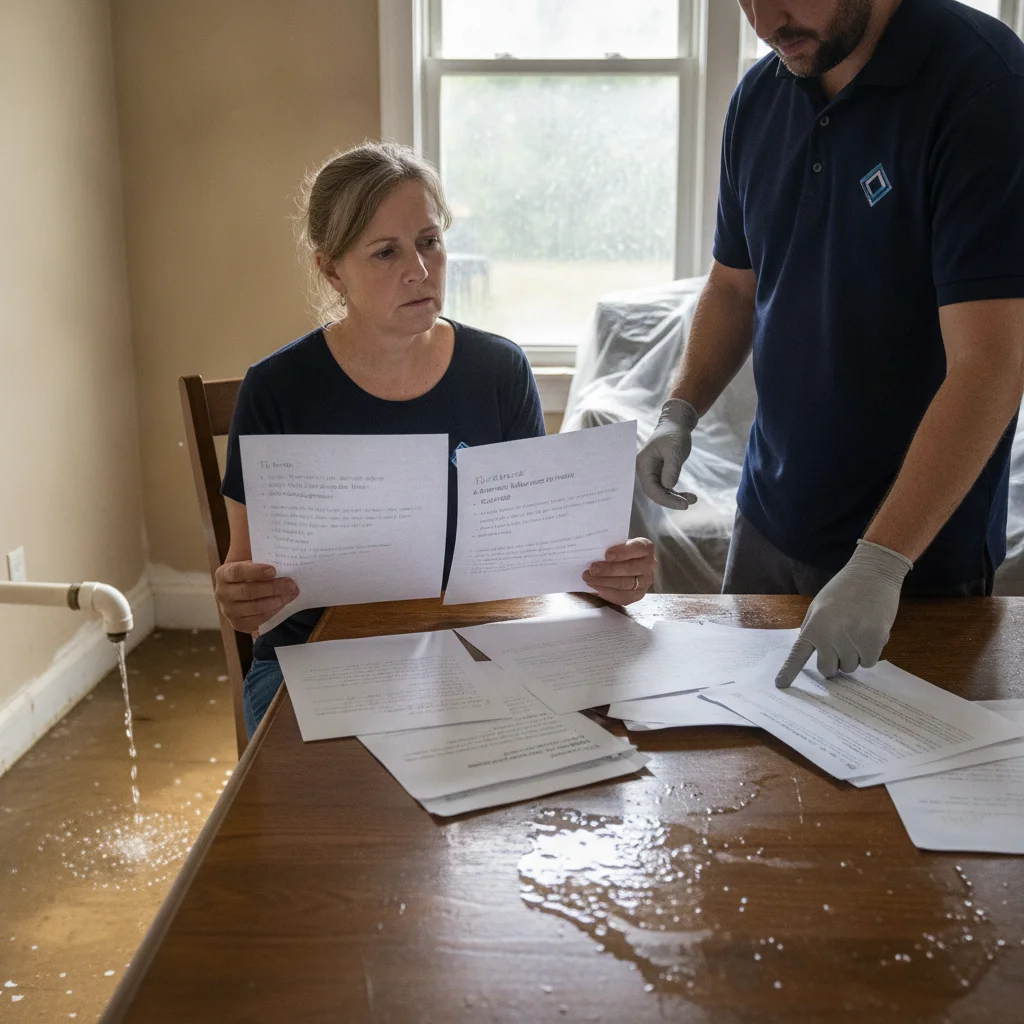
Two flood cleanup proposals can describe the same property very differently. Compare them by source, affected areas, work phases, documentation, and exclusions. A clear written scope helps you see what each independent company is proposing.
Identify the flood source and affected areas
Start with the event each flood cleanup company believes it’s addressing. The proposal should identify the reported source without hiding uncertainty. Examples might include a plumbing release, exterior water entry, a drain backup, or water from another unit. If the source hasn’t been confirmed, the document should say that.
This distinction matters because cleanup doesn’t necessarily correct the original cause. A restoration company may propose water removal and drying while excluding plumbing, roofing, drainage, or exterior repairs. Ask who will confirm that the source has stopped. Then ask whether that work appears in the proposal or requires another independent professional.
Next, compare the listed areas line by line. Look for rooms, closets, hallways, wall sections, flooring areas, and building levels. A proposal that says only “affected area” leaves too much room for interpretation. Ask the company to name each inspected space and identify any area it couldn’t access.
Also check whether both companies evaluated the same property conditions. One may have inspected a cabinet base or adjoining room that another didn’t mention. That difference doesn’t automatically make either scope right or wrong. It does give you a precise follow-up question.
San Diego County properties vary widely, so generic wording isn’t enough. Whether the address is in Chula Vista, Oceanside, El Cajon, or central San Diego, the scope should describe the actual property. Our Chula Vista flood cleanup guide shows how a location-specific cleanup discussion can stay focused on the affected building.
Separate extraction, drying, cleaning, and repairs
A flood damage cleanup contractor may group several work phases under one heading. Ask each company to separate those phases in writing. That makes overlapping work and missing work easier to spot.
Extraction means removing standing or recoverable water from listed areas. Drying covers the proposed treatment of remaining moisture in specified materials or spaces. Cleaning addresses surfaces or contents named in the scope. Repairs cover work intended to restore removed or damaged building materials.
Those labels don’t prove that two companies are proposing the same work. Read the tasks beneath each heading. One drying scope may address flooring and wall cavities. Another may mention only the room generally. One repair section may include removed drywall, while another may exclude all reconstruction.
Ask these questions for every phase:
- Which rooms and materials are included?
- What action is proposed for each material?
- What must happen before this phase begins?
- Which work belongs to another company?
- What event would change the written scope?
- Who approves added work before it starts?
Keep plumbing, drainage, cleanup, and reconstruction boundaries visible. If a plumber is correcting the source, confirm that the cleanup proposal doesn’t quietly include that work. If a separate contractor will handle repairs, ask where the restoration company’s responsibility ends.
Our flood damage cleanup service page explains how Restore Pro SD connects property owners with licensed, independent local pros. Restore Pro SD doesn’t perform extraction, drying, cleaning, or repairs. You contract with and pay the matched professional directly.
Compare contamination and removal boundaries
Flood proposals may use different language for the water source, affected materials, or proposed cleaning controls. Don’t assume matching labels mean matching work. Ask each company to explain its wording in plain language and connect every recommendation to a listed area.
This guide couldn’t confirm one contamination or removal rule that applies to every San Diego County flood. The right boundary depends on what the independent professional observes and can support. Ask for the basis behind every proposed removal instead of accepting a broad statement.
Compare which materials each company proposes to clean, remove, leave in place, or evaluate further. Useful scope details include the room, material, location, and planned action. “Remove affected materials” isn’t specific enough. “Evaluate flooring” also needs a decision point and an identified next step.
If two scopes disagree, ask both companies about the exact difference. One may propose removing a wall section while another proposes leaving it. Ask what condition led to that recommendation, what information remains unknown, and how the company will document any change.
Be equally careful with mold or contamination claims. The approved information for this guide doesn’t confirm a specific condition at your property. A company should support its own assessment and proposed controls. You can review the EPA’s mold and moisture guidance for background, then ask the independent pro how its scope applies to your property.
If a proposal cites IICRC S500, S520, WRT, or ASD, ask for clarification. Request the document version, the company’s applicable credentials, and a plain explanation of how the reference changes the work. Don’t treat an unexplained acronym as proof of a complete scope.
Ask how moisture conditions will be documented
A written proposal should explain what documentation the company plans to provide. Don’t settle for a general promise to monitor the property. Ask what will be recorded, where readings will be taken, and how you’ll receive the records.
Start with a simple room list. Each company should be able to connect its documentation plan to the spaces and materials in its scope. Ask whether records will identify measurement locations consistently. That can help you compare conditions across separate visits without guessing which wall or floor area was checked.
Then ask what happens when a listed area can’t be measured or accessed. The record should preserve that limitation instead of leaving a blank that looks complete. If cabinets, flooring layers, wall cavities, or adjoining units aren’t accessible, request clear notes about what wasn’t evaluated.
You can also ask for the decision process behind changes. What documented condition would lead the company to continue drying, propose removal, or stop work in an area? Who explains that change? Will the revised boundary appear in writing before additional work begins?
Photos and room labels can provide useful context, but ask what each image is meant to show. A folder of unlabeled photos may not answer later questions. The documentation should connect the observed condition, location, and proposed action.
Finally, ask who keeps the records and which documents you’ll receive. Restore Pro SD doesn’t create drying records or validate a contractor’s findings. The independent pro is responsible for explaining its documentation and supporting its own recommendations.
Review exclusions and verify the independent pro
Exclusions deserve the same attention as included work. They show what you may need to arrange separately and where assumptions could create a dispute. Read every exclusion before comparing the proposals as complete packages.
Common scope boundaries may involve the original water source, concealed conditions, personal property, temporary storage, plumbing, drainage, exterior work, permits, reconstruction, finish matching, or work in inaccessible areas. These are comparison topics, not confirmed requirements for every job. Ask each company to mark what applies to your property.
Don’t rely only on a verbal explanation. Request written answers when a boundary affects your hiring decision. If the company says another trade must complete part of the work, ask it to identify that part without guessing who should perform it.
Also check the name of the independent business that will appear on your agreement. Restore Pro SD is a referral service, not the restoration contractor. It performs no physical work, sets no prices, and gives no warranties. The customer contracts with the matched independent professional directly.
Use the CSLB license check to review the business named in the proposal. Compare the lookup record with the company name and details you received. If something doesn’t match, ask the company to explain before signing.
Ask the independent pro for its current insurance information and written warranty terms, if it offers a warranty. This guide couldn’t confirm coverage or warranty terms for any specific company. Those details must come from the company and its documents.
Your final comparison should answer five points: who is contracting with you, what work is included, what is excluded, how changes are approved, and what records you’ll receive. If an answer remains unclear, request a revised scope before choosing the company.
When to call us
Call when floodwater has affected building materials and you need help finding a licensed Water Damage Restoration pro in San Diego County. Restore Pro SD will match you with an independent local professional, but it won’t perform or warranty the work. Call us at (858) 400-4586. The line plays a recording-consent notice, then takes a recorded and transcribed message. It isn’t answered live and doesn’t forward.