Choosing a basement flood cleanup company starts with one document: a clear scope tied to the water source and every affected area. Compare what each independent pro will extract, dry, clean, remove, rebuild, and document. If a line is vague, request a revision before choosing.

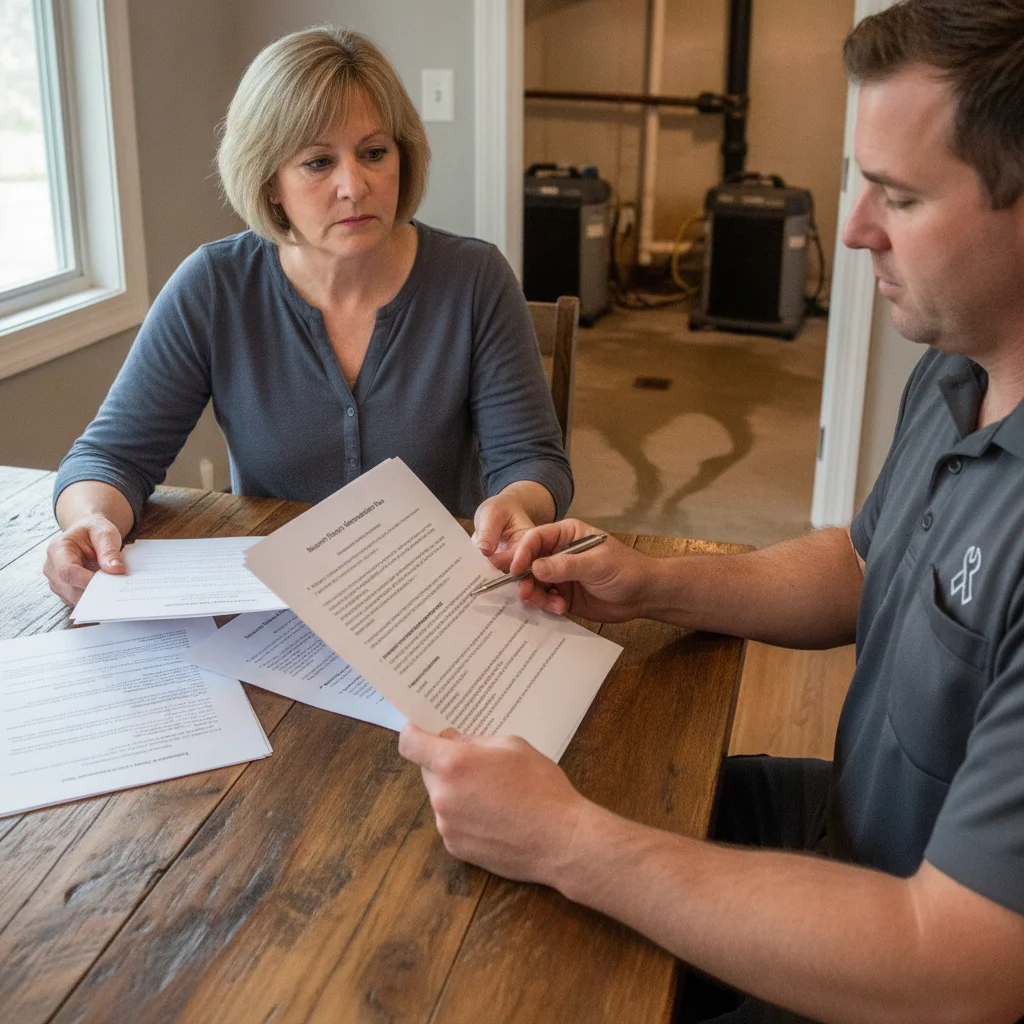
A homeowner comparing written basement flood cleanup scopes from independent local professionals without visible prices or branding

Start with the flood source and affected areas

Give every company the same starting information. Otherwise, you may receive proposals based on different assumptions. That makes a fair comparison difficult.

Begin with what you observed, not an unconfirmed diagnosis. Note where you first saw water and whether the source appears active. Record which rooms, closets, stairs, and adjoining spaces showed visible effects. Include any belongings that may need attention.

A useful starting summary covers:

  • The first place and time you noticed water
  • The visible source, if you can identify it
  • Each floor, wall, ceiling, or built-in item involved
  • Furniture, boxes, appliances, or other contents in the area
  • Work already completed by another company or property owner
  • Areas that weren’t accessible during your initial review

Ask each basement flood cleanup company to inspect the same boundaries. Its written scope should identify which areas it evaluated. It should also mark any areas that weren’t inspected or couldn’t be reached.

Keep source repair separate from damage cleanup. A proposal should state whether the company will address the source, coordinate with another provider, or exclude that work. If source work is excluded, ask what must happen before cleanup continues.

This distinction matters during comparisons. One proposal may begin after the source is addressed. Another may contain a separate source-related task. Neither description is useful unless its boundaries are clear.

For a San Diego County property, include the exact service address when requesting verification. Requirements can depend on the authority serving that address. Don’t accept a broad statement about “local rules” without asking where it came from.

Compare extraction, drying, cleaning, and repairs

A short phrase such as “complete flood cleanup” doesn’t explain the actual work. Ask every candidate to separate the project into distinct stages.

Water extraction covers the removal of standing or collected water. Structural drying addresses the materials and spaces included in the drying plan. Cleaning concerns the surfaces or belongings named in the scope. Reconstruction covers repairs that follow removal or drying.

Ask for each stage to identify:

  • The rooms and materials included
  • Items scheduled for removal
  • Items the pro plans to leave in place
  • Cleaning tasks included in the proposal
  • Repair or replacement work included
  • Work assigned to another independent provider
  • Tasks specifically excluded

Don’t assume removal includes replacement. A proposal might include taking out damaged flooring without installing new flooring. It might include opening a wall without closing, finishing, or painting it. Ask for those boundaries in writing.

Our basement flood cleanup matching service connects San Diego County homeowners with licensed, independent local pros. Restore Pro SD doesn’t perform the cleanup, set the price, or provide a warranty. You’ll contract with and pay the selected professional directly.

You can also review our San Diego basement flood cleanup overview before comparing scopes. Use it to organize your questions, then judge each proposal by its own written details.

Basement flood cleanup companies may describe similar tasks differently. Compare the promised result and project boundary, not only the section heading. If two scopes don’t cover the same work, ask both companies to clarify before comparing them.

Ask how hidden moisture will be documented

A credible comparison needs more than visible observations. Ask each candidate how it will document the areas included in its moisture evaluation and drying plan.

The scope should explain what records you’ll receive. Ask whether the pro will identify reading locations, dates, materials, measurement units, and the conditions used to decide that a drying task is finished. Don’t supply your own target figures. Require the company to explain its proposed criteria and their source.

Useful questions include:

  • Which concealed or adjoining areas will you evaluate?
  • How will reading locations be labeled?
  • What information will appear in the initial record?
  • Will later records use the same locations?
  • Who can explain changes in the readings?
  • What document will show the final condition?
  • Which areas won’t be measured, and why?

Ask how the pro will handle an area it can’t access. The answer should distinguish inspection, removal, drying, and repair. It should also identify any additional approval needed before the scope changes.

Photos can help connect written entries to rooms and materials. Ask whether images will be included and how they’ll be labeled. A folder of unlabeled pictures is harder to compare with the actual scope.

If a company cites a restoration standard, protocol, or certification, request its exact name. Ask how that item affects the proposed work. Then verify the claim with the organization that issued it. The approved claims record for this page doesn’t confirm any specific certification held by a prospective company.

A homeowner and an independent restoration professional standing in a damp basement discussing the work ahead

Review exclusions before choosing an independent pro

Exclusions show where one company’s responsibility ends. Read them before focusing on the total price. A lower total may reflect fewer included tasks rather than better value.

Look for separate treatment of source repair, contents, cleaning, removal, disposal, storage, reconstruction, painting, and flooring. These aren’t automatically included merely because a proposal says “cleanup.” Ask the candidate to mark every excluded task that may still need attention.

Also check who handles communication with other providers. A scope may depend on work performed under a separate agreement. Request the sequence in writing, including which company completes each step.

For every exclusion, ask three questions:

  1. Who is expected to handle this task?
  2. What must happen before the scoped work continues?
  3. How will a change be approved and documented?

Review payment terms, cancellation terms, and change procedures in the independent pro’s agreement. Restore Pro SD doesn’t set contractor prices or payment terms. It also doesn’t issue warranties. Ask the selected company to put any warranty statement and its limitations in its own contract.

Don’t rely on spoken additions. If a representative says a task is included, ask for that task in the written scope. The same applies when conditions change after work begins. Request a written description of the added or removed work.

Avoid comparing a detailed proposal with a one-line summary. Ask for enough detail to line up extraction, drying, cleaning, removal, and reconstruction. This creates a clearer comparison between basement flood cleanup experts.

Finally, check that the contracting business name matches the name on every supporting document. If names differ, ask for a written explanation before signing.

Verify credentials through current official sources

Restore Pro SD is a referral service. We match homeowners with licensed, independent water damage professionals serving San Diego County. We don’t hold a trade license or perform physical restoration work.

Verify each prospective company through current official sources. The approved claims ledger for this page doesn’t identify a specific California license classification for basement flood cleanup. It also doesn’t confirm the exact licensing or permit requirements for your address. Don’t guess about either point.

Use the CSLB license check to review the current record tied to the proposed contracting business. Compare the business name on that record with the name shown on the contract. If the record or required classification is unclear, ask CSLB which requirements apply to the proposed work.

Treat each credential as a separate item. If a candidate claims a certification, verify it with the issuing organization. If the company provides insurance documentation, confirm its current status through the listed issuer or authorized representative. The approved record for this page doesn’t verify a particular company’s insurance or voluntary certifications.

For permit questions, contact the city or county department serving the property address. Ask whether the specific extraction, removal, source repair, or reconstruction scope requires further review. No verified permit rule for this project appears in the approved claims ledger, so a general claim shouldn’t replace an address-specific answer.

For moisture and mold information, compare company recommendations with the EPA’s mold and moisture guidance. Ask the company to explain how its proposed tasks relate to your documented conditions. Don’t treat a general resource as a diagnosis for the property.

Keep copies of the scope, exclusions, credential records, and signed agreement together. Your final choice should rest on current verification and clear written responsibilities.

When to call us

Call when you want help finding a licensed Water Damage Restoration pro for basement extraction, drying, cleaning, or repair needs. Restore Pro SD will match you with an independent local professional serving San Diego County. Call (858) 400-4586 to hear the recording-consent notice, then leave a recorded message about the help you need.