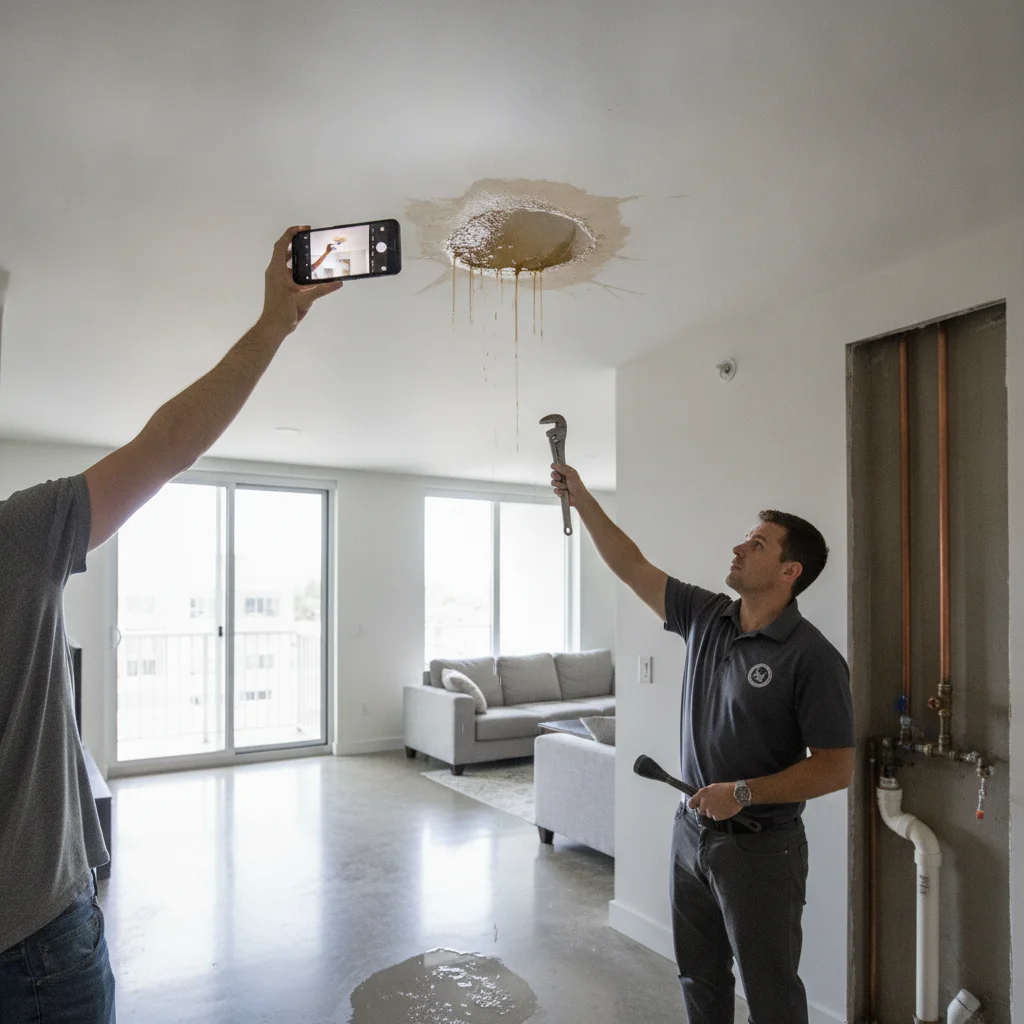
For ceiling water damage in a San Diego condo, first identify where water entered, document every affected area, and coordinate access before ceiling repairs begin. The visible mark may involve your unit, the space above it, and building-managed areas. Treat source control and ceiling restoration as separate decisions.

A visible water stain on a condo ceiling while an owner documents the damage with a phone

Trace the source before repairing the ceiling

Start with the source, not the stain. New paint or drywall can hide visible damage without resolving what caused it.

Ask a qualified professional to investigate possible entry points. These might include plumbing, fixtures, drains, roofing, sprinklers, or condensation systems. Keep every possibility labeled as suspected until someone confirms it.

If another unit is above yours, contact its resident or owner. Ask whether they’ve noticed a leak, overflow, appliance problem, or recent repair. Contact the condo manager or association representative as well. They may know about reported water activity in nearby units or shared areas.

Write down what each person reports. Separate firsthand observations from opinions. A statement such as “water appeared below the bathroom” is more useful than an unsupported diagnosis.

The source and the damaged ceiling may require different professionals. Ask who’ll confirm that water entry has stopped. Then ask the restoration pro how that finding affects the ceiling plan. Don’t describe the ceiling repair as final while the source remains unknown.

For help assessing the affected area, Restore Pro SD can connect you with an independent pro who handles ceiling water damage repair. The customer hires and pays that professional directly.

You can also verify contractor information through the CSLB online license check. Confirm that the information shown applies to the work being proposed.

Check adjoining materials for hidden moisture

Don’t limit the assessment to the center of the stain. Ask the independent restoration pro to check the ceiling, nearby wall intersections, trim, and other adjoining materials that may be involved.

The pro should explain what can be inspected without opening the ceiling. They should also identify areas that can’t be evaluated from the room below. If access above the ceiling requires another unit or a managed building space, add that need to the coordination plan.

Request a moisture map or another clear written record of the assessment. It should identify where readings were taken and which materials were checked. Ask the pro to explain the meaning of those readings for this specific ceiling.

Appearance alone shouldn’t drive the decision. Instead, ask what evidence will show whether the assembly can remain closed. If monitoring is proposed, request the planned check locations and the criteria for ending that monitoring.

Drywall may be only one part of the affected area. Ask about insulation, framing, finishes, and wall sections near the ceiling line. The pro can explain which materials are accessible and which remain uncertain.

For drywall-specific decisions, read our guide to repairing or replacing wet drywall. You can also review the EPA’s mold and moisture guidance when discussing moisture concerns with the contractor. Don’t treat general guidance as a diagnosis of your condo.

Coordinate access in a shared-wall property

Condo ceiling damage can involve several separate contacts. Your list may include the upstairs resident, another unit owner, the property manager, an association representative, your insurer, and the professionals assessing the source and damage.

Make one contact sheet before scheduling work. Record names, roles, preferred contact methods, and which spaces each person controls. That keeps an access request from becoming a debate about blame.

This page can’t confirm who must pay, authorize entry, or repair each building component. No single allocation for every San Diego condo could be confirmed from the approved sources for this page. Check your governing documents, current insurance information, and written building procedures. Ask your insurer and qualified local advisers about anything that remains unclear.

Before anyone opens a ceiling or enters another unit, ask who can authorize that access. Get the answer in writing. Also ask the manager about building-specific procedures for entry, equipment placement, parking, elevators, debris, and work areas.

Try to align the source assessment with the restoration assessment. If separate professionals are involved, give each one the same photos and written timeline. Ask them to identify where their scope ends and another person’s work begins.

Keep messages factual. State what was observed, where it appeared, and what access is requested. Avoid assigning responsibility before the governing documents, insurers, and qualified advisers have been consulted.

An independent restoration professional checking a condo ceiling and adjoining wall with a moisture meter

What San Diego condo owners should document

Begin documenting as soon as you notice the ceiling damage. Take wide photos showing the whole room, then closer photos showing stains, seams, fixtures, and nearby walls.

Keep the original files. Record when you first noticed the problem and what changed afterward. If the stain expands or its appearance changes, photograph it again from a similar position. Don’t alter the damaged area just to create a clearer picture.

Build a simple event log. Include calls, emails, access attempts, inspections, source findings, and work discussions. Note who attended each visit and what they said they could confirm. Label unresolved statements as unconfirmed.

Save communications from the upstairs resident, property manager, association representative, insurer, and contractors. Keep governing documents and insurance correspondence with the same record. This creates one working file instead of several disconnected message threads.

Ask the independent restoration pro for written findings. Useful questions include:

  • Which rooms and materials were assessed?
  • Which areas couldn’t be accessed?
  • Was the water source confirmed or still suspected?
  • What additional access or inspection was recommended?
  • What evidence supports drying, removal, or continued monitoring?
  • What conditions should be checked again?

Documentation doesn’t decide responsibility by itself. It gives the people reviewing the incident a clearer record. Don’t edit a professional’s findings or present a suspected cause as confirmed.

If an insurer requests a particular document or format, confirm that requirement directly. This page can’t verify the terms, duties, deadlines, or coverage of any individual policy.

Decide what can dry and what needs removal

The restoration plan should address each affected material separately. Ask the matched pro to identify which areas can be monitored, which may dry in place, and which may need opening or removal.

Request the reason for every recommendation. The explanation should connect the proposed work to the material’s condition, available access, moisture findings, source status, and any concerns identified during the assessment.

A small visible stain shouldn’t become the only basis for a small scope. Likewise, a large mark doesn’t automatically establish how much material requires removal. Ask the professional to define the affected boundaries using the evidence gathered onsite.

If the ceiling is visibly sagging, bowing, or changing shape, don’t treat it as a cosmetic paint project. Our guide to a sagging ceiling from water explains how to organize the next steps without guessing at the cause.

When drying in place is proposed, ask how progress will be recorded. Request clear completion criteria and a final written summary. When removal is proposed, ask which sections will be opened and why. Also ask whether the opening creates access needed for further assessment.

Don’t let an association meeting, paint appointment, or repair schedule decide the technical result. Coordinate those dates around the findings from the independent pro and the confirmed access plan.

Before approving work, review the proposed scope with the people whose authorization may be needed. Verify current responsibilities through your governing documents, insurer, and qualified local advisers. Restore Pro SD doesn’t decide coverage, ownership, payment, or association duties.

When to call us

When the source is unclear, moisture may extend beyond the stain, or shared access is needed, ask a licensed water damage restoration pro to assess the ceiling and adjoining materials. Call us at (858) 400-4586. The line plays a recording-consent notice, then takes a recorded and transcribed message. It isn’t answered live and doesn’t forward.