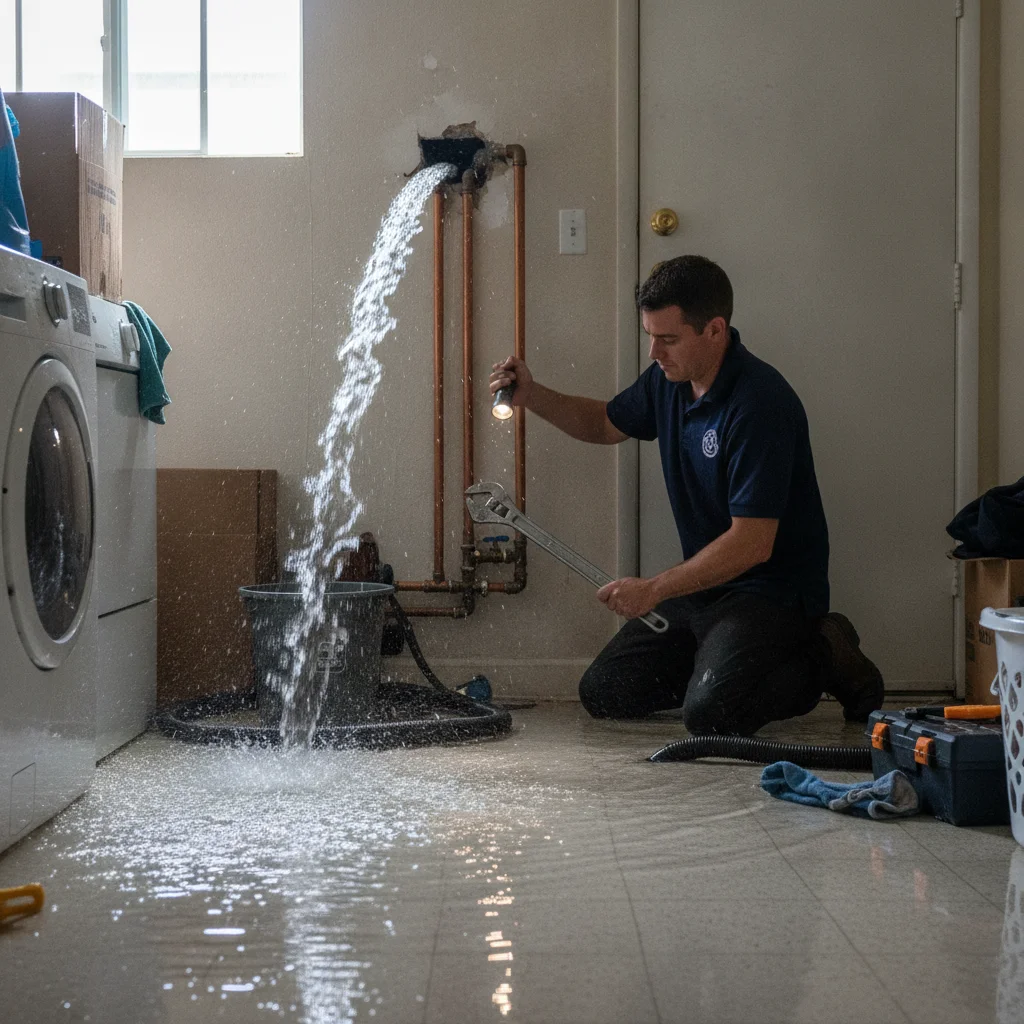
A burst pipe in a Poway home creates two separate jobs. The pipe source must be addressed, then the released water must be documented, removed, and dried. A licensed independent restoration pro can assess that second part.
Confirm the plumbing source is being addressed
Start by confirming who’s handling the damaged pipe. Ask whether the water has only been stopped or the pipe has been repaired. Those aren’t the same status, and the distinction matters when planning cleanup.
Get the affected pipe’s location in writing. Note who addressed it and what work remains. If the source sits behind a wall, under a cabinet, or near another building system, ask the pipe repair professional what access was opened. The restoration pro needs an accurate starting point.
Don’t assume the restoration scope includes plumbing repair. Ask each contractor to identify their work before signing anything. One written scope may cover the pipe. Another may cover water extraction, drying, removal, or later repairs. Clear labels make those responsibilities easier to follow.
No single Poway utility procedure applies to every property setup. The correct contact may depend on the address, property ownership, and affected system. If a utility, association, landlord, or shared line is involved, confirm the current procedure with the party serving that property. Don’t rely on an unverified local rule.
For a broader checklist around the first decisions, read the San Diego burst pipe emergency guide. It helps separate source control from the cleanup work that follows.
Document where water traveled before cleanup
Record the visible conditions before cleanup changes them. Take wide photos of each affected room, then closer photos of wet materials and openings. Include the pipe area when you can reach it without entering a questionable space.
Build a simple room-by-room note. Mark where water first appeared, where it pooled, and which surfaces felt damp. Include closets, cabinets, hallways, and rooms on the other side of an affected wall. Note any belongings that were moved and where they went.
Keep documents from the pipe professional and restoration contractor separate. Save written scopes, invoices, photos, and messages under clear names. If you contact an insurer, ask what records it wants. Don’t assume a particular document, deadline, or coverage decision applies to your situation.
Ask the independent restoration pro to record their own observations before work begins. Their record should distinguish what was visible from what was found during the assessment. If materials are opened or removed, ask for photos showing those locations.
Good documentation also helps when the water path isn’t obvious. A labeled photo set gives each professional the same reference. It can also expose disagreements early, before cleanup and repair scopes become harder to compare.
Check flooring, walls, and nearby rooms
Don’t define the affected area by the largest visible puddle. Walk through every accessible room near the pipe and record anything unusual. Check floor transitions, wall bottoms, baseboards, cabinets, closets, and doorways.
Ask the independent restoration pro which surfaces they assessed. The explanation should name the rooms, materials, and locations checked. If they use moisture readings, ask them to identify where each reading came from. A number without a room and surface label offers little context.
Flooring needs material-specific attention. Ask whether the visible floor, the layer below it, and nearby edges were considered. For walls, ask whether the assessment covered both sides when rooms share the affected partition. If water appeared above or below the pipe location, include those areas in the discussion.
Poway homes don’t share one layout or construction history. Don’t let a neighborhood generalization decide the scope. Use the actual building, the observed path, and the contractor’s documented findings. If an area couldn’t be accessed, ask the pro to state that limitation plainly.
The assessment should also identify unaffected comparison areas when helpful. That gives the written record context without pretending every surface needs work. Before approving removal, ask what observed condition supports it and what part of the scope depends on access.
Separate pipe repair from extraction and drying
Pipe repair addresses the plumbing source. Extraction and drying address water already released into the home. Keep those work categories distinct, even when contractors coordinate access or scheduling.
A burst pipe cleanup service may include assessment, water removal, material handling, and drying work. The exact scope comes from the independent contractor. Restore Pro SD doesn’t perform that work, set its price, or issue a warranty.
Ask for a written scope that names each room and planned task. Look for clear descriptions instead of broad phrases. The document should make it possible to tell whether flooring, wall areas, cabinets, or nearby rooms are included. Ask how the contractor will record progress and explain changes.
Later repairs may be another scope. Drying a wall area and rebuilding its finish aren’t identical tasks. Ask who’s responsible for each stage and which company appears on each agreement. Don’t assume one authorization covers every step.
If two professionals give different recommendations, ask each to explain the observed basis. Compare the areas they inspected, the work they proposed, and the exclusions they listed. The goal isn’t to choose the longest scope. It’s to understand which conditions each proposed task addresses.
What Poway homeowners should verify before repairs
Verify the independent contractor before authorizing restoration or repair work. Use the exact business name shown on the agreement. Compare it with the CSLB license check, and review the current record yourself.
Ask who will contract with you and who will receive payment. Restore Pro SD is a referral service. It matches Poway homeowners with licensed, independent local water damage professionals. The homeowner contracts with and pays the professional directly.
The written agreement should identify the contractor, property, affected areas, and authorized tasks. Ask about exclusions, change approvals, payment terms, and any contractor warranty before signing. Restore Pro SD doesn’t give warranties or set contractor prices.
Don’t treat a trade certification as a substitute for checking the contractor’s state record. Ask the contractor to explain any certification they present and who holds it. Confirm the state license information separately through the official lookup.
A Poway-specific permit rule for this situation couldn’t be confirmed from the approved facts available for this page. The required process may depend on the actual repair scope. Ask the contractor which public office has jurisdiction over your address, then confirm the current requirement with that office before repairs begin.
Finally, keep the pipe repair scope, cleanup scope, and later repair scope together. Review names, dates, rooms, and exclusions across all documents. That makes gaps easier to spot before work advances.
When to call us
If the pipe source is addressed but water reached finishes or nearby rooms, speak with a licensed water damage restoration pro. Restore Pro SD performs no physical restoration work and connects homeowners with independent local professionals. Call us at (858) 400-4586. The line plays a recording-consent notice, then takes a recorded and transcribed message. It isn’t answered live and doesn’t forward.