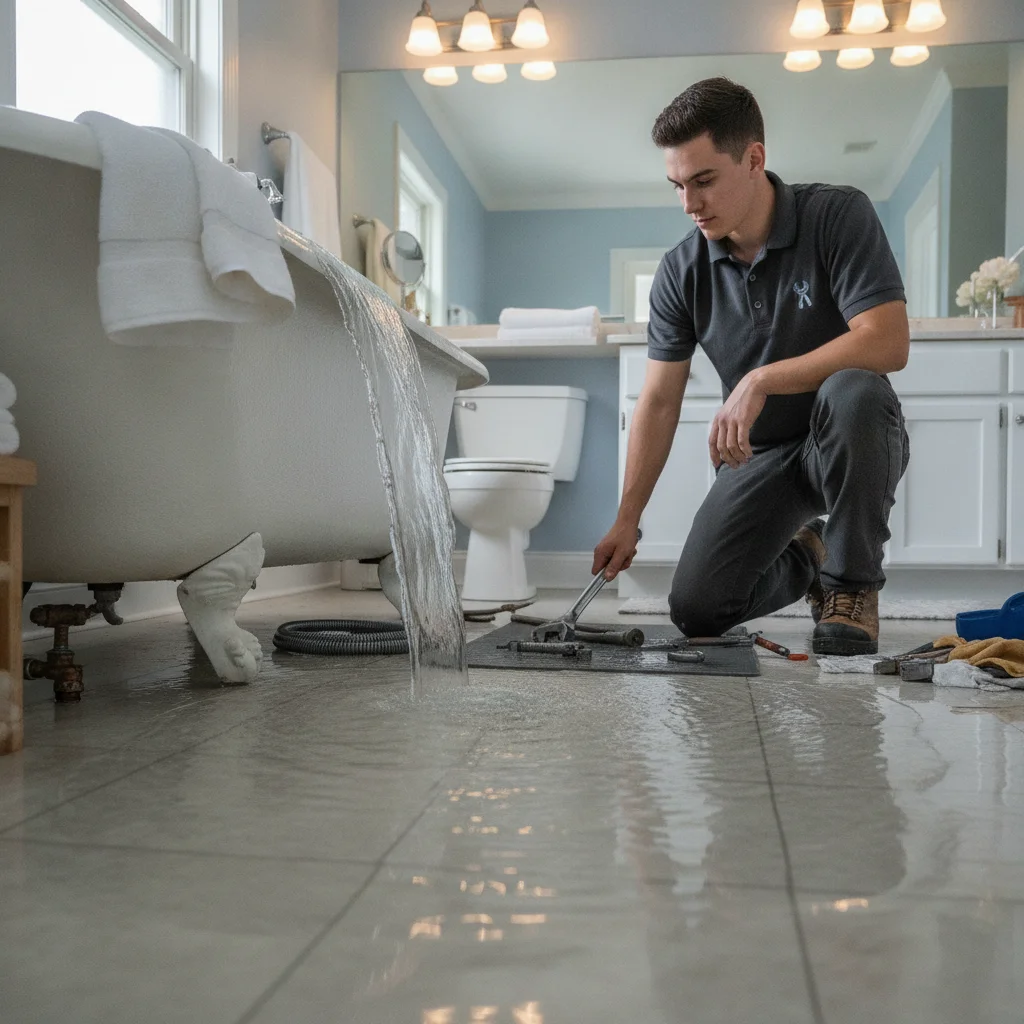
An overflowing bathtub can soak more than the visible bathroom floor. Stop the source when that’s safe, record where the water went, and have the affected materials assessed before repairs begin.
Stop the source when it can be done safely
The first goal is to stop more water from entering the room. Only do that when you can reach the control safely and understand what you’re touching. If you’re uncertain, leave source control to a qualified professional.
This page can’t confirm which shutoff or electrical steps are safe for your property. Those details depend on the building and the conditions around the bathroom. Check the property’s emergency instructions or ask the responsible property manager or qualified professional for direction. Don’t take a step that feels unsafe based on general online advice.
Once the source is controlled, resist the urge to treat the visible puddle as the whole problem. Towels may collect water on the surface, but they don’t show where it traveled. Water may have crossed the threshold, reached a wall edge, or appeared in the room below. Record those observations before moving items or changing the scene.
Note how the overflow started. Write down whether the faucet remained on, the drain seemed blocked, or someone left the room while the tub filled. Don’t take the drain apart or guess which component failed. Source repair belongs in a separate plumbing scope.
The steps in our guide to the first phase after water damage can help you organize notes and questions. Treat that page as general planning guidance, not property-specific safety direction.
Document where the water traveled
Start with wide photos of the bathroom. Then take closer photos of the tub edge, floor, doorway, baseboards, vanity, and nearby walls. Photograph visible water, staining, lifted edges, or other changes without labeling the cause yourself.
Record the order in which you noticed things. A simple timeline can include when the tub overflow was found, when the water stopped, and where water first appeared. Use the actual times if you know them. If you don’t, write “time not confirmed” instead of estimating.
For overflowing bathtub cleanup, source details matter. Tell the matched pro what was in the tub, whether bath products were present, and whether another fixture was involved. A bathtub overflow isn’t automatically the same event as a toilet overflow. Don’t assign a water category from appearance alone. Ask the independent restoration professional to evaluate the source and affected materials.
Walk only through areas you already know are safe to access. From those areas, look for a trail beyond the bathroom. Check the hallway edge, adjoining room, shared wall, and any accessible space below. If you find bath water damage downstairs, photograph the full ceiling and each visible mark.
For a San Diego County condo or rental, identify whether the space below belongs to another unit. Follow the property’s own notification process. Save messages, photos, and names together so you can provide a clear record without relying on memory.
Check flooring, walls, and the ceiling below
Begin with the bathroom floor, but don’t stop at its center. Note what happens at seams, edges, transitions, and openings around fixed features. Record any visible change near the tub, toilet base, vanity toe kick, doorway, or wall trim.
The adjoining room deserves its own check. Photograph the flooring immediately beyond the threshold. Look at both sides of the shared wall where access is safe. If a closet backs up to the bathroom, note any visible changes there too. Don’t pull trim, lift flooring, or open a wall just to investigate.
If the bathroom is upstairs, inspect the accessible ceiling below from a safe location. Record stains, drips, surface changes, or water at nearby wall edges. Don’t assume that one visible mark shows the full affected area. The matched professional can determine what needs further assessment.
Surface appearance alone shouldn’t decide whether flooring, drywall, trim, or other materials can remain. Ask the pro to explain how each affected area was evaluated. A useful assessment connects the source, the observed water path, and the materials included in the proposed scope.
Keep a written room list. Use plain labels such as “upstairs bathroom,” “hallway outside bathroom,” and “downstairs bedroom ceiling.” That makes it easier to compare the initial inspection with later documentation. It also reduces confusion when plumbing, restoration, and repair work involve different companies.
Separate extraction from plumbing and repairs
A bathtub overflow can involve several separate scopes. The source may need plumbing attention. Water may need extraction. Affected materials may need drying or later repair. Keep those tasks separate on paper, even when one independent company offers more than one service.
Ask who will identify and correct the source. Then ask what the restoration scope covers. Our emergency water extraction service explains how we connect San Diego County property owners with licensed independent restoration pros. Restore Pro SD makes the match. It doesn’t perform extraction, drying, plumbing, or repairs.
Don’t assume extraction includes every later task. Ask whether the written scope covers only visible water removal or also assessment of adjacent flooring, walls, and the ceiling below. If repairs are proposed, request a separate description of the materials and areas involved.
The same separation applies to cause and water classification. A tub that filled past its rim presents different source details from a toilet overflow. That distinction doesn’t let a homeowner assign the category remotely. Give the professional an accurate account, then ask how the source information affected the assessment.
Before signing a repair contract, verify the independent professional’s current license details using the CSLB license check. Restore Pro SD doesn’t hold a trade license or provide a warranty. You’ll contract with and pay the matched independent professional directly.
Ask what the matched pro will document
Ask for documentation that follows the water path, not just the room name. The record should identify the bathtub as the reported source, list each inspected area, and distinguish visible observations from professional findings. If something couldn’t be inspected, ask that the limitation be written down.
Request photos tied to specific rooms and materials. Ask how the professional documented the bathroom floor, wall edges, doorway, adjoining space, and ceiling below. If readings or other assessment methods are used, ask where they were taken and how those locations connect to the proposed work.
The written scope should separate assessment, extraction, drying, removal, and repair. Not every job will include every step. Ask the professional to explain which steps apply to your property and which company is responsible for each one. Don’t accept an implied salvage outcome or repair promise that isn’t written into your direct agreement.
Ask how progress will be recorded after work begins. Useful questions include which areas will be checked again, what changes will be documented, and what record you’ll receive when the restoration scope ends. Those questions don’t guarantee a result. They help you understand how decisions will be supported.
Keep copies of the scope, photos, messages, and any plumbing findings. Label each file with the room and date when possible. If the event affects another unit, keep that property’s information separate. Clear records make it easier to compare what was first observed with what the independent professionals later documented.
When to call us
When tub water reaches flooring edges, adjoining walls, another room, or the ceiling below, the affected areas may need a licensed Water Damage Restoration pro. Restore Pro SD can match you with an independent professional serving San Diego County. Call us at (858) 400-4586. The line plays a recording-consent notice, then takes a recorded and transcribed message. It isn’t answered live and doesn’t forward.