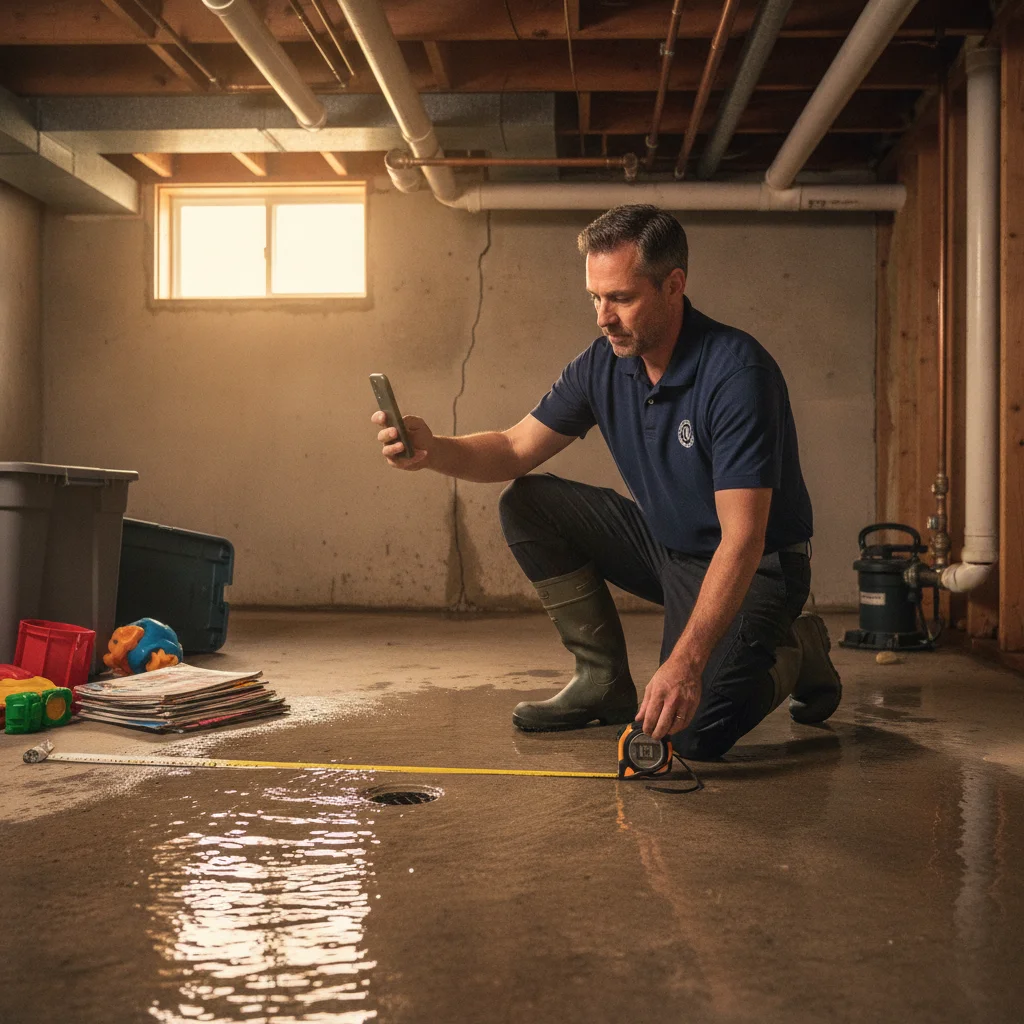
A flooded lower level in La Jolla needs a clear source record before cleanup begins. Basement flood cleanup La Jolla homeowners request should separate wet-material documentation from the repair that stops new water. That distinction gives the matched professional a cleaner starting point.

A La Jolla homeowner documenting shallow basement flooding before an independent cleanup professional arrives

Identify how water reached the basement

Start with the first place water appeared, not the deepest puddle. Photograph that point before belongings or finishes are moved. Write down when you noticed it and what was happening nearby. Note rain, indoor plumbing use, a drain backup, a pump alarm, or work on the property. Record only what you observed.

Don’t assign a cause from appearance alone. A supply line, drain, exterior opening, or below-grade assembly requires a different repair discussion. Ask the independent professional to identify the evidence behind the proposed source. The cleanup scope should say when the source remains uncertain.

For address notes, use the City’s La Jolla planning page. Check whether the property records use The Village, La Jolla Shores, Mount Soledad, coastal bluff, canyon, or hillside language. Don’t turn any location label into a source diagnosis.

Give the professional the address, the lower-level entrance, and useful cross streets. Note whether water first appeared at a wall, floor joint, stair, door, plumbing fixture, or drain. If someone already stopped the water, record what they changed. Keep source repair notes separate from extraction and drying notes.

For basement water removal in La Jolla, the first deliverable should be a written source hypothesis. It should distinguish confirmed observations from open questions. That makes later drainage, plumbing, or building decisions easier to review.

Document finished surfaces and stored belongings

Create a room record before cleanup changes the scene. Take wide photos from each corner. Then photograph the water line, floor edges, wall bases, doors, cabinets, and built-ins. Use the same room names in every photo, list, and contractor document.

Finished basements need more detail than a single photo of standing water. Record the visible flooring type and each wall finish. Note baseboards, trim, doors, shelving, and lower cabinets. If a finish was already damaged, label that condition separately. Don’t make the restoration professional guess which marks appeared with this event.

Make a simple belongings list. Include the item, room, visible condition, and where it was moved. Grouping every box as “storage” hides useful detail. Keep receipts, model labels, and serial information when available. Photograph closed containers before opening them, then update the record after inspection.

Ask the independent professional how contents will be handled. The written scope should identify items staying in place, items moved elsewhere, and items needing a separate decision. It should also identify who will document each move. Restore Pro SD doesn’t perform packout, cleaning, disposal, or repair work. We match homeowners with licensed, independent local water damage professionals.

Keep contractor records, property records, and any insurer communication together. Coverage decisions aren’t set by Restore Pro SD. The homeowner contracts with and pays the matched professional directly.

Check walls, flooring, and adjoining spaces

A cleanup boundary shouldn’t be based only on the visible puddle. Ask the professional to create a room-by-room moisture map. The map should name each tested wall, floor area, cabinet, and adjoining space. It should also separate measured areas from places that weren’t accessible.

Request the initial readings and the locations where they were taken. Ask what instrument was used and what comparison area was selected. Later readings should use clear locations, so you can follow the drying record without decoding vague notes such as “wall checked.”

Flooring needs its own line in the scope. Ask how the contractor will assess the visible finish, material below it, floor edge, and transition into the next room. For walls, ask whether trim, drywall, plaster, paneling, insulation, or a cavity is part of the inspection. Don’t treat a dry-looking surface as complete documentation.

Include adjoining rooms, closets, the stair landing, and utility areas in the conversation. A closed door or flooring transition shouldn’t become an automatic stopping point. The professional should explain where mapping ended and why.

Ask whether the proposed process follows the applicable IICRC S500 or S520 guidance. If a contractor names an IICRC credential, request the exact certification and verify it separately. Verify the contractor’s CSLB record separately as well. If the contractor adds mold work, ask for a separate written scope and the exact credential being relied upon.

An independent restoration professional mapping basement moisture along flooring, walls, and an adjoining room

Separate water removal from drainage repairs

Treat cleanup and source correction as separate scopes, even when one contractor offers both. The cleanup document should describe water removal, material assessment, moisture mapping, drying work, contents handling, and monitoring. The source document should name the defect being repaired, or state that the defect hasn’t been confirmed.

That separation matters when a proposal mentions a drain, pipe, pump, door, wall, or exterior drainage change. Ask which item stopped new water and which item addresses existing wet materials. Don’t accept one vague line called “flood repair.” It should be possible to see what happens if the source repair changes after the cleanup starts.

For a focused overview of the cleanup service, see our basement flood cleanup matching page. Our San Diego basement flood cleanup guide covers the broader countywide decision. This La Jolla page stays focused on address-level source checks, documentation, and local verification.

Restore Pro SD doesn’t set the professional’s price and doesn’t give warranties. Ask the independent professional to put its price, proposed work sequence, and warranty terms in its own agreement. Also ask who is responsible for drainage design, repair, permits, and follow-up inspection. A restoration scope shouldn’t quietly become approval for unlisted construction.

Before signing, compare the source statement with the moisture map. If they describe different rooms or different entry points, ask for a correction. The final documents should tell one consistent story without pretending an unconfirmed cause is settled.

What La Jolla homeowners should verify locally

Start with the exact address and proposed work. I couldn’t confirm one permit answer that applies to every La Jolla basement cleanup, plumbing repair, drainage change, or structural repair. Send the exact scope to City of San Diego Development Services and ask which approval, record, or inspection applies.

Tell the City whether the proposal involves drywall, framing, plumbing, electrical work, grading, a drain, or work near a property line. Ask whether coastal, historical, building, plumbing, grading, or right-of-way review applies to the address. Get the answer for the actual scope. Don’t rely on a contractor’s blanket statement that La Jolla work always, or never, needs a permit.

Verify the independent contractor through the CSLB license check. Search the exact business name or license information supplied by the contractor. Compare that result with the name on the contract. Ask the contractor directly about its insurance, certifications, exclusions, price, schedule, and warranty. Restore Pro SD doesn’t make those promises for the contractor.

Finally, request a written handoff. It should identify completed cleanup work, remaining moisture documentation, unresolved source questions, and the party handling permanent repairs. If exterior drainage is proposed, ask for an address-specific explanation of where water will be directed and whether any authority needs to review it. That keeps flooded basement cleanup in La Jolla tied to the home in front of you, not a generic county checklist.

When to call us

When water remains, finished materials are involved, or the source isn’t clear, ask a licensed Water Damage Restoration professional to assess the scope. Restore Pro SD is a referral service and performs no physical work. Call us at (858) 400-4586. The line plays a recording-consent notice, then takes a recorded and transcribed message. It isn’t answered live and doesn’t forward.