
Last updated: April 23, 2026
Condensate Line Overflow in Julian, CA.
Condensate line overflow damage shows up as ceiling stains and soft drywall under attic or closet attic cooling units. In San Diego coastal humidity, algae clogs in the drain line are a recurring summer call..
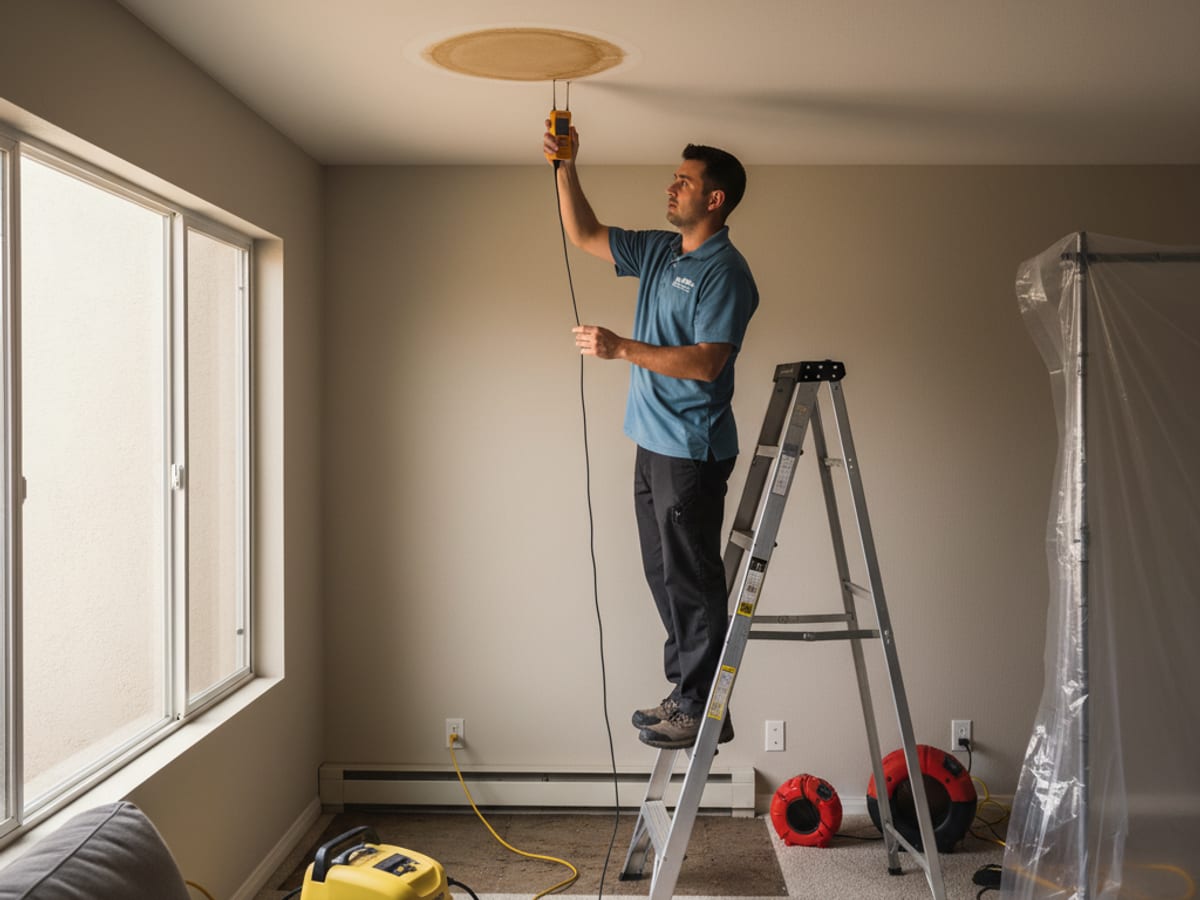
How condensate line overflow works in Julian
In Julian, condensate line overflow is a specialized restoration scenario, not a generic service page. Julian water damage scope is shaped by elevation, age of housing stock, and weather. That local housing mix shapes where we look first for this scenario.
Why condensate line overflow shows up in Julian
Condensate Line Overflow in mountain and desert parcels with longer response staging usually tracks clogged condensate drains and pan overflows. We moisture-map first, confirm category, and only then open finishes. Local climate and housing age change dry-out timing and material decisions.
- Common local pattern: clogged condensate drains and pan overflows
- Housing context: mountain and desert parcels with longer response staging
- Climate and access factor into equipment sizing and ETA
- Related path: extraction, then structural drying, then rebuild
- Insurance documentation from the first moisture map
Julian homes and what they need
For frozen-pipe rupture events, the response sequence runs fast extraction once we arrive, structural dry-out with high-CFM air movement and oversized dehumidifier capacity (mountain humidity affects dry-out timeline differently than coastal zones), mold remediation when the loss ran long before discovery, and reconstruction.
Neighborhoods we cover for condensate line overflow in Julian: Historic Julian core, Pine Hills, Wynola, Cuyamaca area, Volcan Mountain perimeter, Whispering Pines.
Julian sits at 4,200 feet with regular winter snow and freeze events. Frozen-pipe ruptures during cold snaps, snowmelt intrusion through aging Victorian-era and 1920s-50s mountain-cabin roofs, and septic backups during major storms drive the call mix. Response from East County staging via SR-78 runs 2 to 3 hours typical.
What condensate line overflow usually involves
- Primary drain clog versus pan overflow
- Attic attic-cooling-unit drip into ceilings
- Closet handler damage to surrounding finishes
- Secondary float-switch failures
- Dry-out of insulation above stained ceilings
- Coil cleaning coordination after mitigation
Ready for restoration help? See water damage in Julian or the Julian service area page.
Julian condensate line overflow questions
What usually causes condensate line overflow here?
In this part of the county the leading pattern is clogged condensate drains and pan overflows. We confirm category and map the wet footprint before demolition.
Is condensate line overflow an emergency?
Ceiling stains under an attic cooling unit or attic unit often track to a clogged condensate line. Map the wet ceiling before cutting a large hole.
What should I do about condensate line overflow in Julian right now?
Ceiling stains under an attic cooling unit or attic unit often track to a clogged condensate line. Map the wet ceiling before cutting a large hole. In Julian, the scope starts with moisture mapping and source review. Those findings determine whether extraction, containment, or structural drying is needed. Call (858) 400-4586.
Do you handle condensate line overflow across Backcountry San Diego?
Yes. Condensate Line Overflow in mountain and desert parcels with longer response staging usually tracks clogged condensate drains and pan overflows. We serve Julian and nearby Backcountry communities with the same IICRC-based process.
Where we work in Julian
Get help with condensate line overflow in Julian
Moisture mapping first. Mitigation when the loss is active.