
Last updated: April 23, 2026
Category 1 Water Damage in Julian, CA.
Category 1 water starts clean, supply lines, sinks without contamination, or rain that entered without outdoor filth. Time and materials still decide whether it stays a straightforward dry-out..
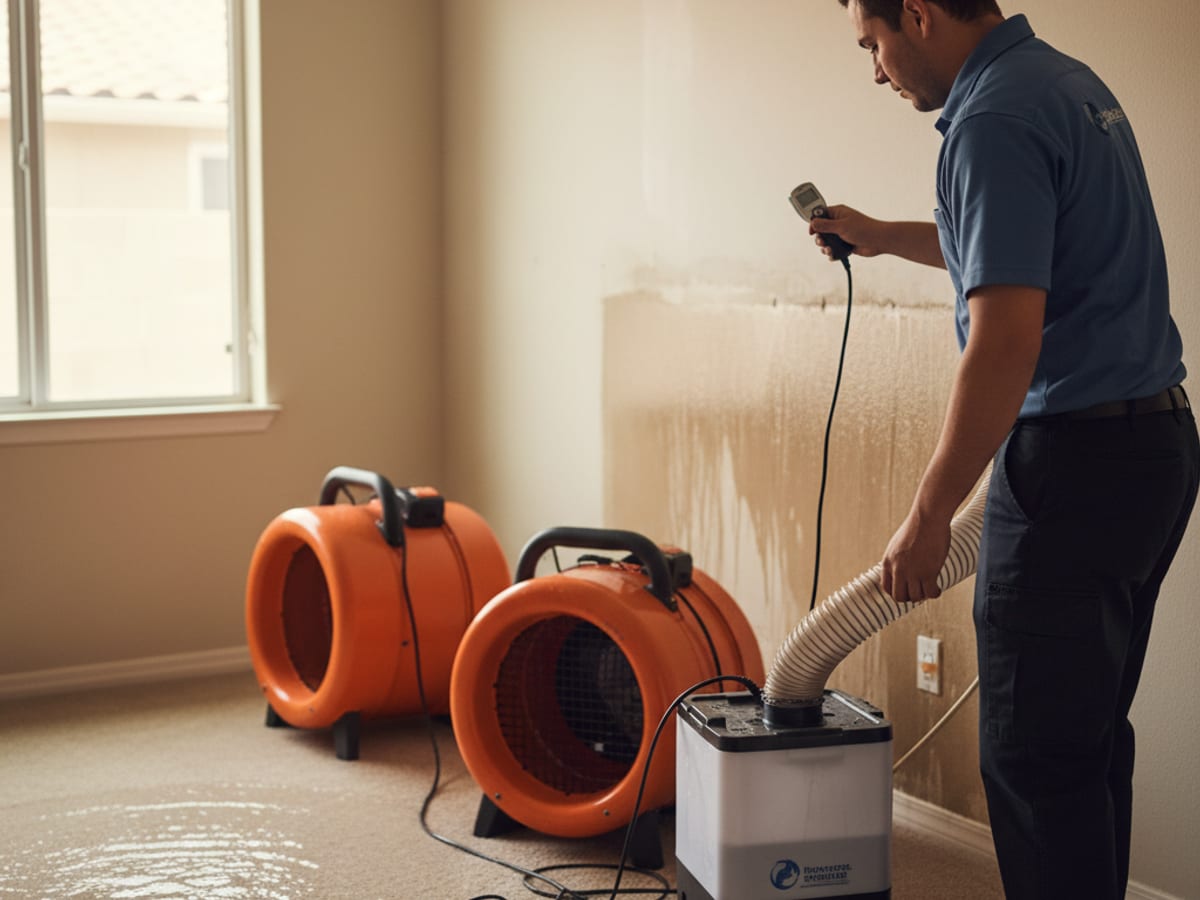
How category 1 water damage works in Julian
In Julian, category 1 water damage is a specialized restoration scenario, not a generic service page. Julian water damage scope is shaped by elevation, age of housing stock, and weather. That local housing mix shapes where we look first for this scenario.
Why category 1 water damage shows up in Julian
Category 1 losses near Alpine, Julian, and Mt. Laguna usually tie to freeze-burst pipes, snowmelt intrusion, and septic events. Clean water still damages mountain cabins and rural homes with crawlspaces and septic, and cooler temperatures that slow dry-out is why waiting can push a clean loss into a gray-water scope.
- Local pattern: freeze-burst pipes, snowmelt intrusion, and septic events
- Housing stock: mountain cabins and rural homes with crawlspaces and septic
- Climate factor: cooler temperatures that slow dry-out
- Cities in this region pattern: Alpine, Julian, and Mt. Laguna
- Related service path: water damage restoration
Julian homes and what they need
For frozen-pipe rupture events, the response sequence runs fast extraction once we arrive, structural dry-out with high-CFM air movement and oversized dehumidifier capacity (mountain humidity affects dry-out timeline differently than coastal zones), mold remediation when the loss ran long before discovery, and reconstruction.
Neighborhoods we cover for category 1 water damage in Julian: Historic Julian core, Pine Hills, Wynola, Cuyamaca area, Volcan Mountain perimeter, Whispering Pines.
Julian sits at 4,200 feet with regular winter snow and freeze events. Frozen-pipe ruptures during cold snaps, snowmelt intrusion through aging Victorian-era and 1920s-50s mountain-cabin roofs, and septic backups during major storms drive the call mix. Response from East County staging via SR-78 runs 2 to 3 hours typical.
What category 1 water damage usually involves
- Supply-line and fixture releases without sewage
- Time on materials before microbial growth
- Porous materials that still need removal when saturated
- When Category 1 becomes Category 2 by sitting
- Moisture mapping beyond the visible wet edge
- Insurance documentation for sudden clean-water losses
Ready for restoration help? See water damage in Julian or the Julian service area page.
Julian category 1 water damage questions
How do you handle category 1 water damage in Alpine?
We start with moisture mapping and category assessment, then mitigation matched to the loss. In this region that often means accounting for freeze-burst pipes, snowmelt intrusion, and septic events inside mountain cabins and rural homes with crawlspaces and septic.
Is category 1 water damage urgent in the Backcountry area?
Clean water becomes gray if it sits. Extract and dry promptly so category does not escalate. Locally, cooler temperatures that slow dry-out means delays usually widen the footprint.
What should I do about category 1 water damage in Julian right now?
Clean water becomes gray if it sits. Extract and dry promptly so category does not escalate. In Julian, the scope starts with moisture mapping and source review. Those findings determine whether extraction, containment, or structural drying is needed. Call (858) 400-4586.
Do you handle category 1 water damage across Backcountry San Diego?
Yes. Category 1 losses near Alpine, Julian, and Mt. We serve Julian and nearby Backcountry communities with the same IICRC-based process.
Where we work in Julian
Get help with category 1 water damage in Julian
Moisture mapping first. Mitigation when the loss is active.