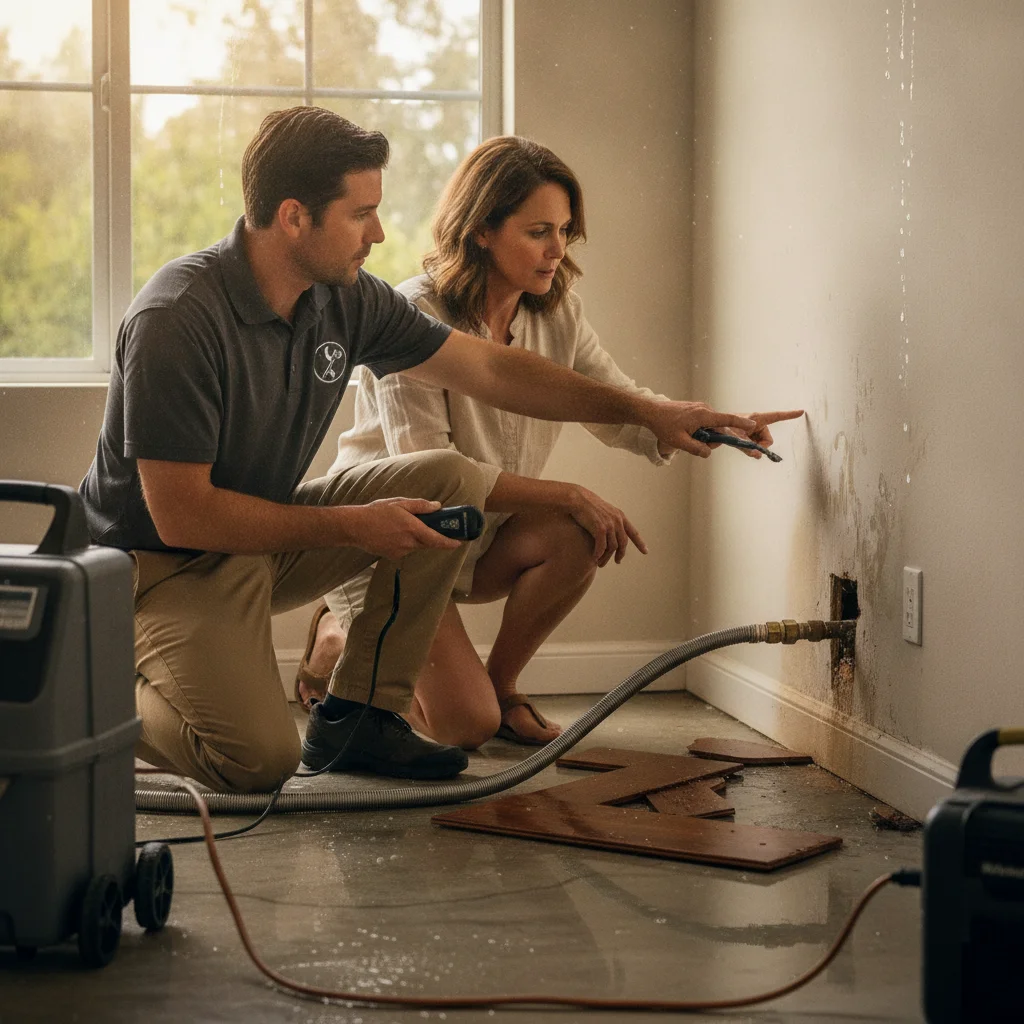
A repair scope should identify what stays, what leaves, and why. That decision needs evidence from your property, not a universal material checklist. A licensed independent restoration pro should document each recommendation before reconstruction begins.
We couldn’t confirm a universal material rule, numerical moisture threshold, or category-based removal rule in the verified sources available for this page. Ask the pro to identify the current standard and property evidence behind each decision.
What restoration can save before repairs begin
The word “saved” can hide several different outcomes. One item may remain in place. Another may be removed, treated, and returned. A third may need replacement after the surrounding area is addressed. Your written scope should distinguish those outcomes.
Start with a room-by-room inventory. Ask the restoration pro to label every affected surface or component. Each line should show its location, current condition, proposed action, and supporting evidence. Broad phrases such as “repair wall” don’t explain enough.
If extraction or drying has already occurred, request the records connected to that work. Ask what was evaluated before treatment and what changed afterward. A recommendation to retain something should carry as much explanation as a recommendation to remove it.
Don’t treat “dry” as a promise that an item can stay. Ask whether the recommendation also considers the material’s condition, the reported water source, and anything found around it. The pro should explain remaining uncertainty before you approve repairs.
Restore Pro SD matches property owners across San Diego County’s 67 cities with licensed independent local professionals. We don’t inspect materials or decide what gets saved. The professional you hire makes those recommendations and performs the work.
Our water damage restoration service page explains how the matching service works. For broader context around the stages surrounding repair, read the water damage restoration process. Your repair scope should still be specific to your property.
When porous materials may need removal
A material name alone doesn’t settle the water damage repair or replacement decision. If a scope labels drywall, carpet, padding, insulation, or another component as porous, ask what that label means for the proposed work. Then ask why this particular item can or can’t remain.
The explanation should identify the exact location and affected portion. “Remove drywall” is vague. A clearer scope names the room, wall, section, and stopping point. It should also address connected finishes, trim, backing, or other layers included in the work.
Ask the pro to separate observed conditions from assumptions. What could be inspected directly? What couldn’t be seen without opening an assembly? Which removal is proposed for access, and which removal is based on the material’s condition? Those are different reasons and should appear separately.
No fixed removal boundary could be confirmed from the verified sources available for this page. Don’t accept a made-up distance, percentage, or blanket rule. Ask the licensed restoration pro to cite the current guidance used and connect it to documented conditions in your home.
You can also review the EPA’s mold and moisture information for current federal guidance. That resource doesn’t replace a property-specific assessment or contractor scope.
Before approving removal, ask what happens to the exposed area next. The scope should explain whether follow-up evaluation is planned and who approves reconstruction. It should also identify anything excluded from the proposal. Clear exclusions prevent a salvage decision from becoming an undefined repair later.
How moisture readings guide the repair scope
Moisture readings can support a scope only when the contractor explains them. A number without a material, location, date, and comparison point gives you little basis for approving work.
Ask for a simple reading map. It should connect each recorded result to a specific room and surface. If the pro took readings more than once, request the sequence. You should be able to see which observation supports each retain, remove, or replace recommendation.
The contractor should also explain the instrument and method used. Ask whether the reading is direct or comparative. Ask what reference condition was chosen and why it applies. Don’t assume every material or instrument follows one shared numerical cutoff.
We couldn’t confirm an approved universal moisture number for this page. That means this article won’t invent one. The independent restoration pro should identify the threshold or comparison method used, cite its source, and explain how it applies to the measured material.
Photos can make the record easier to follow. Request labels that match the written scope, especially where several rooms or layers are involved. A photo isn’t a moisture measurement, but it can show where a documented reading was taken.
Before reconstruction, ask for the final basis behind each decision. If an item remains, the file should show why. If it leaves, the file should connect removal to recorded conditions or another stated reason. That creates a reviewable water damage repair scope instead of a conclusion you must accept on trust.
Why the water source and category change the plan
The reported water source belongs near the top of the scope. Ask the pro to name that source, state how it was identified, and record any uncertainty. A vague label doesn’t explain what entered the space or how the classification was chosen.
If the contractor assigns a water category, request the definition used. Ask which current document or standard supplies that definition. The file should explain how the category affects the proposed cleaning, removal, access, and repair decisions.
Don’t rely on an article that assigns a category from a short description. Property conditions need an on-site evaluation by the independent professional. This page’s verified sources don’t establish category definitions or automatic removal rules, so we won’t publish them as settled facts.
Ask these questions before treating the classification as final:
- What is the reported source?
- Which areas had confirmed contact?
- What observations support the assigned category?
- Which current guidance defines that category?
- How does the classification affect each scope line?
- What finding would change the classification or repair plan?
If the professional changes the category later, request a written explanation. It should identify the new evidence and every scope item affected by the change. Ask for revised removal boundaries, exclusions, and reconstruction items before authorizing added work.
Separate source control from material repair as well. Ask who is responsible for the original leak or intrusion and whether that work appears in the contract. A restoration scope shouldn’t quietly imply that an unrelated repair is included. Every responsibility should have a named party and written boundary.
Questions to ask before approving reconstruction
Reconstruction can cover damaged finishes without answering why they were removed. Review the restoration record before approving the next scope. The repair proposal should match documented rooms, materials, and boundaries.
Use these questions during that review:
- Which materials are staying, and what supports that decision?
- Which materials are leaving, and why can’t they remain?
- Does each line identify the room and affected section?
- Which readings, observations, or photos support each decision?
- What source and category did the pro record?
- Which current standard or guidance informed the scope?
- What couldn’t be inspected before removal?
- Who decides whether newly exposed material stays or leaves?
- How will scope changes be documented and approved?
- Which restoration, repair, and reconstruction items are excluded?
- Who handles the original source of water?
- Who provides any warranty stated in the contract?
Verify the independent professional’s information through the CSLB license check. Ask the contractor to explain whether any credentials shown are state licenses, voluntary certifications, or something else. Don’t treat those labels as interchangeable.
Compare the restoration and reconstruction scopes line by line. Room names, removal limits, and retained components should agree. If they don’t, ask both parties to resolve the mismatch in writing before work continues.
Restore Pro SD is a referral service. We match customers with licensed independent local water damage professionals. We don’t perform repairs, set prices, issue warranties, or make scope decisions. The customer contracts with and pays the selected professional directly.
That separation matters when you approve reconstruction. Questions about methods, charges, exclusions, scheduling, and warranties belong with the professional named in your contract. Keep that contractor’s written answers with the moisture records, photographs, and signed scope.
When to call us
Call when you need a licensed Water Damage Restoration pro to evaluate affected materials and prepare a property-specific repair scope. Restore Pro SD can match you with an independent local professional serving San Diego County. Call (858) 400-4586 to hear the recording notice and leave a recorded message for the referral service.