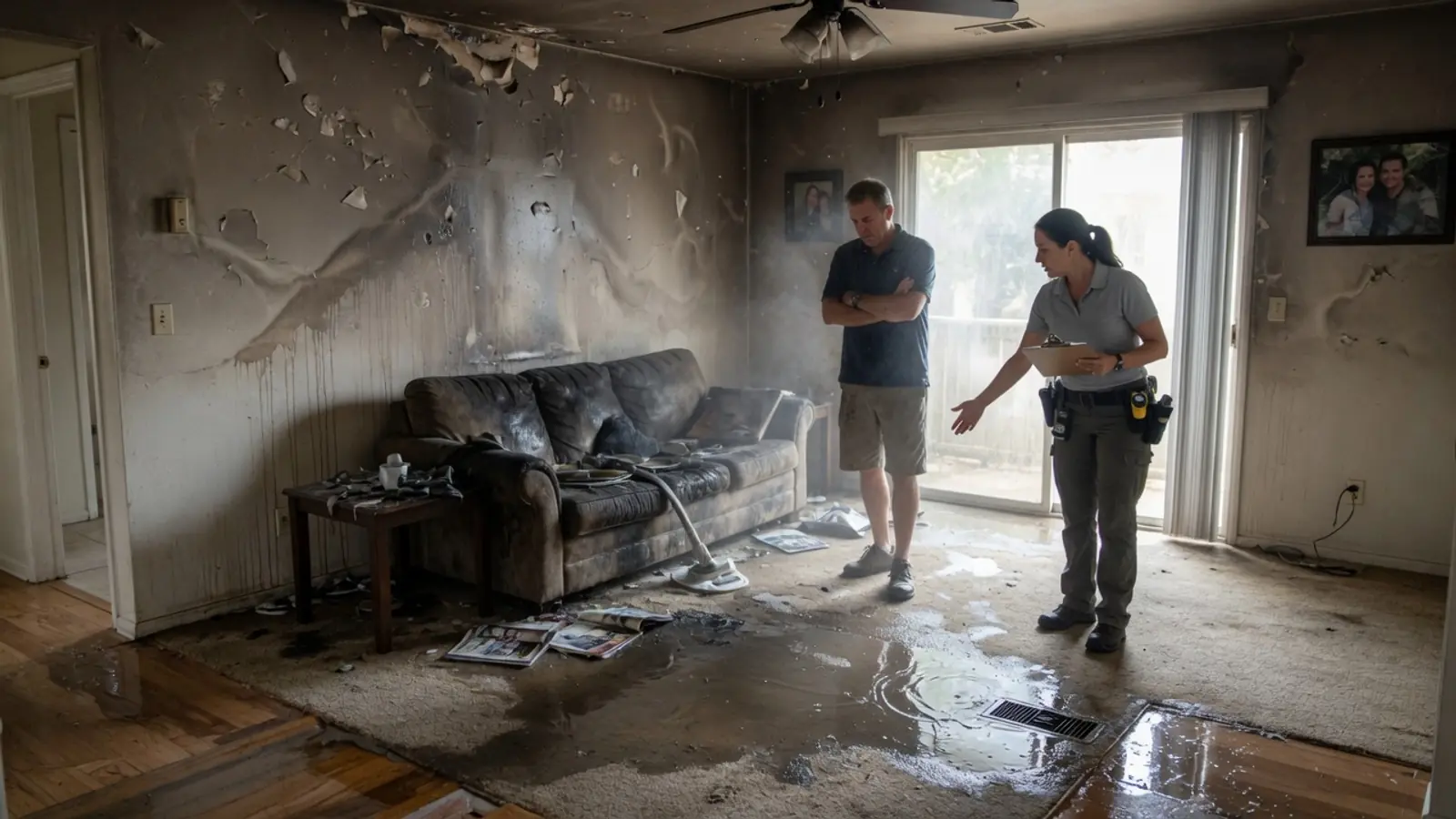
A fire is out and the rooms are still wet. Suppression water, a burst line, or a sprinkler head can soak finishes after the flame is gone. Fire and water damage repair is two problems in one house: residue and remaining water.
This is a hiring guide. It is not the post-fire water sequence, not sprinkler discharge, and not a line-item scope comparison. Those pages answer different questions.
Restore Pro SD matches you with a licensed independent restoration professional. We do not board up, extract, clean soot, or rebuild. You contract with that pro. Re-entry, fire-department clearance, and coverage outcomes are not facts this site can confirm. Ask the fire department and your insurer.
Start with fire residue and remaining water
Ask what is still wet, and what is only dirty. Standing water in a Mission Valley condo is an extraction problem. Soot on a dry wall in El Cajon is a cleaning problem. Both can be true in the same room.
EPA guidance is to fix water problems as soon as possible and dry items completely. If sewage or other contaminated water mixed in, call a professional experienced with that work. Suppression water is not automatically clean. The independent pro classifies what they see. Restore Pro SD does not assign a water category as brand protocol.
Stay out of standing water. CDC guidance is not to switch power on or off while standing in water. Call an electrician if the panel is wet or not safe to reach.
Compare drying, cleaning, and repair boundaries
A useful scope names three lines. Extraction and drying for the water. Cleaning or pack-out for contents and soot. Rebuild for drywall, paint, and flooring. If those sit in one blurry paragraph, ask for a split.
Fire and water damage is the matching page. Emergency water extraction is the standing-water page. Cleaning is not drying. Painting a stained wall while the cavity is wet is not a finish.
Do not run HVAC to clear smoke if you suspect the system is contaminated with mold. The EPA says not to run HVAC you know or suspect is contaminated with mold, because it can spread spores. Ozone machines sold as air cleaners are not a shortcut. EPA research shows ozone has little potential to remove indoor contaminants at levels that stay within public health standards, and ozone can be harmful.
Ask how contents and soot will be handled
Ask what stays in the house, what goes to a pack-out, and what they expect to discard after they see it. There is no salvage guarantee on this site. A sofa that looks only wet can hold soot in the foam. A matched pro decides on site.
Ask how they will keep clean rooms clean. Soot tracks. Water tracks. A hallway used as a dump path becomes part of the loss.
Keep photos from the fire department visit with the moisture notes. That file is what you review before anyone hangs new drywall.
Identify work that sits outside the scope
Board-up, roof tarp, and structural shoring are not restoration matching. A licensed builder or emergency board-up contractor handles those. Electrical, gas, and plumbing repairs belong to those trades. Restoration does not replace them.
A City of San Diego or County rebuild-permit rule for this page could not be confirmed as a single countywide number. Check with the city or county building authority for the property before anyone reframes a wall.
Check the restoration pro on the CSLB license lookup. Restore Pro SD does not hold that license.
Verify the independent pro through official sources
Ask for the contractor’s name and license number. Confirm it on CSLB. Ask whether their scope is mitigation only or also rebuild. Ask what notes you will get for your own file. Restore Pro SD does not file the insurance claim. Ask your carrier about your own policy.
Call Restore Pro SD at (858) 400-4586. The line takes a recorded message. We match you with a local licensed restoration professional. They contract with you directly.