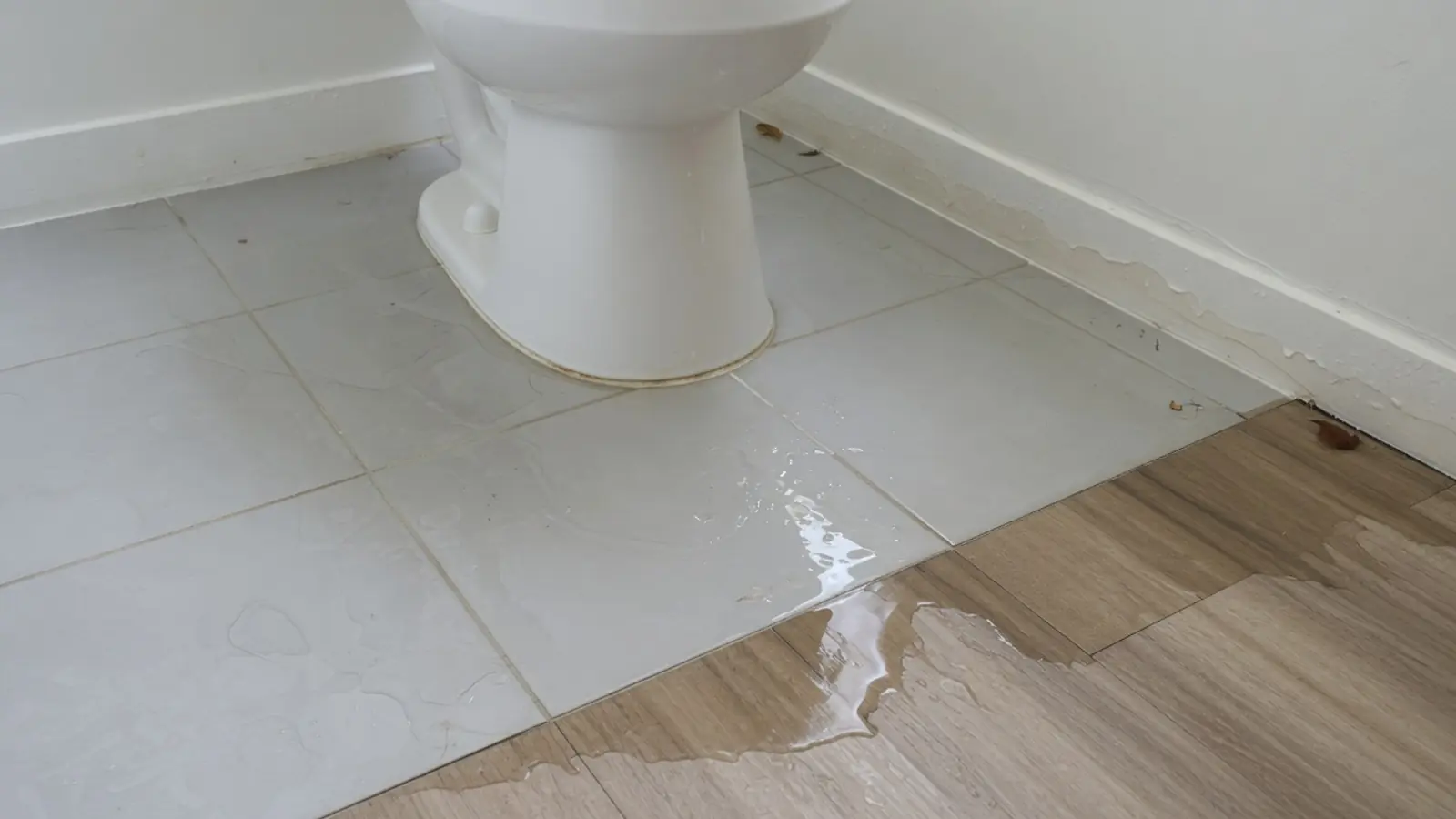
The toilet still flushes. Water beads at the base, under the vinyl, or at the hallway edge. That is water leaking from under a toilet: a wax ring, a loose closet flange, or a supply line at the stop valve, not a bowl that overflowed.
This is not toilet overflow cleanup. Overflow dumps tank or bowl water over the rim. A base leak soaks the floor every day the fixture is used. A sewage backup through the same fixture is a third job.
Restore Pro SD matches you with a licensed independent restoration professional. We do not reset toilets or dry the house ourselves. You contract with that pro.
Confirm the leak at the base, not the overflow
Look at how the water arrives. A wet ring at the porcelain, a soft spot in the vinyl, or staining on the ceiling below after flushes points at the base or the supply. Water shooting over the rim is overflow. Water coming up a shower or floor drain at the same time is a line backup.
A licensed plumber confirms the wax, the flange, or the supply and stops it. Restoration does not make that repair. If you can shut water to the fixture or the house without standing in a puddle, shut it.
CDC guidance is not to switch power on or off while standing in water.
If the water is sewage or otherwise contaminated, EPA guidance is to call a professional experienced with that work. Do not treat a dirty backup as a clean wax-ring leak.
Trace moisture through the floor and nearby rooms
A slow base leak wets the subfloor first. In a two-story house in Mira Mesa, Chula Vista, or El Cajon, the first public stain is often the downstairs ceiling, not the bath floor. In a slab home in San Marcos or Otay Ranch, water can migrate under vinyl and show up at a closet or hallway.
Check the vanity kick. Check the hallway carpet edge. Check the room below. EPA guidance is to fix plumbing leaks as soon as possible and dry items completely.
Coastal baths in Oceanside and Pacific Beach already sit in damp air. A slow flange leak there can stay wet between uses. Inland, the tile can look dry by afternoon while the pad is still holding water.
Separate plumber work from drying and removal
Keep two files. The plumber’s invoice proves the fixture is sealed. The restoration scope proves the floor system was mapped and dried. Setting a new wax ring on a wet subfloor is how the stain comes back.
Water damage restoration is the matching page for the indoor loss. Ceiling water damage is common when the bath is upstairs. Carpet water extraction applies if the hallway pad took the leak.
If this is a rental, California Civil Code 1941.1 lists plumbing that is not in good working order and floors that are not in good repair among the defects that can make a dwelling untenantable. Put the landlord on notice.
Review readings before finishes go back
Ask the matched pro for meter readings at the stall, the adjoining floor, and the ceiling below if it was wet. A drying log is the paper trail.
The EPA says not to paint or caulk moldy surfaces. Clean, dry, then finish. If the moldy area is less than about 10 square feet, roughly a 3 ft by 3 ft patch, a homeowner can handle cleanup in most cases using EPA tips. If there has been a lot of water damage, or mold covers more than 10 square feet, consult EPA mold remediation guidance.
Check the restoration pro on the CSLB license lookup. Restore Pro SD does not hold that license.
When to call us
Call when water is coming from under a toilet, when the ceiling below stained after flushes, or when a plumber reset the fixture and the floor is still wet. Call us at (858) 400-4586 and we’ll connect you with a licensed local restoration pro.