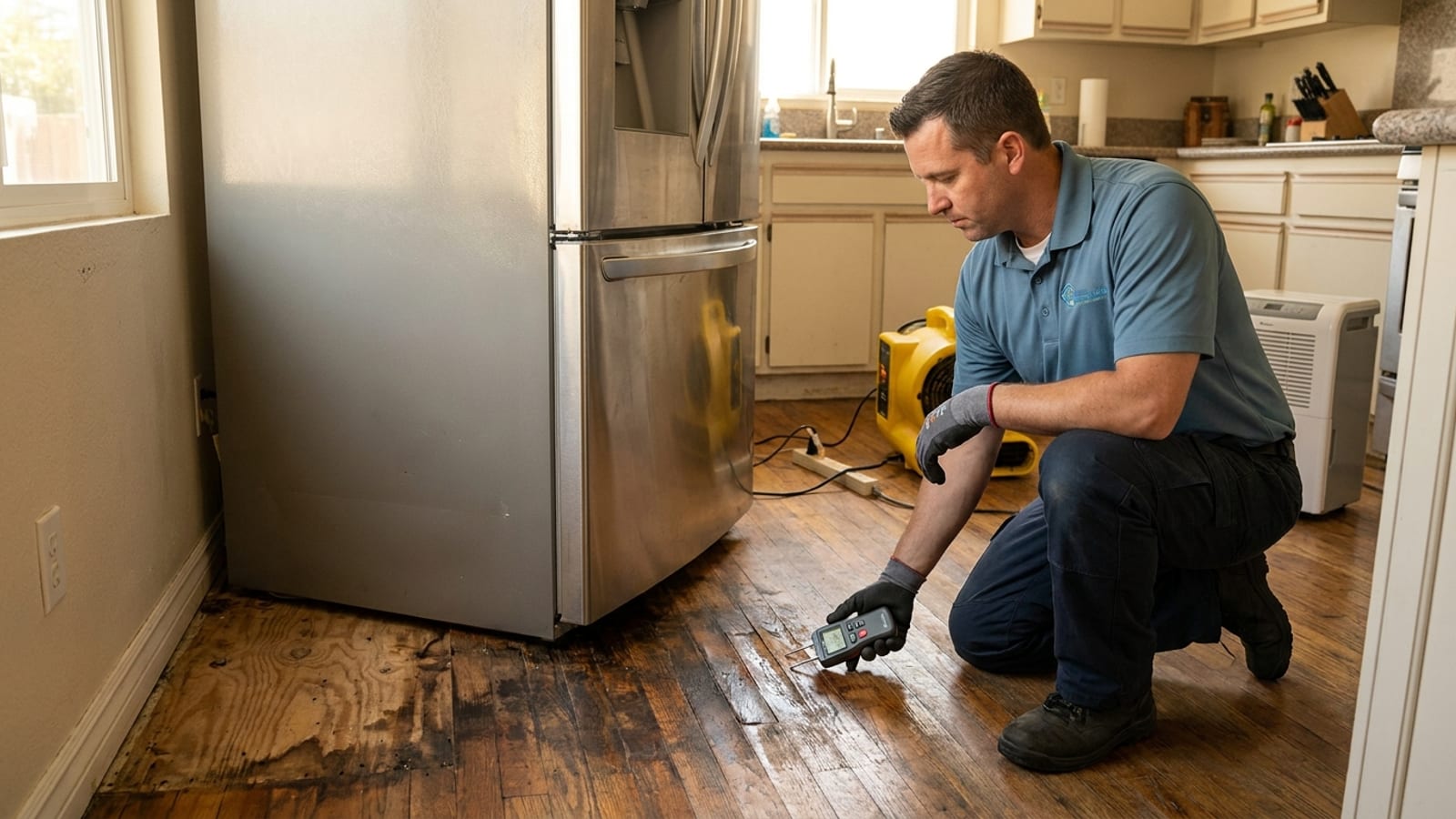
You did not see a flood. You noticed a soft spot in the kitchen floor, or a musty smell that stayed after you cleaned. That is the usual first clue of a refrigerator water-line leak: a slow drip behind the cabinet that never makes a puddle you can see.
This page is for the homeowner who just pulled the fridge out, or is about to. Restore Pro SD matches you with a licensed independent restoration professional. We do not send a brand crew.
Direct answers
What is leaking? The small supply line that feeds the ice maker and dispenser, usually quarter-inch plastic or braided line, plus the valve and fittings behind the fridge.
What do you do first? Unplug the fridge. Shut the dedicated valve behind it or under the nearby sink. If you cannot find that valve, shut the house main. If electrical outlets or cords are in water, do not stand in it. Turn power off at the main breaker only if you can reach it without entering standing water. Otherwise call an electrician.
Why is the floor the problem, not the drip? Water that does not evaporate on the condenser coils runs under vinyl, laminate, or tile and into the subfloor. Slab-on-grade kitchens in El Cajon, La Mesa, and Chula Vista can also move water along the concrete away from the fridge.
Who dries it? An independent restoration professional maps wet material and extracts or dries it. EPA guidance is to fix plumbing leaks as soon as possible and dry items completely. Contaminated water is a different job.
Why these leaks hide
The fridge sits against the wall. The line is behind it. A pinhole or a weeping compression fitting does not dump gallons onto the kitchen walkway. Heat from the coils can evaporate a thin film. What remains wicks under the flooring.
Mineral crust on a fitting, a stained toe-kick, or grout that turned gray next to the fridge are better clues than a puddle.
What to look for before you pull it
- Flooring that cups, buckles, or feels springy next to the fridge.
- A musty smell that stays in one kitchen corner.
- Paint or baseboard bubbling at the toe-kick.
- Ice that slowed down or cubes that shrank, which can go with a failing line.
If you see those, pull the fridge after you unplug it. Watch the line so you do not yank a fitting loose. Photograph the connection, the floor behind the unit, and any staining before you mop.
What is happening under the finish
Wood or OSB subfloor takes that water. It swells. It can feel spongy. Tile can hide the same wet zone until grout or a hollow sound gives it away.
Do not treat a musty smell as proof of a lab-confirmed mold colony. It is a reason to stop the leak and get wet material checked. EPA’s published advice is still: stop the water and dry completely. Sewage or other contaminated water needs a professional experienced with that damage.
A dishwasher leak hides the same way under cabinets. If both appliances share a saddle valve, check that valve too.
What to ask the independent professional
Guessing the wet area from the stain size is how people under-dry a kitchen. Ask:
- How they will check under the finish, not just the visible stain.
- Whether the pad, underlayment, or subfloor has to come out, or whether they will try to dry in place.
- How they will know the assembly is dry compared with an unaffected room, not a calendar date.
- Whether emergency water extraction is needed before drying equipment goes in.
Water damage restoration is that sequence: stop the source, remove free water, dry the structure, then repairs.
Do not run a box fan across a musty cavity as your drying plan. It does not replace stopping the leak and drying the wet material.
Insurance is a policy question
Call the carrier if you have a policy and tell them you found a slow leak. What the contract covers is a policy question, not something this page can answer. Photographs from before anyone tears out wet board belong in the claim file.
When to call
If you have staining, a soft floor, or a smell that will not leave after the valve is closed, get a moisture assessment before you replace the vinyl and hope.
Call Restore Pro SD at (858) 400-4586. The line takes a recorded message. We match you with a local licensed restoration professional. They contract with you directly.