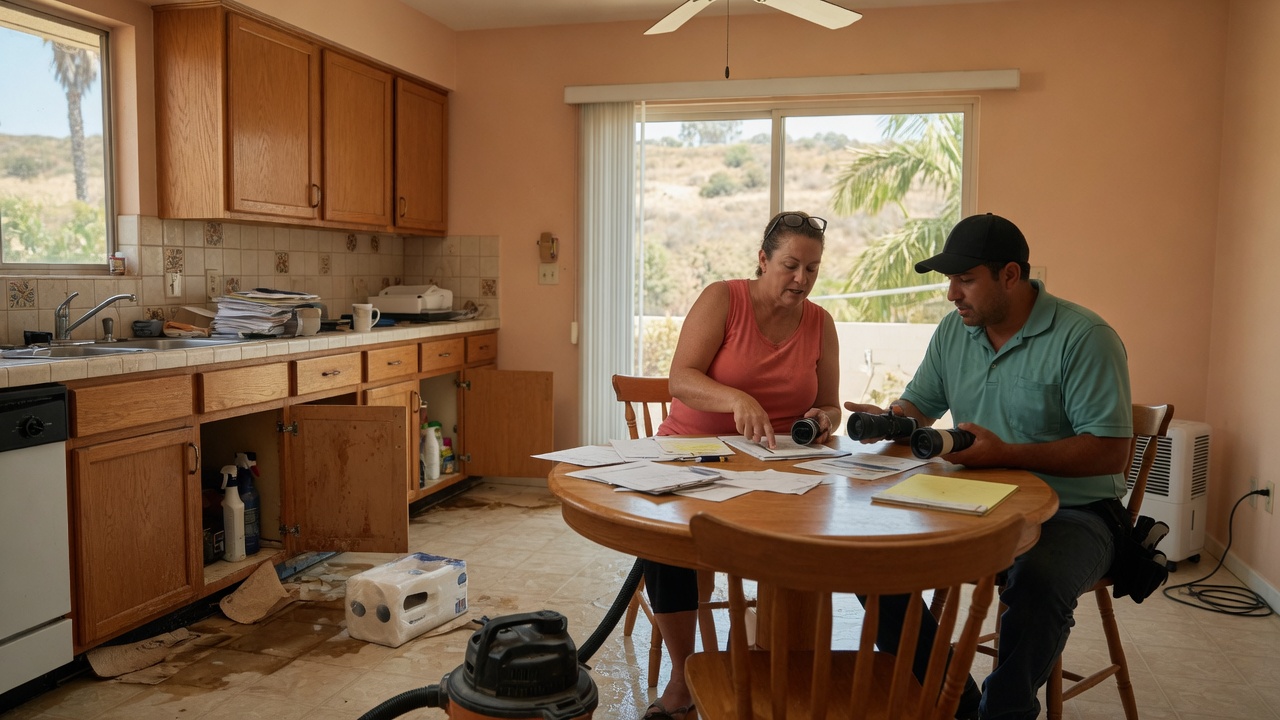
A useful burst pipe cleanup scope names the rooms, the wet materials, and the work that is not included. Two offers that both say cleanup are not the same job. Read them side by side in writing before you pick.
Restore Pro SD does not write those scopes, does not quote them, and does not file insurance. We match you with a licensed independent restoration professional. You contract with that professional.
If water is still running, use the burst pipe emergency page. Carpet-only extraction is a different comparison. This page is the whole cleanup after a pipe failure: floors, walls, cavities, and contents. For generic repair estimates that are not burst-pipe specific, use how to compare water damage repair estimates.
The plumber’s stop is not the cleanup
A plumber stops the leak. Restoration maps and dries what the leak already wet. If those two jobs sit on one page without a split, you cannot tell who owns the pipe and who owns the wet house.
Ask each written scope:
- Has a plumber already isolated the break, or is that still open?
- Who is responsible if water starts again while drying equipment is in the rooms?
- Is pipe repair listed as excluded, or is it assumed?
Older coastal cottages in Ocean Beach and Pacific Beach often have copper. Newer inland tracts in Mira Mesa, Santee, and Escondido often have PEX. That is not a failure-rate chart. Ask what actually failed: a pinhole, a fitting, a washing-machine hose, or a line in the slab. The burst pipe cleanup path follows the source.
A slab leak under a Chula Vista tract home is not the same job as a supply-line split under a kitchen sink in a Mission Valley condo. The plumber decides how to repair the pipe. The restoration scope should say what they will dry after that repair is done, including cabinet bases, bottom plates, and any slab or crawl space the water reached.
Do not stand in water to kill power. The CDC electrical guidance is to shut the main breaker only when you can reach it without walking through water. Otherwise call an electrician. Never switch power on or off while standing in water.
Compare extraction, drying, and demolition as three jobs
Cleanup is not one verb. Extraction takes standing water. Structural drying pulls moisture out of materials that can stay. Demolition is the wet drywall, pad, or insulation they do not expect to dry in place. A scope that only says extract leaves the rest of the house unnamed.
Ask each independent professional to split those three in writing. Extraction should name the rooms with standing water and what they will not reach. A pump does not dry a closed wall, pad under a sofa, or a toe kick. Structural drying should name the materials they expect to save, and what nearby dry piece of the same material they will use as a baseline. IICRC S500 is an industry playbook many contractors use for drying. It is a voluntary standard, not a California license. Restore Pro SD holds neither that standard nor a CSLB license.
Demolition should name what comes out. Wet drywall paper, soaked insulation, and pad that stays wet after extraction are common removals after a pipe burst. This page does not publish a cut height. Ask which panels, pad runs, and cabinet parts they want out, and why those cannot dry in place. If one scope leaves the walls closed and the other opens two rooms, those are different jobs even when both say cleanup.
The EPA mold guidance is to fix plumbing leaks as soon as you can and dry items completely. If sewage or other contaminated water caused the damage, call a professional experienced with that work. Do not treat a sewage line and a clean supply-line burst as the same cleanup on paper. If the whole argument is whether pad comes up, use the carpet extraction scopes after a pipe burst page.
Ask how they will map hidden cavities
The stain on the paint is not the map. A supply line open inside a wall wets the paper, the insulation, and often the bottom plate before you see a dark stripe. Water from an upstairs bath can sit in a joist bay. Water from a laundry closet can stop in a closet you have not opened.
Ask the scope to name the method: where they will probe, which cavities they will open, what dry wall they will compare against, and what happens if a later reading shows a pocket they missed.
Building type changes the map. Inland homes in El Cajon, Santee, and Escondido often sit on slab, so water can track along concrete under cabinets and pad. Older beach cottages in Ocean Beach and Pacific Beach often sit on raised floors, so water can soak subfloor and drift toward a crawl space. A stacked condo may include the unit below. If the break is inside a wall, the burst pipe inside a wall page covers opening that cavity. The cleanup scope still has to say whether that opening, the insulation, and the drying of the plate are in this contract.
Until the pro maps the wet area, stay out of standing water. Do not peel drywall yourself to see how far it went.
Keep contents handling on its own line
A furnished kitchen or bedroom is two jobs. Contents have to be protected, moved, or packed out. Floors and walls have to be extracted, dried, or opened. Mixing those jobs is how a table gets set back on still-wet pad.
The independent restoration pro should keep those tracks separate in the scope. Contents handling covers furniture, dishes, electronics, and what sits in the cabinets. Extraction and drying cover the building. If the room needs a pack-out, that is a documented contents process, not a side errand during extraction. Ask who is moving what. A restoration technician is not automatically a contents specialist.
The scope should say who decides when pieces can return, and on what evidence. That is a condition check, not a promise on the calendar. There is no honest fixed drying time for a San Diego kitchen after a pipe burst.
Read the exclusions before you pick
The thinner page is often the one that left work out. Restore Pro SD does not quote. You are comparing two independent professionals’ written lists of what they will and will not do.
Look for lines that push work off the page:
- Pipe repair, repipe, or any plumbing after the stop.
- Electrical that got wet, or calling an electrician.
- Rebuild, texture, and paint after wet drywall comes out.
- Matching flooring past the wet area.
- Cabinets themselves, not only the toe kick or the under-sink base.
- The crawl space, the unit below, or a shared condo wall.
- Contents cleaning, pack-out, or storage.
- Mold work if growth is found after drying starts.
An exclusion is not automatically a bad scope. It is a boundary. If one scope includes opening two wet walls and the other excludes all demolition, those offers are not competing. Ask the short one to name the same rooms and the same exclusions. Line both documents up: rooms named, plumber assigned, extraction versus drying versus demolition split, cavity map named, contents named, exclusions named, and the license you can look up. A handshake is not a scope.
You contract with the licensed contractor, not with Restore Pro SD. Check a California license on the CSLB license lookup before work starts. Ask your carrier about your own policy. We do not bill insurance and we do not rank contractors by price.
When to call us
Call when you have two burst pipe cleanup offers and they do not name the same rooms, or when the leak is stopped and the wet walls, floors, and contents still need a licensed restoration contractor. Stay out of standing water. Call us at (858) 400-4586. The line takes a recorded message. You get a call back. We match you with a licensed local restoration professional. They contract with you directly.