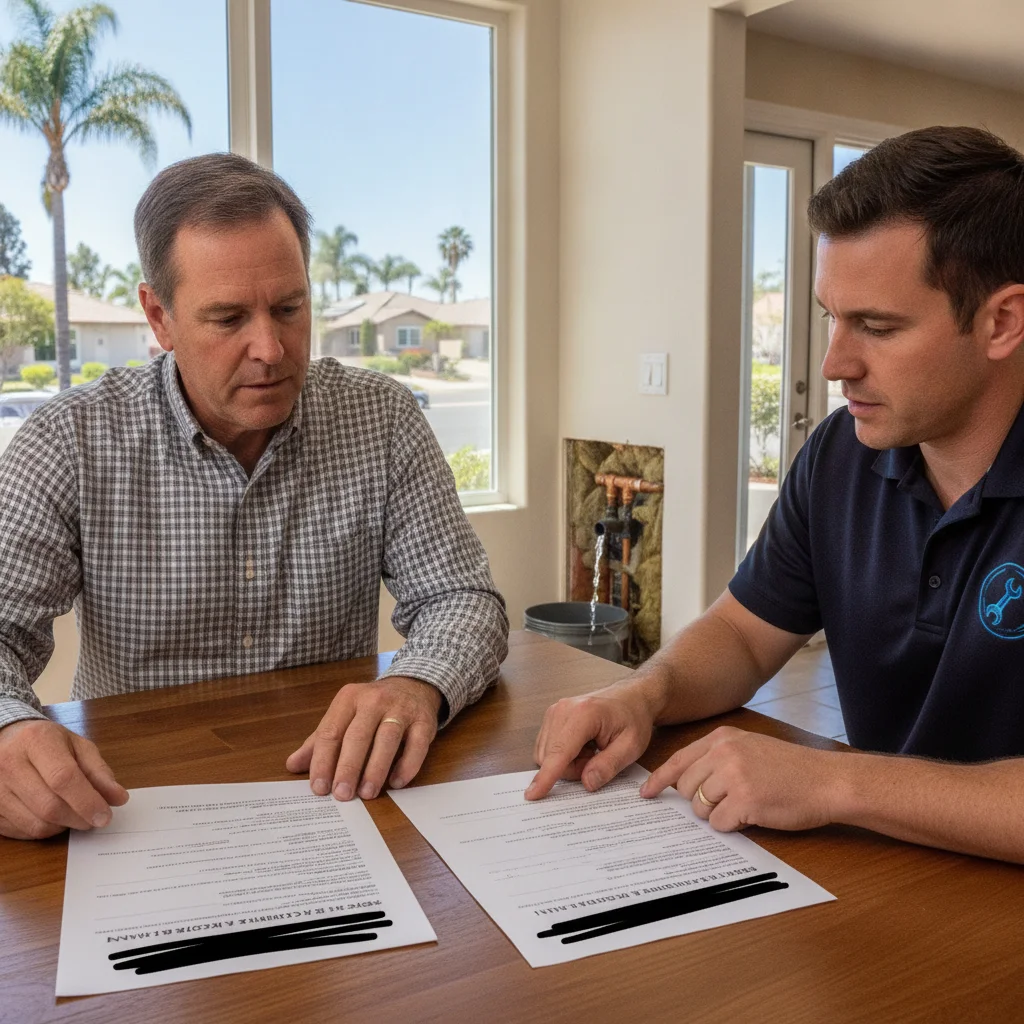
Two written scopes may propose very different work for the same property. Before choosing a San Diego County pro, compare what each water damage repair estimate includes, documents, and leaves out.

A San Diego County homeowner comparing two written water damage scopes without v

Compare the affected areas listed in each scope

Start with the rooms and surfaces, not the final total. Each scope should identify where the proposed work will happen. Broad phrases such as “affected area” don’t help you compare two estimates.

Create a simple room-by-room list. Note every floor, wall, ceiling, cabinet, baseboard, and enclosed space mentioned. Record whether the proposal calls for inspection, removal, drying, cleaning, or repair in each location. If one scope includes an adjoining hallway and another doesn’t, ask both pros to explain that difference.

The location descriptions should match the actual San Diego County property. A Chula Vista condo, an Encinitas house, and an El Cajon rental won’t share the same layout. Labels such as “coastal” or “inland” don’t identify the work area. Street address, floor level, room name, and the affected surface are more useful.

Also compare the boundaries of the proposed work. One estimate might name a bathroom wall without addressing the flooring beneath it. Another might include both. That difference doesn’t prove either scope is correct. It shows where you need a written explanation.

Don’t fill those gaps yourself. Ask what the pro observed and why each area was included or excluded. Then request a revised scope when the explanation changes the proposed work. Your goal is a written description that matches the property, not two documents with identical wording.

Separate extraction, drying, and reconstruction work

Sort every line into three groups: extraction, drying, and reconstruction. This reveals whether you’re comparing the same stages of work.

Extraction covers the proposed removal of water or water-damaged contents. The estimate should say which areas and materials are involved. Avoid assuming that a general cleanup line includes every affected room or surface.

Drying is a separate part of the scope. Look for the proposed equipment, placement areas, monitoring plan, and documentation method. The approved sources for this article don’t establish a universal drying duration or equipment count. Ask each independent pro to explain those details for your property.

Reconstruction covers work that restores removed or damaged finishes. That may be presented separately from extraction and drying. Compare whether each scope includes removal only, replacement, finishing, or none of those items. Our guide to deciding whether to save or replace water-damaged materials can help you frame those discussions.

A total that includes reconstruction can’t be compared directly with one that stops after drying. Mark those differences before considering price. The water damage restoration service overview offers more context on how a restoration project may be divided.

No current San Diego line-item rate could be confirmed from the approved sources for this article. Confirm every rate with the independent pro before signing. For separate market context, review our San Diego water damage restoration cost guide.

Check how moisture conditions will be documented

A water restoration estimate scope should explain how conditions will be recorded. Look for clear locations, dates, and material descriptions. A statement that something is “wet” provides little detail for later comparison.

Ask where readings will be taken and how those locations will be identified. The written answer might use room names, wall positions, diagrams, or labeled photos. Whatever method is proposed, it should let you connect each record to a specific area.

Next, compare the planned documentation at the beginning and end of the work. Ask each pro what records you’ll receive and when. If the scope refers to a drying target, request the exact method used to establish that target. Don’t assume two estimates use the same process because both mention monitoring.

Photos can support the written record, but the scope should explain their purpose. Ask whether they’ll document affected materials, equipment placement, removal, or completed work. If mold appears in a proposal, compare its wording with the EPA’s mold and moisture guidance.

No IICRC credential or protocol claim was confirmed for any individual pro in the approved sources for this article. If an estimate names an IICRC document, certification, or protocol, ask the issuing organization to verify it. Restore Pro SD doesn’t claim those credentials.

Written documentation makes disagreements easier to identify. If one proposal offers only a final note while another describes records by room and date, ask what evidence each pro will provide.

A scope comparison divided into extraction, drying, documentation, exclusions, a

Review exclusions, assumptions, and change orders

The smallest text may contain the biggest scope differences. Read every exclusion and assumption before comparing totals.

An exclusion identifies work that isn’t included. Mark anything involving concealed areas, personal property, plumbing repairs, finish matching, permits, testing, or reconstruction. These examples don’t mean every project needs those items. They show where a proposal may stop.

An assumption describes what the estimate expects to be true. One scope might depend on access to a room or assume that no additional damaged material will be found. Ask the pro to rewrite any assumption you can’t evaluate. It’s better to resolve vague wording before work begins.

Then review the change-order process. Ask what event could change the written scope, who documents that event, and what approval is requested before added work proceeds. The estimate should also explain how added work will be described and priced. Don’t accept an unwritten promise as a substitute for clear terms.

If an insurer is involved, ask the independent pro which documents will be sent to you and which will be shared elsewhere. This article doesn’t confirm any insurer’s approval process, coverage decision, or payment rule. Check those points directly with your insurer.

Build a comparison sheet with four columns: included, excluded, assumed, and subject to change. Copy the proposal’s wording instead of paraphrasing it. When two scopes place the same item in different columns, request written clarification. That difference may matter more than the total shown at the bottom.

Verify the independent pro through official sources

Restore Pro SD is a referral service. We match customers with licensed, independent local water damage pros. We don’t perform restoration work, set prices, issue warranties, or hold a trade license.

Before choosing a pro, match the business name on the estimate with the person or company offering the contract. Use the CSLB’s official license check to review the available record. Compare the listed business details with the proposal rather than relying on a logo or verbal statement.

The approved sources for this article don’t establish which license classification applies to every possible repair. They also don’t confirm a license number for any individual pro discussed here. Check the proposed work and business directly through CSLB before signing.

No insurance requirement or coverage level was confirmed for this article. If an estimate says the business is insured or bonded, ask for current documentation. Confirm the claim with the named issuer instead of treating the estimate itself as proof.

Apply the same rule to certifications and warranties. Ask who issued the credential, who provides the warranty, what work it covers, and where the terms are written. Don’t attribute a contractor’s credential or warranty to Restore Pro SD.

Finally, confirm that the name receiving payment matches the written agreement. Save the estimate, revisions, supporting records, and signed contract together. When something can’t be confirmed through an official source or issuer, mark it as unverified and ask for documentation before deciding.

When to call us

When competing scopes disagree about affected areas, drying records, or reconstruction responsibility, a licensed Water Damage Restoration pro can explain the proposed work. Call us at (858) 400-4586 and we’ll connect you with a licensed local restoration pro.