Water on an Oceanside lower level does not stay in one puddle. It soaks carpet, wicks into drywall, and can travel into rooms you thought were dry. If your home has a basement, a walk-out lower floor, or another below-grade room, start by tracing how the water got in, then get standing water out without stepping into an electrical or sewage hazard.
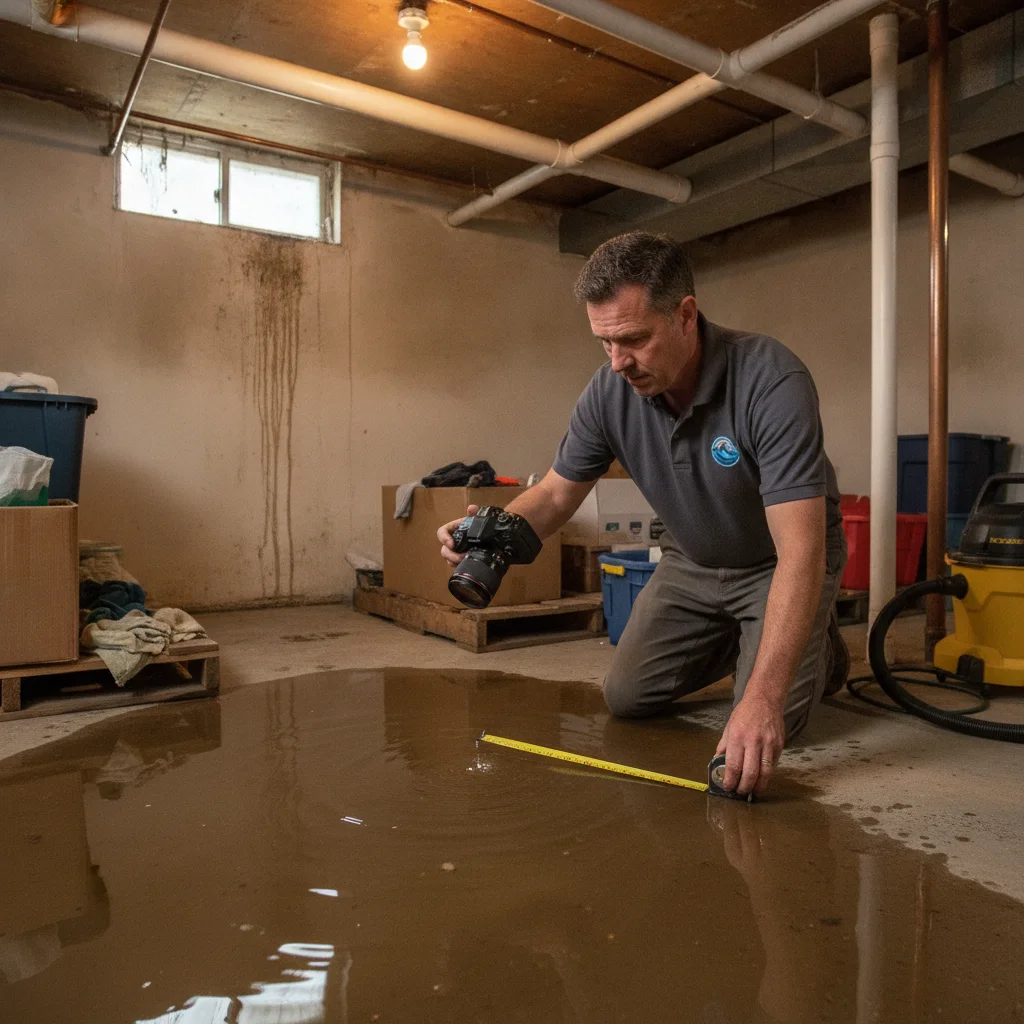
Identify how water reached the basement
Not every Oceanside house has a basement. A lot of coastal and inland tract homes sit on slab. Some hillside lots, including parts of Fire Mountain and other slope streets west of I-5, have a lower level people call a basement even when it is a walk-out. Confirm what you actually have before you plan the cleanup. Look at how the floor sits against the yard, the garage, and the street.
Then find the path the water used. A supply-line break, a water heater, a washer, or an upstairs drain can dump clean-looking water into a lower room. A blocked gutter or wind-driven rain can soak the same space from outside. Seepage through a foundation wall looks different from a sudden pipe dump. A sewer or toilet backup is a different job altogether. The EPA says that if water or mold damage was caused by sewage or other contaminated water, you should call a professional experienced with contaminated-water damage. That is sewage cleanup, not a mop-and-fan afternoon.
Oceanside is not a generic beach town with a swapped city name. It sits at the north end of San Diego County’s coast, with Camp Pendleton on the north edge, the San Luis Rey River running through town to the harbor, and a wide inland belt toward Vista and San Marcos. A lower room near the river corridor, a coastal cottage off Coast Highway, and a newer inland house can all flood for different reasons. Do not assume your address is in a mapped floodplain, and do not assume it is out of one. The map is address-specific.
If a storm is involved, look at grade around the foundation, downspouts that dump next to the wall, and any window well that holds rain. Our note on wind-driven rain in Oceanside covers how coastal storms push water at walls and openings. If you have a sump, see whether it ran, tripped, or sat dry. A failed sump is one path into a lower level, not proof that every Oceanside home has one.
Stop the source if you can do it without walking through water. That may mean the main water shutoff, not a basement switch. If electrical circuits or equipment are wet or near water, the CDC’s electrical-hazard guidance is clear: turn off power at the main breaker only when you can reach it without entering standing water. Otherwise call an electrician. Never switch power on or off while standing in water.
Document standing water and affected belongings
Take photos and short video before anyone moves much. Shoot the water line on walls and furniture, the wet floor, and the room next door. Note the time you first saw the water and whether it was still rising. That record helps you, the matched restoration pro, and an insurer if you file a claim. Coverage is not automatic. A sudden pipe break and a slow seepage claim can be treated differently. Confirm what your policy says, and see our explainer on whether homeowners insurance covers water damage.
Write down what got wet. Carpet, pad, boxes, clothes, a sofa on the floor, and stored photos are the usual list in a used lower level. Lift dry items out only if you can do it from dry footing. Do not wade in to save a box if the water may be sewage or if cords and outlets are in it.
A published Oceanside basement flood cleanup price is not on our verified claims list, so we will not invent one. Cost depends on how much water is there, what it is (clean supply water versus sewage), how far it traveled, and which materials stayed wet. Ask the licensed pro you are matched with to put extraction, drying, and any tear-out in writing before you sign. Restoration pricing is their contract with you, not a Restore Pro SD fee.
If you rent the space, California Civil Code §1941 says the lessor of a building meant for people to live in must, absent an agreement to the contrary, put it in a condition fit for occupation and repair later dilapidations that make it untenantable. Civil Code §1941.1 treats a dwelling as untenantable if it substantially lacks listed items, including effective waterproofing and weather protection of roof and exterior walls, plumbing in good working order, and floors in good repair. Civil Code §1942 describes a limited repair-and-deduct path after notice, with a cap of one month’s rent and a limit of twice in 12 months. Civil Code §1929 still puts ordinary-care damage on the tenant. Those are the statutes. They are not a promise that your landlord will move on your timeline. Put the notice in writing and keep a copy. Our tenant and landlord water-damage note walks that split in more detail.
Check walls, flooring, and adjoining spaces
Standing water is the obvious problem. The damage you miss is usually in the wall, under the finish floor, or one room over. Look for a tide line on drywall or paneling. Press baseboards. If they feel soft or the paint is bubbling, water has been wicking. Concrete can look almost dry on top and still hold moisture. Wood that cups, laminate that swells at the joints, and carpet that stays cold after the puddle is gone are all signs the assembly is still wet.
Check the closet under the stairs, the mechanical closet, and any finished room that shares a wall. Water follows the low point and the cavity, not the room name. If the lower level has an HVAC closet, stay out of the decision to run the system when mold is in play. The EPA says that if you know or suspect the HVAC system is contaminated with mold, do not run it, because it can spread mold through the building. Consult EPA duct-cleaning guidance before you do more.
What water damage in a basement looks like is often quiet at first. A musty smell, white staining on concrete, dark corners behind stored bins, and drywall that looks intact until you press it. Allergic reactions to mold are common and can be immediate or delayed, per the EPA’s brief mold guide. Mold can also trigger asthma attacks in people with asthma who are allergic to it, and it can irritate eyes, skin, nose, throat, and lungs in allergic and non-allergic people. That guide does not list every health effect. Talk to a health professional if someone in the house is reacting.
The EPA’s homeowner mold-cleanup page draws a size line. If the moldy area is less than about 10 square feet, roughly a 3 ft by 3 ft patch, a homeowner can often handle cleanup with EPA tips. If there has been a lot of water damage, or mold covers more than 10 square feet, use EPA’s mold remediation guidance and bring in help. Do not paint or caulk over moldy surfaces. Clean the mold and dry the surface first. Paint over mold is likely to peel.
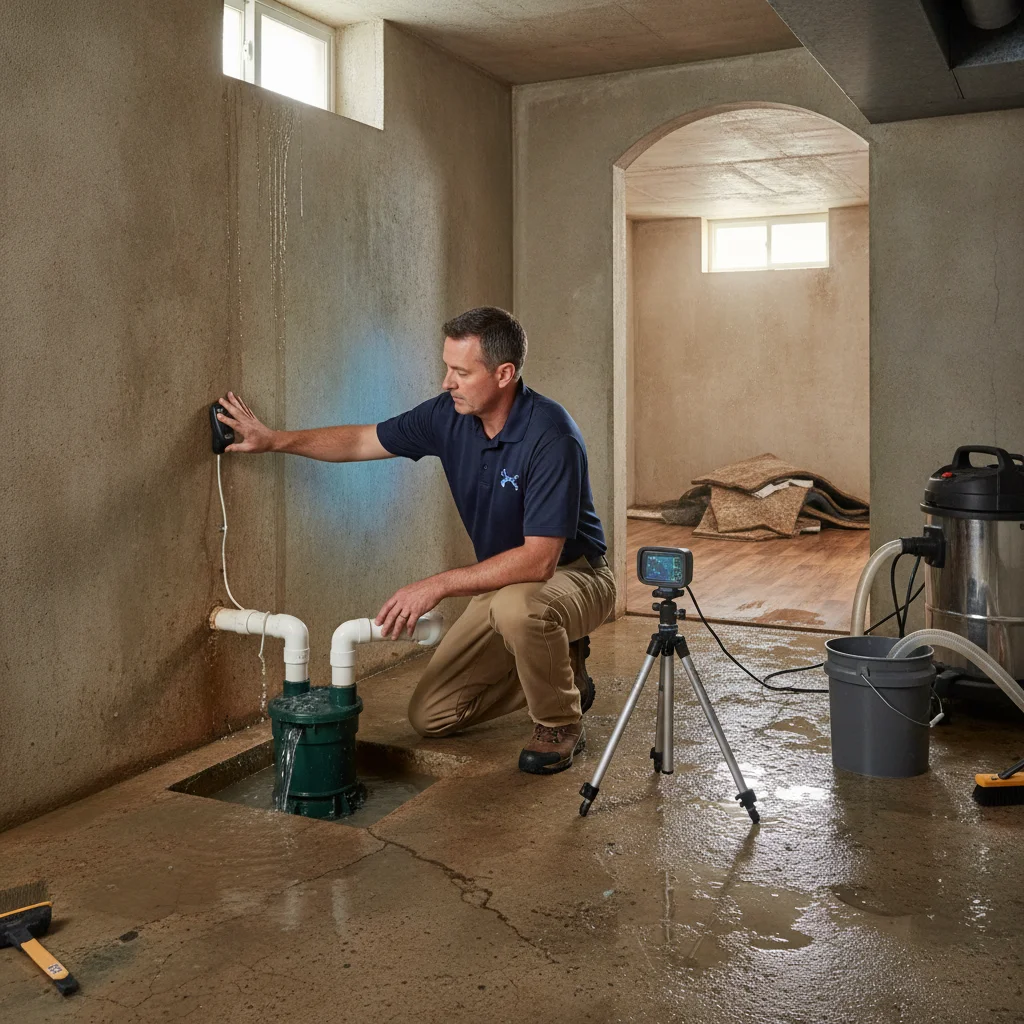
Separate water removal from source repairs
Getting water out of the room and fixing what put it there are two jobs. Mixing them up is how people pay twice.
A plumber, a drain contractor, or the City of Oceanside (if a public line is involved) stops the source. Confirm with the city which pipe is public and which is private. That split is property-specific, and a single citywide rule was not confirmed here. A licensed restoration pro then handles basement flood cleanup: extract standing water, dry the structure, and deal with wet contents. IICRC S500 is the common industry playbook for that water-damage work. It is a voluntary standard, not a California license. The state license for repair work sits with the Contractors State License Board. Check the pro you hire on the CSLB license lookup before they start demolition or rebuild.
Restore Pro SD does not extract water, dry walls, or hold a contractor license. We match you with licensed, independent local restoration pros. They contract with you. They do the physical work.
How you get water out depends on what it is and how much there is. A tiny, clean spill on sealed concrete is not the same as inches of water in carpet over a wood subfloor. Shop-vac work on sewage is a bad idea. For volume extraction and hidden moisture, the matched pro brings pumps, extractors, and meters. After the standing water is gone, structural drying is what actually finishes the job. Fans alone on a still-wet assembly leave moisture in the cavity. Coastal Oceanside air is often humid. That can slow drying compared with a dry inland day in East County. The pro should measure, not guess.
If you are asking who to call: 911 for a life-safety emergency, an electrician when water and power meet, a plumber to stop an active leak, and a licensed restoration pro for extraction, drying, and contaminated-water work. If you want a second local filter on who to hire, use our Oceanside water-damage hiring guide.
Verify property-specific flood information
Do not copy a neighbor’s flood story onto your address. Check your parcel.
Start with FEMA’s flood resources and the Flood Map Service Center for your exact street. A house near the San Luis Rey, a lot on a slope above Coast Highway, and an inland tract home can sit in different mapped zones, or in none of the zones people expect. We are not publishing a zone for any Oceanside neighborhood here because that would be a guess. If the map is hard to read, ask the City of Oceanside who handles floodplain questions for building and planning. County staff are the wrong window if you are inside city limits.
That check matters for two separate decisions. One is how the water got in this time: storm, pipe, sewer, or seepage. The other is whether flood insurance, a city drainage issue, or a private plumbing failure is even in play. A restoration invoice does not settle that. Neither does a blog post.
While you are on city and county sites, look for any permit flag if the repair will touch electrical, structural members, or a change to waterproofing. A specific Oceanside permit trigger for basement water jobs was not confirmed in our verified claims. Ask the city before anyone opens walls. The EPA’s mold and moisture pages are the cleanup reference once the structure is ready to dry.
If this lower level is a rental, send the landlord the photos and the source you found. Habitability and waterproofing live in the Civil Code sections above. If it is your house, keep the same file for the insurer and for the matched pro. The goal is the same: water out, source named, structure actually dry.
When to call us
Call when standing water is in a basement or lower level, when the water may be sewage, or when walls, floors, or an adjoining room are still wet after the puddle is gone. That is licensed restoration work, not a weekend fan setup. Call us at (858) 400-4586 and we’ll connect you with a licensed local restoration pro.