
Last updated: April 23, 2026
Wet Insulation in Spring Valley, CA.
Wet insulation holds moisture against framing and loses R-value. Attic, wall, and crawlspace insulation each need a different access plan, but the save-versus-replace decision is usually the same once saturation is confirmed..
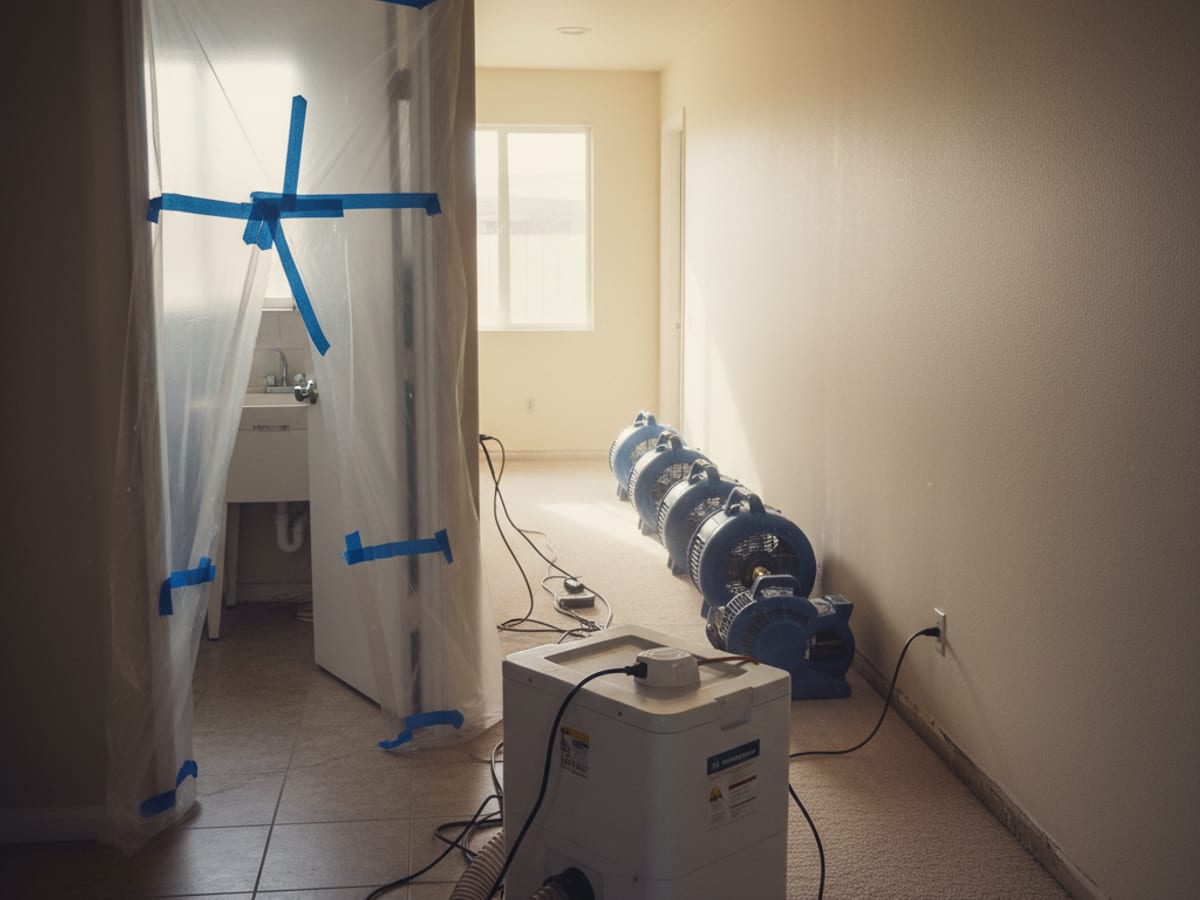
What wet insulation means in Spring Valley
In Spring Valley, wet insulation is a moisture problem first and a cosmetic issue second. Spring Valley water damage scope is shaped by the area's mixed building eras and hillside terrain. That local housing mix shapes where we look first when this symptom shows up.
Why wet insulation shows up in Spring Valley
Wet insulation jobs near El Cajon, Santee, and Lakeside follow slab leaks year-round and roof or runoff events in wet weeks. Access through slab-on-grade tracts and canyon-adjacent homes varies, and dry air that helps drying once the source is stopped is why in-place drying is rarely enough once batts are saturated.
- Common local pattern: slab leaks year-round and roof or runoff events in wet weeks
- Housing context: slab-on-grade tracts and canyon-adjacent homes
- Climate factor: dry air that helps drying once the source is stopped
- Neighborhoods and cities in play: El Cajon, Santee, and Lakeside
- Related restoration path: structural drying after moisture mapping
Spring Valley homes and what they need
For older single-family losses, the work concentrates on identifying slow source failures behind walls, Cat 2 backup containment and cleanup, and the standard older-construction demolition and reconstruction sequence.
Neighborhoods we cover for wet insulation in Spring Valley: Casa de Oro adjacency, La Presa, Sweetwater Road corridor, Bancroft Drive corridor, Mount Helix hillside (SV side), Rancho San Diego adjacency.
Spring Valley runs older 1950s-70s single-family stock on aging copper and galvanized supply, plus 1980s-90s tract through the Casa de Oro adjacency and the hillside neighborhoods now in prime slab-leak window. Cat 2 backups on aging cast-iron drains drive a steady portion of the residential volume.
Common causes of wet insulation
- Attic insulation wet from a roof or condensate leak
- Wall cavity batts wet from a supply pinhole
- Crawlspace insulation hanging damp under a bathroom
- Paper-faced batts that stay wet against drywall
- Blown cellulose that clumps and holds water
- Mold risk when wet insulation sits against wood framing
Ready for restoration help? See structural drying in Spring Valley or the Spring Valley service area page.
Spring Valley wet insulation questions
What usually causes wet insulation in El Cajon homes?
In this part of the county the leading pattern is slab leaks year-round and roof or runoff events in wet weeks. We moisture-map first, confirm whether the source is still active, and only then open walls or remove finishes.
Is wet insulation an emergency in the East County area?
Wet insulation rarely dries in place to a reliable standard. Most saturated batts and blown layers need removal. Locally, dry air that helps drying once the source is stopped means waiting often makes the footprint larger than the first stain or puddle suggests.
What should I do about wet insulation in Spring Valley right now?
Wet insulation rarely dries in place to a reliable standard. Most saturated batts and blown layers need removal. In Spring Valley, we moisture-map on arrival, stop active sources when we can, and start extraction or containment the same visit on active losses. Call (858) 400-4586.
Do you handle wet insulation across East County San Diego?
Yes. Wet insulation jobs near El Cajon, Santee, and Lakeside follow slab leaks year-round and roof or runoff events in wet weeks. We serve Spring Valley and nearby East County communities with the same IICRC-based process.
Where we work in Spring Valley
Get help with wet insulation in Spring Valley
Moisture mapping first. Mitigation when the loss is active.