
Last updated: April 23, 2026
Wet Carpet in Pine Valley, CA.
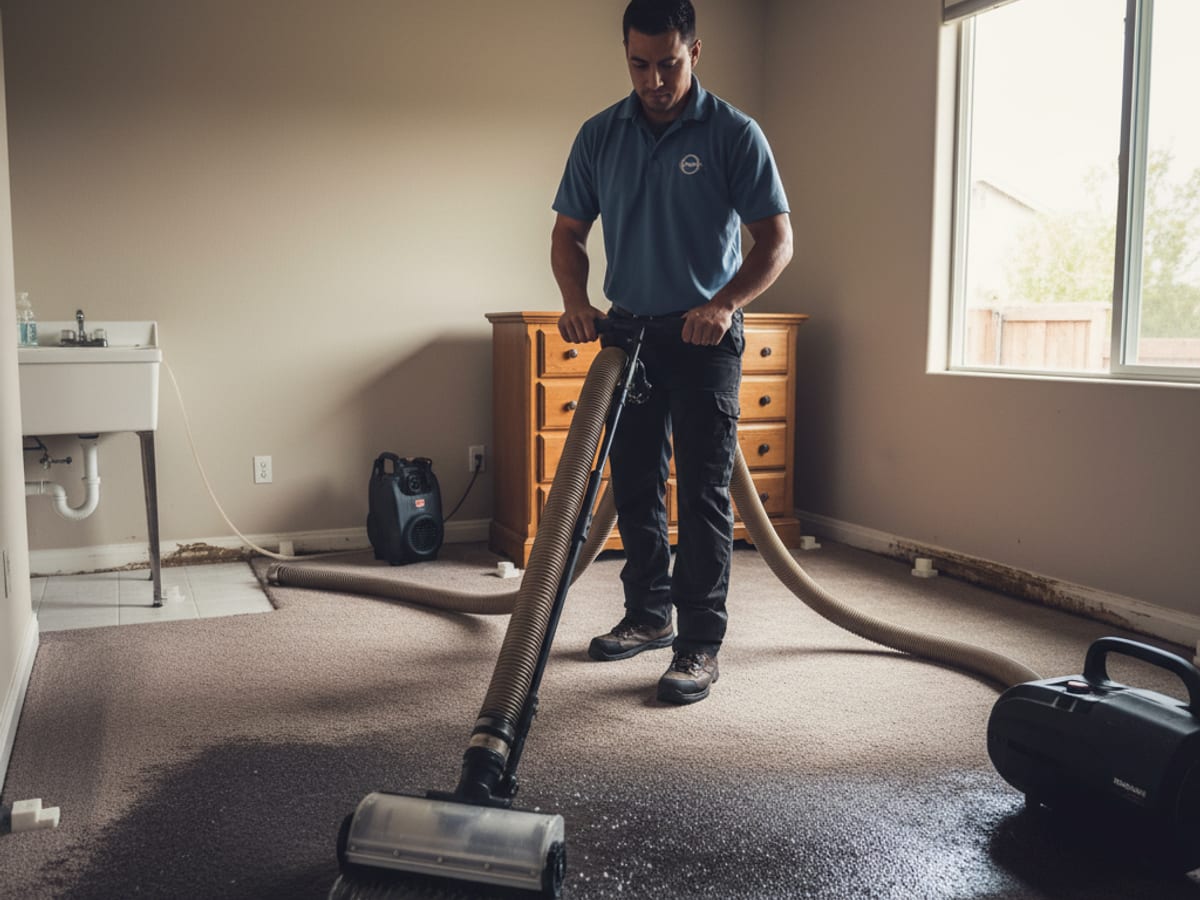
Wet carpet is an extraction and pad decision, not a surface mop job. Pad holds water against the subfloor, and category of water decides whether cleaning in place is even allowed..
What wet carpet means in Pine Valley
In Pine Valley, wet carpet is a moisture problem first and a cosmetic issue second. Pine Valley water damage scope reflects the community's 3,700-foot elevation and mountain-foothill character. That local housing mix shapes where we look first when this symptom shows up.
Why wet carpet shows up in Pine Valley
Wet carpet calls across Alpine, Julian, and Mt. Laguna often start with freeze-burst pipes, snowmelt intrusion, and septic events. In mountain cabins and rural homes with crawlspaces and septic, pad and subfloor hold the real moisture load, and cooler temperatures that slow dry-out changes how fast odor and colonization follow.
- Common local pattern: freeze-burst pipes, snowmelt intrusion, and septic events
- Housing context: mountain cabins and rural homes with crawlspaces and septic
- Climate factor: cooler temperatures that slow dry-out
- Neighborhoods and cities in play: Alpine, Julian, and Mt. Laguna
- Related restoration path: carpet water extraction after moisture mapping
Pine Valley homes and what they need
For frozen-pipe rupture events, the response sequence runs fast extraction, structural dry-out with high-CFM air movement and oversized dehumidifier capacity, mold remediation when needed, reconstruction.
Neighborhoods we cover for wet carpet in Pine Valley: Pine Valley proper, Pine Valley Inn area, Lyons Valley adjacency, Buckman Springs adjacency.
Pine Valley sits at 3,700 feet with regular winter freeze events and occasional snow accumulation. Frozen-pipe ruptures during cold snaps, septic backups during major storms, and slab leaks in the older 1960s-80s mountain-tract stock drive the local call mix. Response from East County staging via I-8 runs 75 to 105 minutes typical.
Common causes of wet carpet
- Clean supply-line water vs contaminated outdoor or sewage water
- Pad saturation that keeps the subfloor wet after the face yarn looks dry
- Stretch-in carpet that can sometimes be saved vs gluedown that rarely can
- Tack strip rust and baseboard wicking at the perimeter
- Subfloor swelling that shows up days after the carpet feels dry
- Musty odor that means the pad already colonized
Ready for restoration help? See carpet extraction in Pine Valley or the Pine Valley service area page.
Pine Valley wet carpet questions
What usually causes wet carpet in Alpine homes?
In this part of the county the leading pattern is freeze-burst pipes, snowmelt intrusion, and septic events. We moisture-map first, confirm whether the source is still active, and only then open walls or remove finishes.
Is wet carpet an emergency in the Backcountry area?
Wet carpet and pad start growing microbial activity within 24 to 48 hours. Extract the same day when you can. Locally, cooler temperatures that slow dry-out means waiting often makes the footprint larger than the first stain or puddle suggests.
What should I do about wet carpet in Pine Valley right now?
Wet carpet and pad start growing microbial activity within 24 to 48 hours. Extract the same day when you can. In Pine Valley, we moisture-map on arrival, stop active sources when we can, and start extraction or containment the same visit on active losses. Call (858) 400-4586.
Do you handle wet carpet across Backcountry San Diego?
Yes. Wet carpet calls across Alpine, Julian, and Mt. We serve Pine Valley and nearby Backcountry communities with the same IICRC-based process.
Where we work in Pine Valley
Get help with wet carpet in Pine Valley
Moisture mapping first. Mitigation when the loss is active.