
Last updated: April 23, 2026
Water Heater Leak in San Ysidro, CA.
Water heater leaks range from a slow pan drip to a tank rupture that floods a closet and adjacent rooms. Closet location, slab versus raised foundation, and how long it ran set the restoration scope..
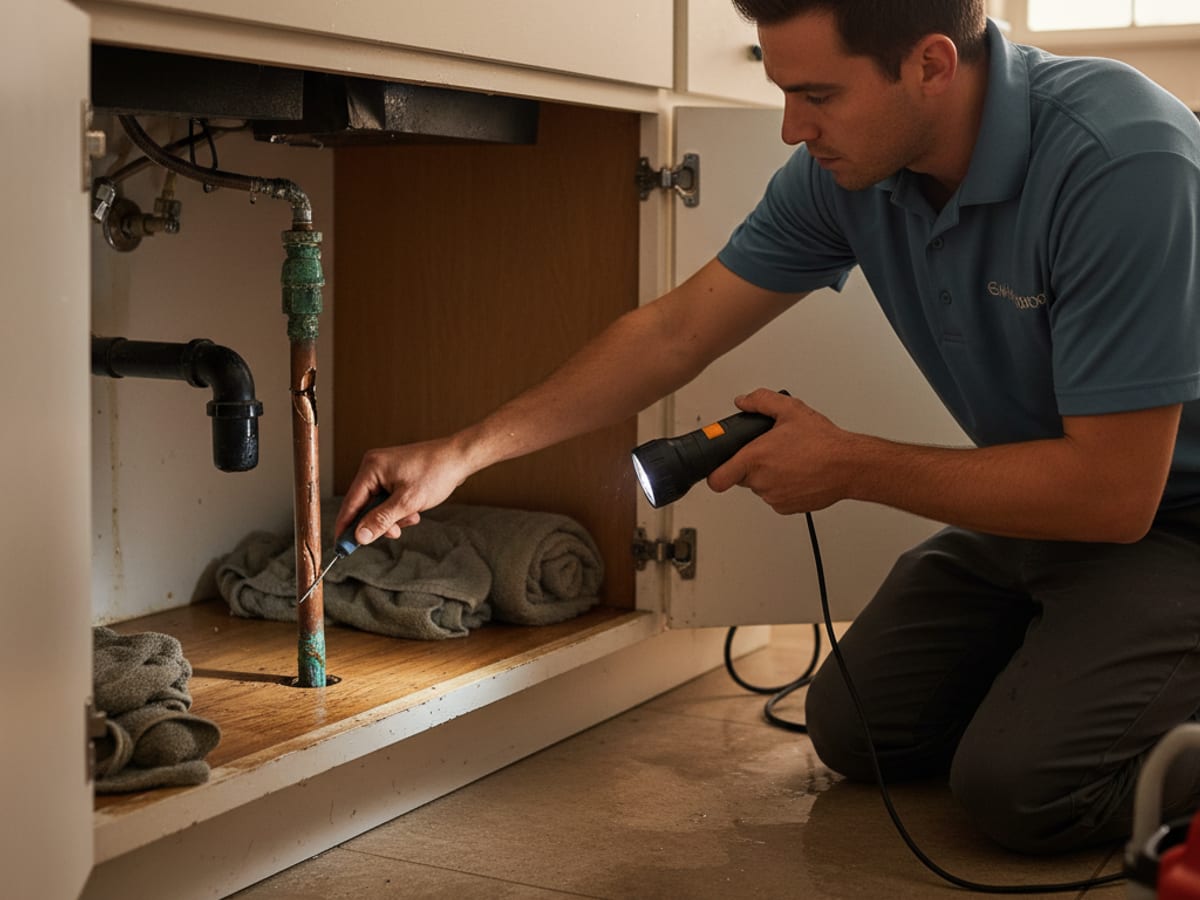
What water heater leak means in San Ysidro
In San Ysidro, water heater leak is a moisture problem first and a cosmetic issue second. San Ysidro water damage scope reflects the area's older residential stock and its dense commercial corridor adjacent to the busiest land border crossing in the Western Hemisphere. That local housing mix shapes where we look first when this symptom shows up.
Why water heater leak shows up in San Ysidro
Water heater losses around Chula Vista, National City, and Bonita often tie to aging plumbing west and appliance-supply failures east. Closet and garage installs in older west-side stock plus newer EastLake and Otay Ranch tracts create tight footprints that still wick far, especially when bay-side humidity in the west, drier conditions inland east slows drying.
- Common local pattern: aging plumbing west and appliance-supply failures east
- Housing context: older west-side stock plus newer EastLake and Otay Ranch tracts
- Climate factor: bay-side humidity in the west, drier conditions inland east
- Neighborhoods and cities in play: Chula Vista, National City, and Bonita
- Related restoration path: burst pipe cleanup after moisture mapping
San Ysidro homes and what they need
Older residential work concentrates on identifying slow source failures behind plaster or drywall, Cat 2 backup containment and cleanup on aging cast-iron, and standard older-construction demolition and reconstruction.
Neighborhoods we cover for water heater leak in San Ysidro: San Ysidro Civic Center, Smythe Avenue corridor, East Beyer Boulevard corridor, Las Americas adjacency, Border-adjacent residential, San Ysidro Boulevard corridor.
San Ysidro runs older 1950s-70s single-family stock with aging galvanized and early-copper supply plus a dense multi-family inventory along San Ysidro Boulevard and East Beyer Boulevard. Cross-border-commerce commercial losses add a layer to the standard residential call mix.
Common causes of water heater leak
- Tank corrosion failure versus fitting or T&P discharge
- Closet drywall and plate damage at the base
- Garage slab leaks that look small but wet a wide footprint
- Expansion pan that overflowed because the drain line was clogged
- Old galvanized nipples and flex connectors as leak points
- Insurance documentation of sudden tank failure versus long seepage
Ready for restoration help? See burst pipe in San Ysidro or the San Ysidro service area page.
San Ysidro water heater leak questions
What usually causes water heater leak in Chula Vista homes?
In this part of the county the leading pattern is aging plumbing west and appliance-supply failures east. We moisture-map first, confirm whether the source is still active, and only then open walls or remove finishes.
Is water heater leak an emergency in the South County area?
A failing tank can dump its full volume. Shut the cold supply and power or gas, then extract before the closet walls soften. Locally, bay-side humidity in the west, drier conditions inland east means waiting often makes the footprint larger than the first stain or puddle suggests.
What should I do about water heater leak in San Ysidro right now?
A failing tank can dump its full volume. Shut the cold supply and power or gas, then extract before the closet walls soften. In San Ysidro, we moisture-map on arrival, stop active sources when we can, and start extraction or containment the same visit on active losses. Call (858) 400-4586.
Do you handle water heater leak across South County San Diego?
Yes. Water heater losses around Chula Vista, National City, and Bonita often tie to aging plumbing west and appliance-supply failures east. We serve San Ysidro and nearby South County communities with the same IICRC-based process.
Where we work in San Ysidro
Get help with water heater leak in San Ysidro
Moisture mapping first. Mitigation when the loss is active.