
Last updated: April 23, 2026
Standing Water Indoors in Granite Hills, CA.
Standing water indoors is an extraction clock. Category of water, depth, and what materials are soaking decide the first hour of work more than anything else..
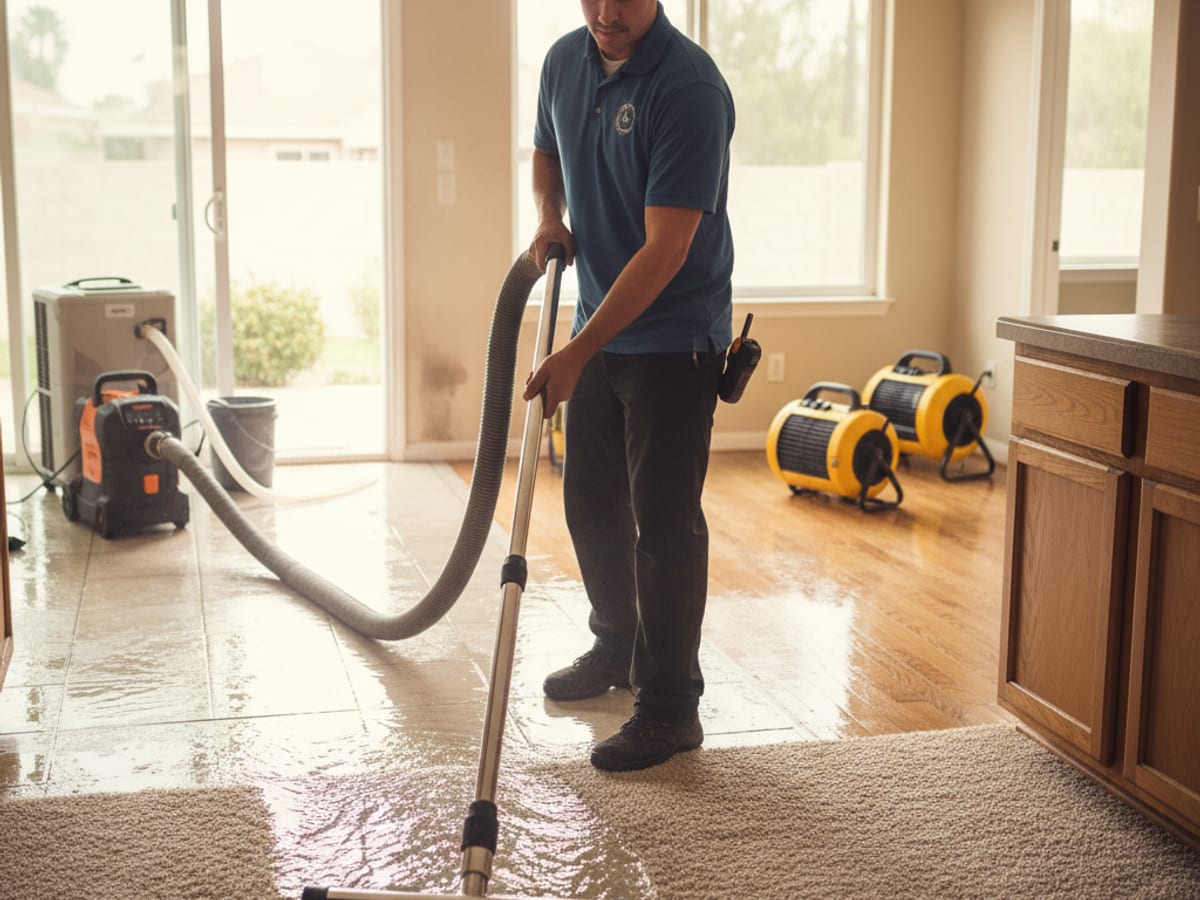
What standing water indoors means in Granite Hills
In Granite Hills, standing water indoors is a moisture problem first and a cosmetic issue second. Granite Hills water damage scope is shaped by the area's foothill topography and the 1960s-80s tract development character. That local housing mix shapes where we look first when this symptom shows up.
Why standing water indoors shows up in Granite Hills
Standing water responses in El Cajon, Santee, and Lakeside prioritize shutoff and extraction first. Slab leaks year-round and roof or runoff events in wet weeks sets a lot of the volume, and slab-on-grade tracts and canyon-adjacent homes changes hose access and category decisions under dry air that helps drying once the source is stopped.
- Common local pattern: slab leaks year-round and roof or runoff events in wet weeks
- Housing context: slab-on-grade tracts and canyon-adjacent homes
- Climate factor: dry air that helps drying once the source is stopped
- Neighborhoods and cities in play: El Cajon, Santee, and Lakeside
- Related restoration path: emergency water extraction after moisture mapping
Granite Hills homes and what they need
Typical scope is slab-leak restoration similar to other East County 1980s zones, plus winter-season roof-leak ceiling damage.
Neighborhoods we cover for standing water indoors in Granite Hills: Granite Hills CDP, El Cajon adjacent residential, Foothill hillside parcels.
Granite Hills is El Cajon-adjacent foothill stock from the 1960s-80s, slab-on-grade construction with under-slab copper now in the slab-leak window. Older composition roof stock also produces winter-storm ceiling-damage events during atmospheric rivers.
Common causes of standing water indoors
- Active supply break still adding volume
- Appliance discharge that looks shallow but wet a large pad area
- Door threshold or slider intrusion during a storm
- Water heater tank failure dumping dozens of gallons
- Category assessment before anyone starts mopping contaminated water
- Contents move-out needed for hose access
Ready for restoration help? See water extraction in Granite Hills or the Granite Hills service area page.
Granite Hills standing water indoors questions
What usually causes standing water indoors in El Cajon homes?
In this part of the county the leading pattern is slab leaks year-round and roof or runoff events in wet weeks. We moisture-map first, confirm whether the source is still active, and only then open walls or remove finishes.
Is standing water indoors an emergency in the East County area?
Standing water spreads into walls and under cabinets while you wait. Shut the source off and call for extraction. Locally, dry air that helps drying once the source is stopped means waiting often makes the footprint larger than the first stain or puddle suggests.
What should I do about standing water indoors in Granite Hills right now?
Standing water spreads into walls and under cabinets while you wait. Shut the source off and call for extraction. In Granite Hills, we moisture-map on arrival, stop active sources when we can, and start extraction or containment the same visit on active losses. Call (858) 400-4586.
Do you handle standing water indoors across East County San Diego?
Yes. Standing water responses in El Cajon, Santee, and Lakeside prioritize shutoff and extraction first. We serve Granite Hills and nearby East County communities with the same IICRC-based process.
Where we work in Granite Hills
Get help with standing water indoors in Granite Hills
Moisture mapping first. Mitigation when the loss is active.